Meta[x]is
Rethinking city infrastructure through aerial connectivity and behavioural models.
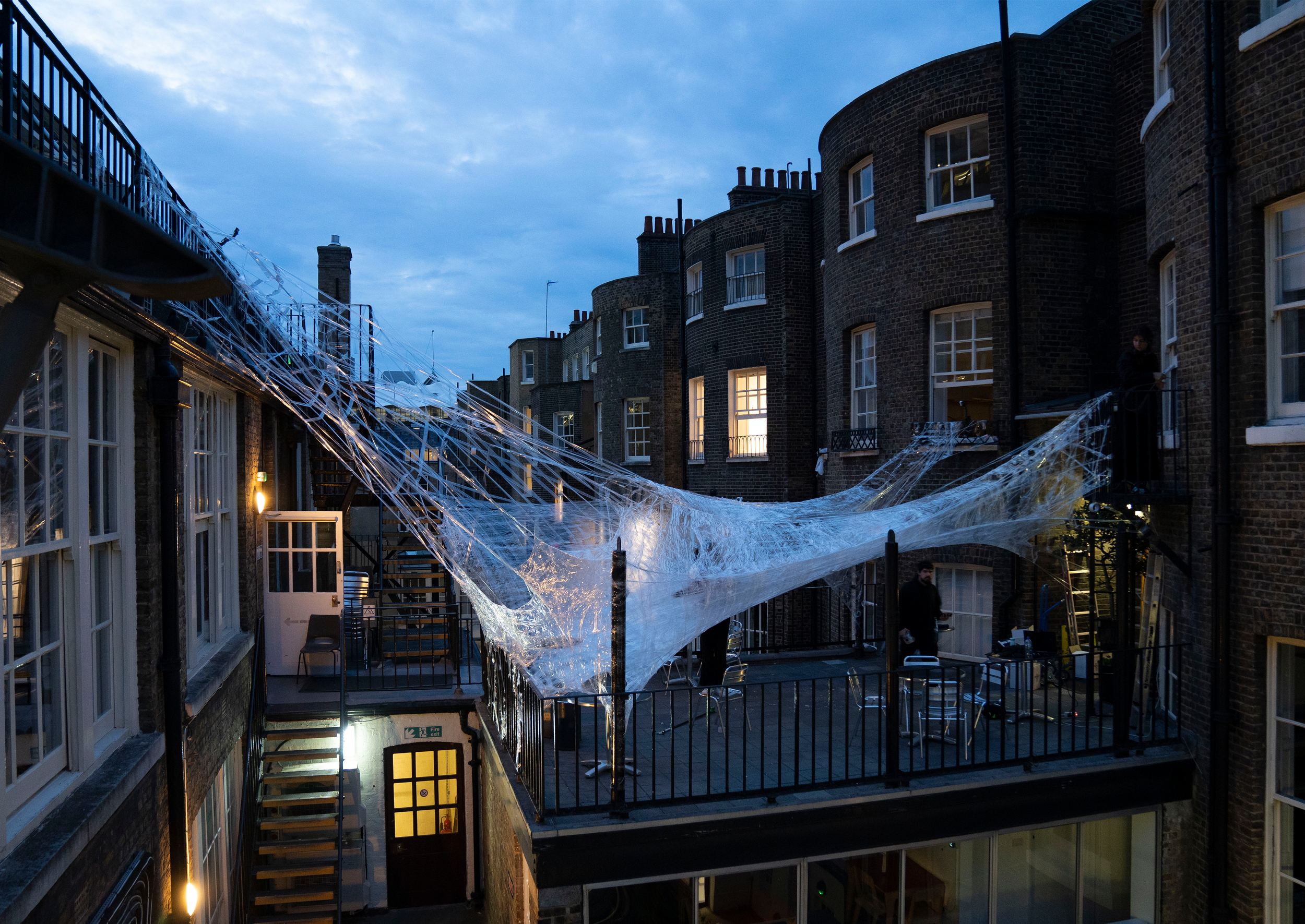
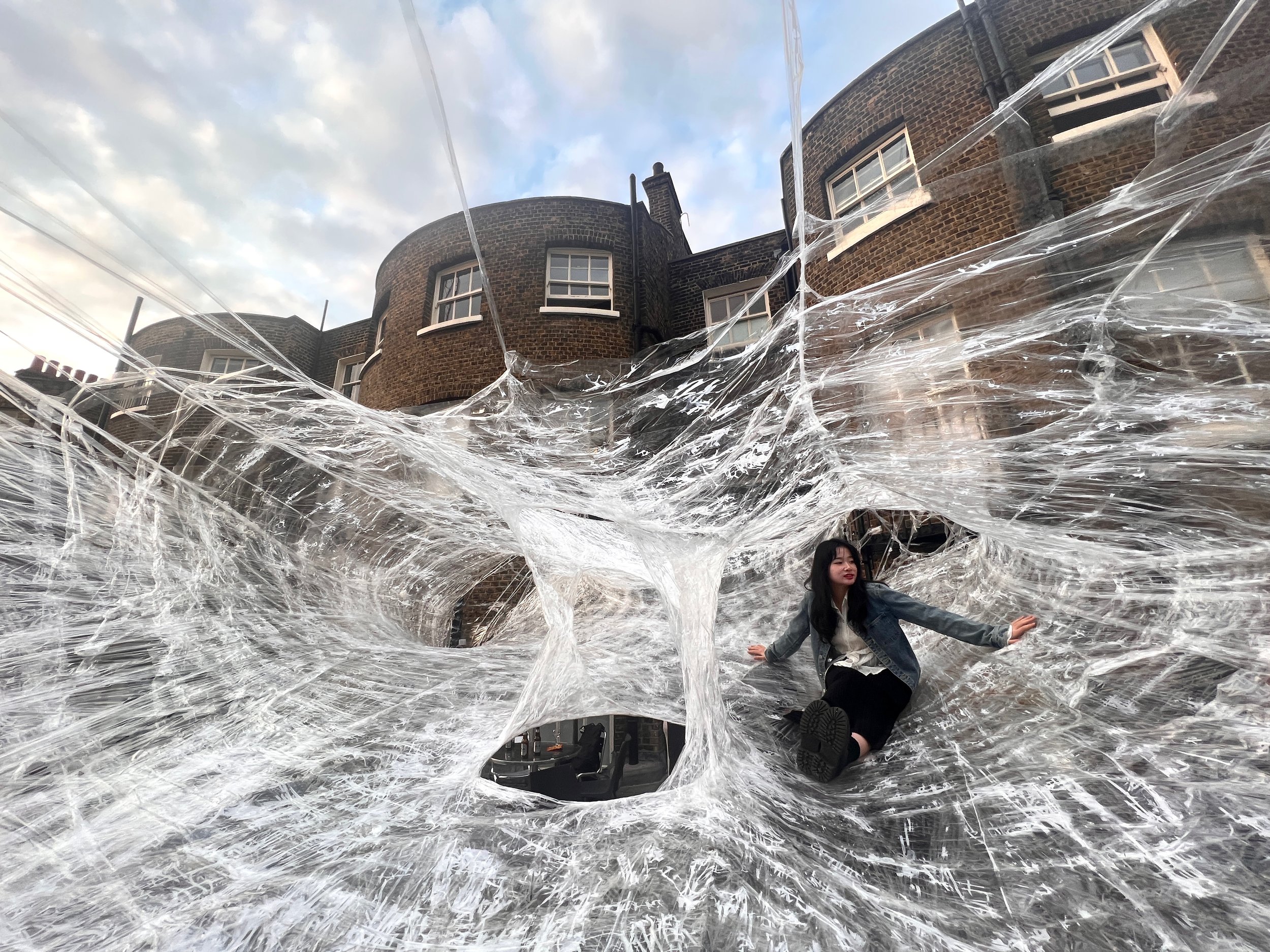
Exploring elasticity and adaptability as architectural forces that can stretch, expand, and anchor.
Studio Theodore Spyropoulos
Tutors Hanjun Kim, Octavian Mihai Gheorghiu, Apostolos Despotidis
Team Panayiotis Ioakim, Yifan Yang, Carole El Danaf, Jayanaveenaa Periyasamy
The history of architecture seems to offer a consistent fascination with the idea of connecting buildings and transcending the limitations of ground-level urban life. This desire to elevate the human experience of the city, remained largely unrealized, existing more as a tantalizing dream than a practical reality. For the concept of bridging and aerial connectivity to become more than just an abstract notion; Meta(x)is’ approach demanded a rethinking of existing infrastructure and a fundamental urban design shift.
Through studying the micro-organism of silkworms we extracted two phenomena in which we saw the opportunity for a paradigm shift or as a behavioural model in architecture. One phenomenon involved the silkworm using one continuous line deposition in order to construct space. Pertinently, the behaviour of the line retained an elasticity and flexibility to stretch, stick, expand or anchor. While we experimented extensively, we also learnt that silkworms exhibit a collective behaviour. This enables, through pheromones, an exchange of information creating an infrastructural network that can be used as strategy for the silkworms to collectively move.
Meta(x)is interrogated this phenomenon through analogue experimentation that included an understanding how the line as a behavioural model can be used extensively to create an intelligent structure through techniques of multi-materiality and tensioning. Alongside analogue testing, we designed a machine system of generative line strategies through an agent-based system and a cables printer. Our system is capable of line deposition of elastic material, making our proto-design an automated process of creating aerial bridging within an existing infrastructure. tion between humans and the particle world becomes an emergent behaviour that we couldn’t see or manipulate before. A new atmosphere is created where the particle structure can be viewed inwardly, and nature re-arranged and reconstructed at various scales.
Our prototype yields the interplay of scale, testing the strength and intricacy of lightweight and translucent structures. An elastic adaptive temporary structure can dissolve and return to its original material state. In this way, Meta(x)is offers a new way of experiencing the city and, at the same time, addresses the ecological concerns through the material re-use.
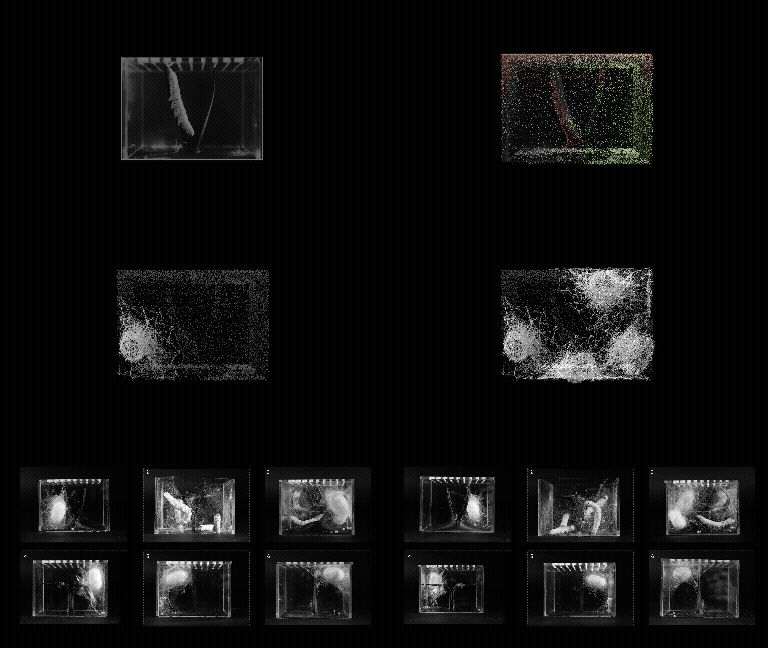
Drawing inspiration from silkworm behaviour to imagine continuous lines as intelligent spatial agents.

Envisioning lightweight, adaptive structures that dissolve and return to material origins.
Digital Simulation
Prototyping