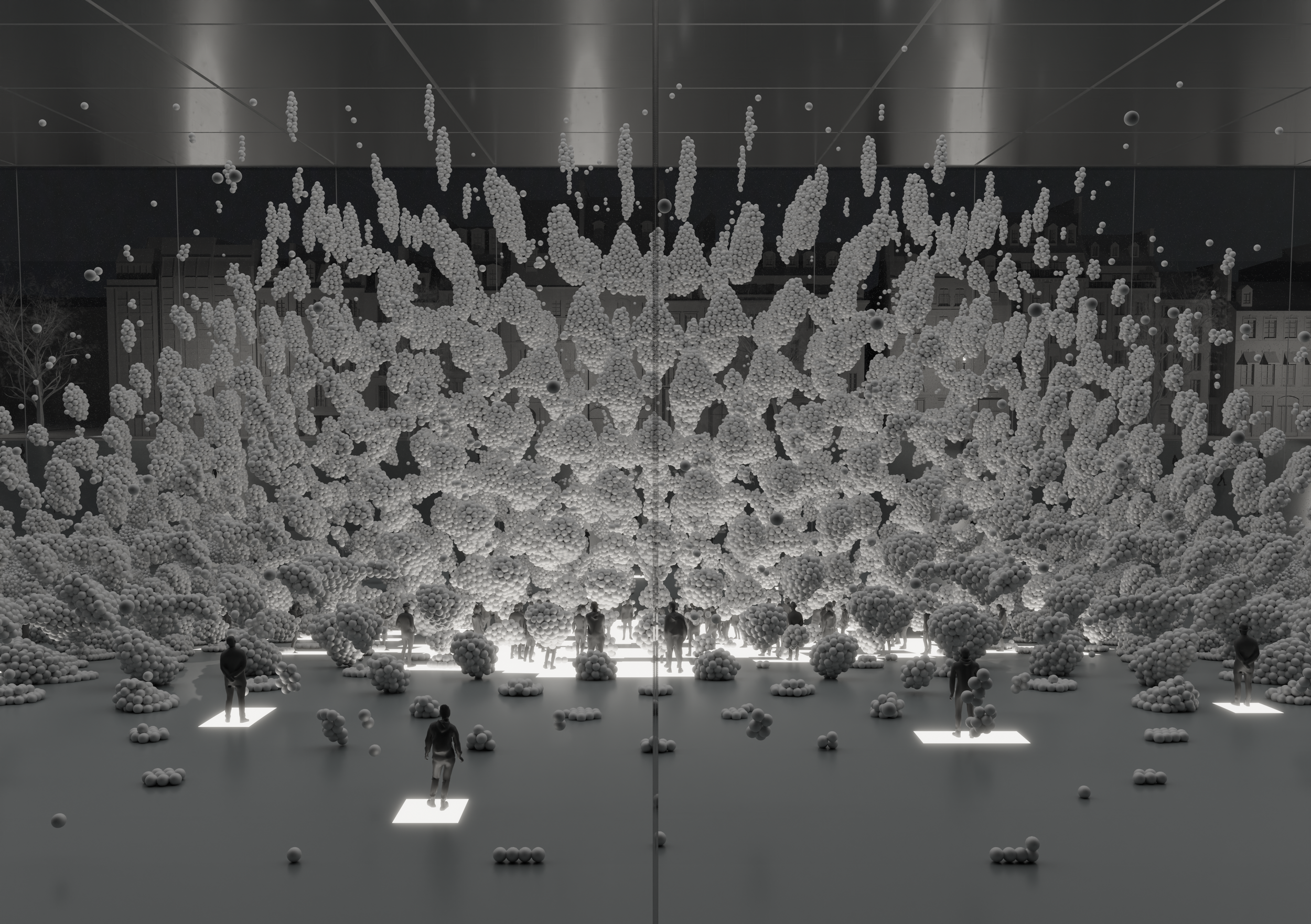
Wavescape
Exploring sound as a wave phenomenon, initially through sound frequencies, unfolding its capacity to sculpt the behaviour of matter through vibrational force.
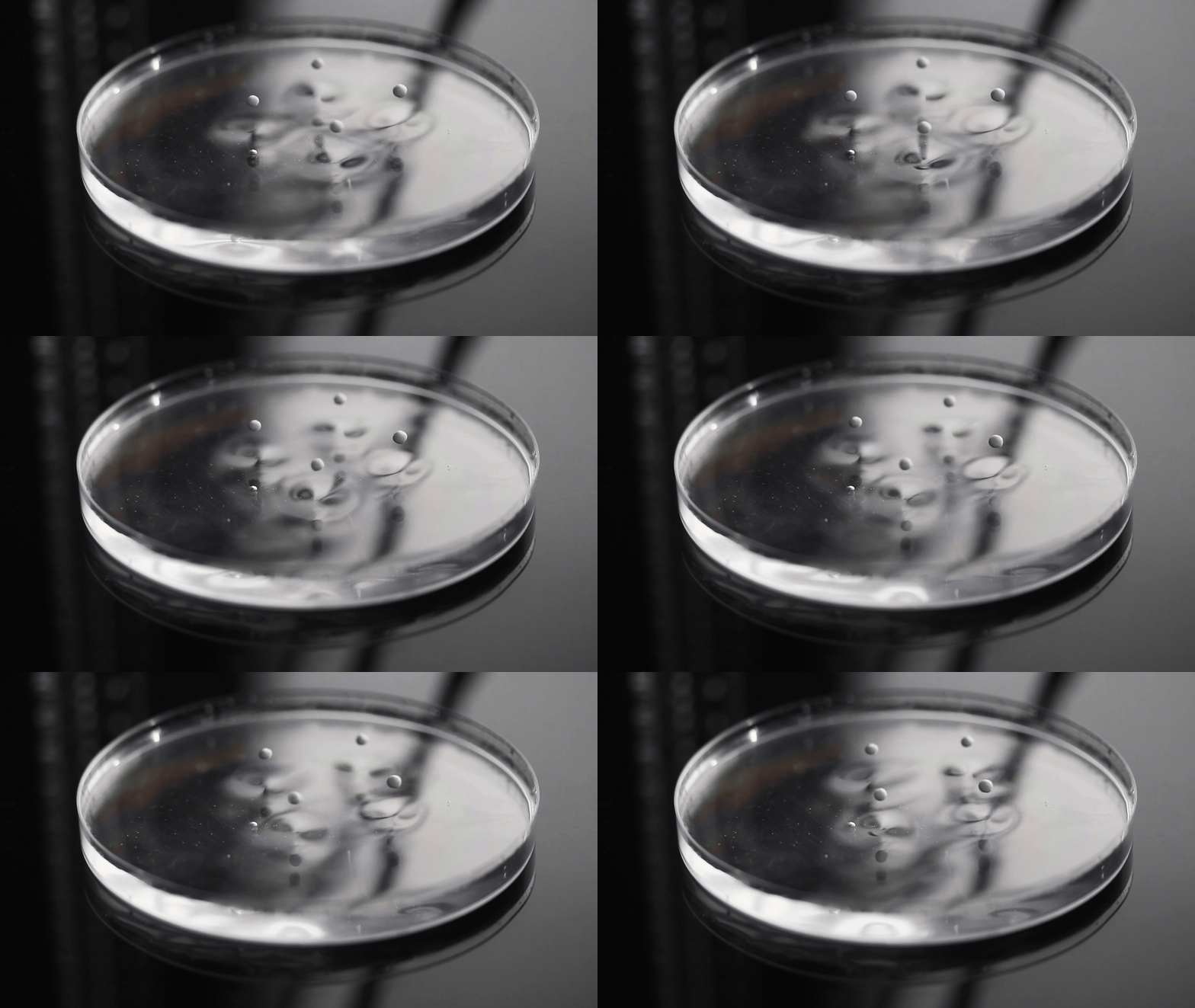
Waves, as energy in motion, emerge as the primary force that organizes matter.
Studio Theodore Spyropoulos
Tutors Hanjun Kim, Octavian Mihai Gheorghiu, Apostolos Despotidis
Team Chomdoen Chongwattananukul, Jiwoong Yang, Daria Zotova, Pavel Zotov
WaveScape explores sound as a wave phenomenon, initially through sound frequencies. Since everything has its native frequency that influences behaviour, sound was examined as an immaterial substance that cannot be seen or touched but permeates all around us, but pertinently, impacts all elements of our environment. Upon observations of particle behaviour we deduced control parameters starting with basic frequency experiments with liquid and solid. One of the important research aims, initially, was to control the environment by implementing the sound wave principles. Sound frequency is considered as the force that can structure the particle-based system environment, merging immaterial and material.
Initially different material stages were analysed to learn how particles behave when influenced by frequency and vibration. Each object’s unique natural frequencies, are determined by the materials they are made of, and influence the vibrations when disturbed. WaveScape investigated a range of mixed substances found in natural and everyday settings, including non-Newtonian fluids, viscous fluids, and crystallisation processes. We were fascinated by discovering how a fundamental frequency can bring about significant property changes transforming the matter from disorderly to orderly states.
WaveScape centres on a concept of a new nature in which the environment is decomposed and visualised as a particle-based system governed by wave forces. In this way, a wave can manipulate the particles regardless of their condition or composition. Gordon Pask suggested in 1972: “Instead of pre-programming all the possible responses of the machine, giving it an underspecified goal enables the collaboration of man and machine on a shared purpose. From this interaction, complex behaviour patterns emerge.” WaveScape seeks to develop a system in which the interaction between humans and the particle world becomes an emergent behaviour that we couldn’t see or manipulate before. A new atmosphere is created where the particle structure can be viewed inwardly, and nature re-arranged and reconstructed at various scales.
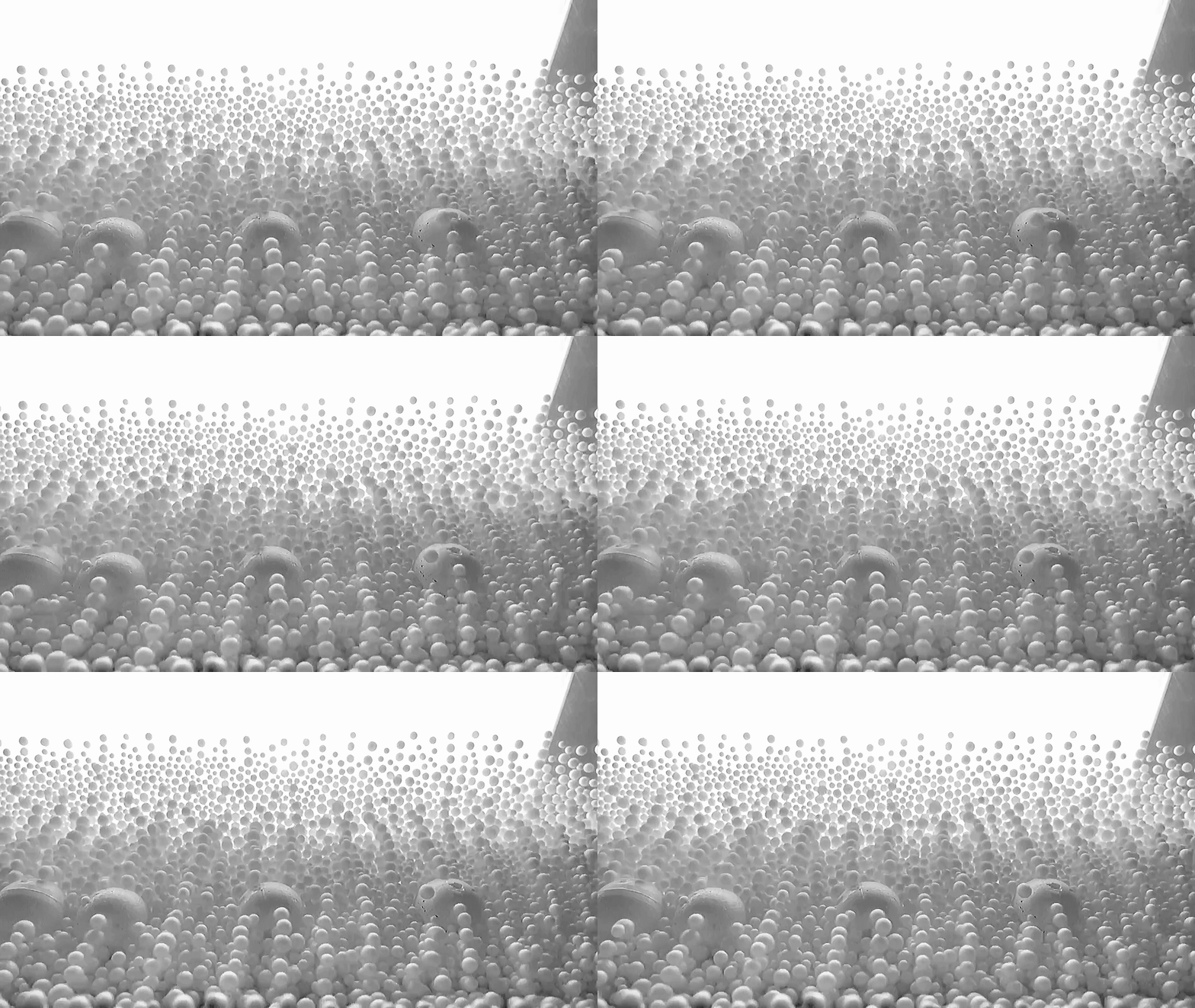
Revealing wave forces as agents of continual reorganisation, guiding particles into emergent patterns shaped by rhythm, motion, and resonance
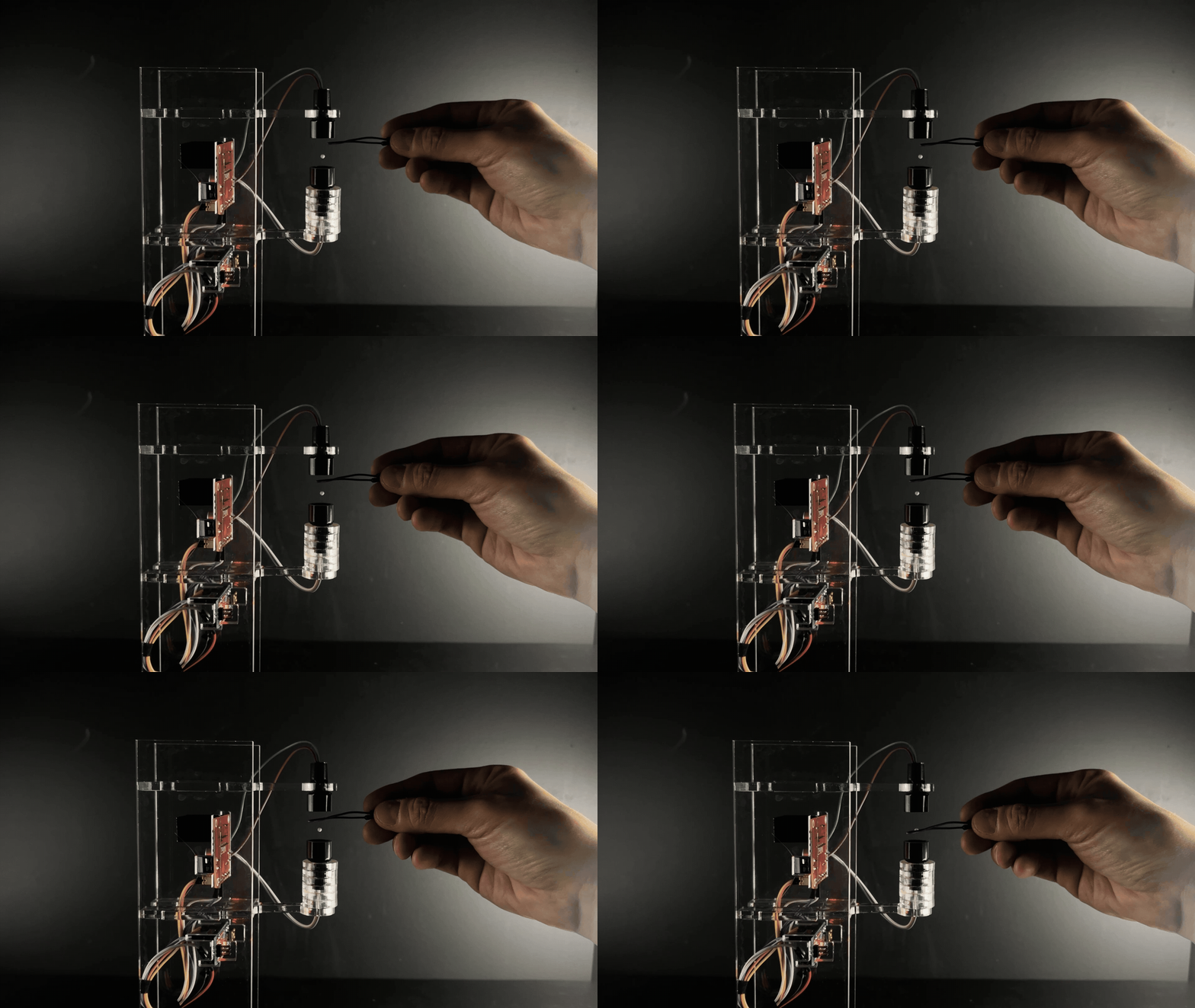
Envisioning an environment governed by vibrational logic, where matter aligns with underlying frequencies to form dynamic structures across multiple scales.
Digital Simulation
Prototyping