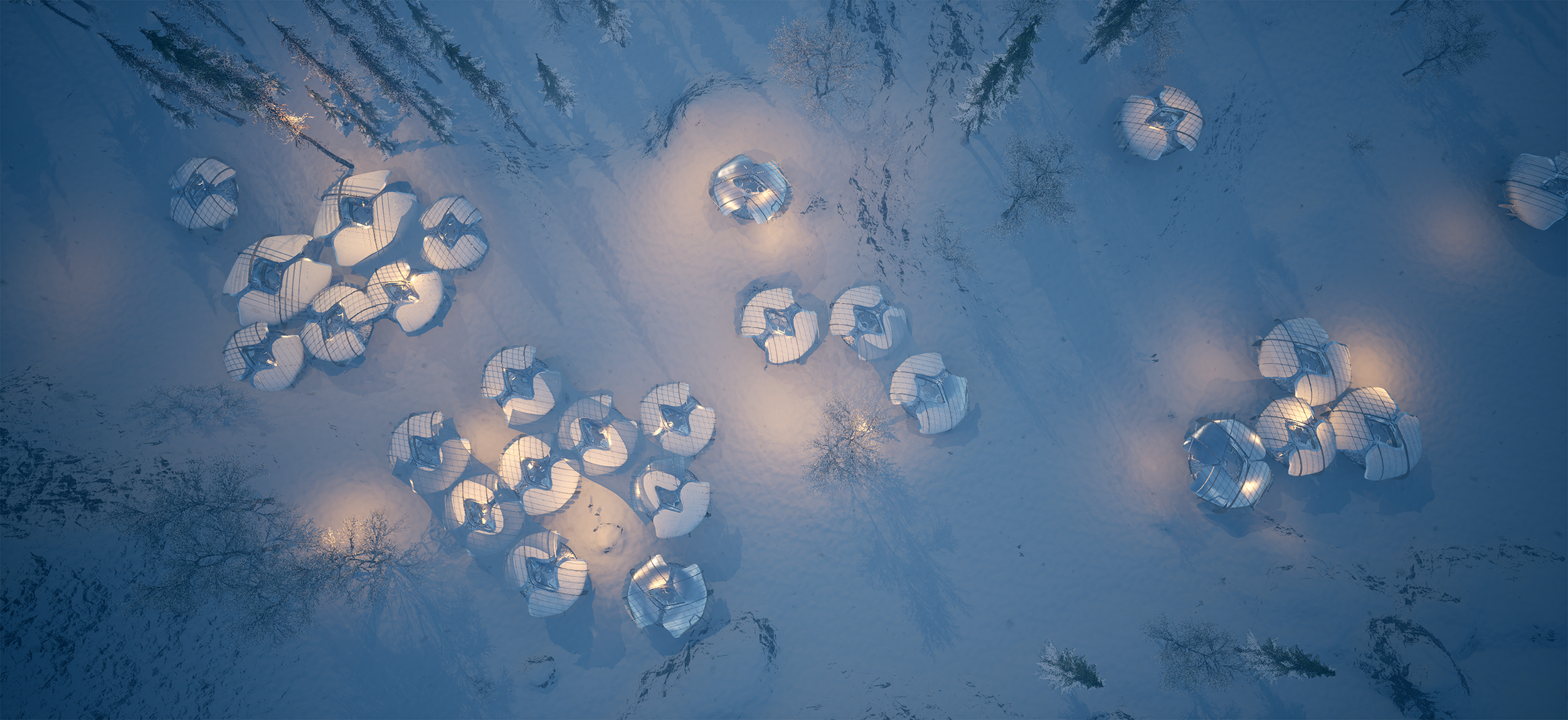
Acclimatizer
Proposes a dynamic housing system that actively adapts to extreme cold waves through deployable morphology, autonomous mobility, and collective behaviour, reframing architecture as a proactive agent within climatic instability.
Challenges the static paradigm of conventional shelter
Studio Pierandrea Angius
Tutors Tina Tsagkaratou, Angel Tenorio
Team Beiqi Gao, Haohong Ma, Jinghan Li, Xinyue Wang
Acclimatizer investigates architecture’s capacity to move from passive sheltering towards active adaptation in response to increasingly volatile climatic conditions, with a particular focus on extreme cold waves. Situated within the context of accelerating climate anomalies, population displacement, and resource instability, the project challenges the static nature of conventional architecture and proposes a dynamic, self-sufficient housing system capable of responding to environmental, social, and spatial change. Rather than treating cold waves as isolated disasters, the research frames them as recurring, systemic phenomena that demand architectural strategies able to anticipate, adapt, and evolve over time.
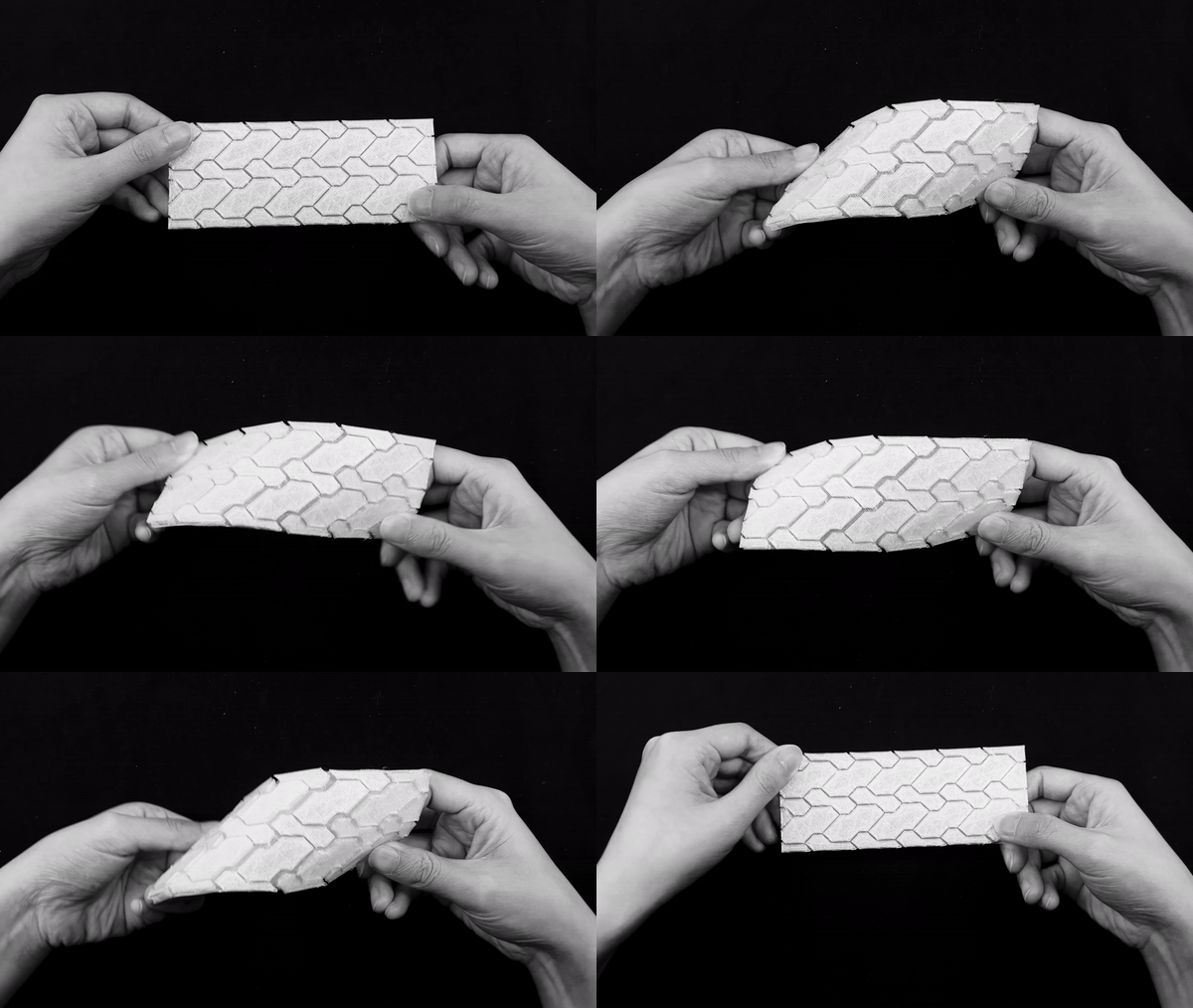
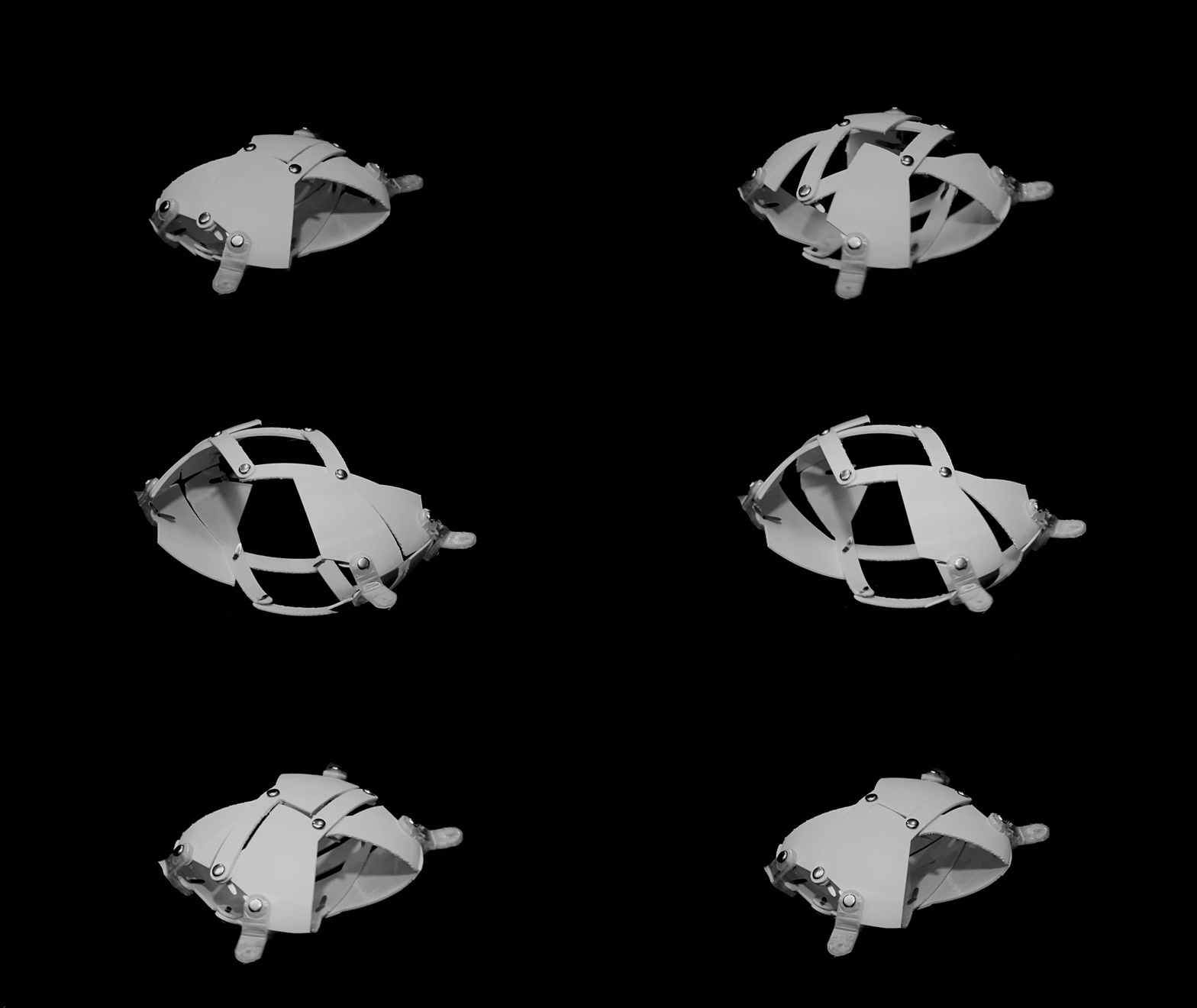
The project draws from historical precedents of cold-climate inhabitation—most notably the Inuit igloo and collective animal behaviours such as penguin huddling—to inform a model of adaptive dwelling based on mobility, aggregation, and seasonal transformation. At the scale of the unit, bistable and deployable structures allow volumes to expand or contract according to temperature, wind, and snow load, optimising thermal performance and energy efficiency. Interior spaces transform concurrently, using soft structures and reconfigurable furniture to accommodate shifting individual and collective needs.
At the community scale, Acclimatizer proposes a responsive settlement logic in which autonomous units monitor environmental data, migrate to optimal locations, and cluster in extreme conditions to share resources and minimise heat loss. Snow is reinterpreted not only as a threat, but as an active material—used for insulation, energy generation, and structural stabilisation. Through the integration of climatic intelligence, adaptive morphology, and collective behaviour, Acclimatizer outlines a resilient prototype for future inhabitation under climate uncertainty.
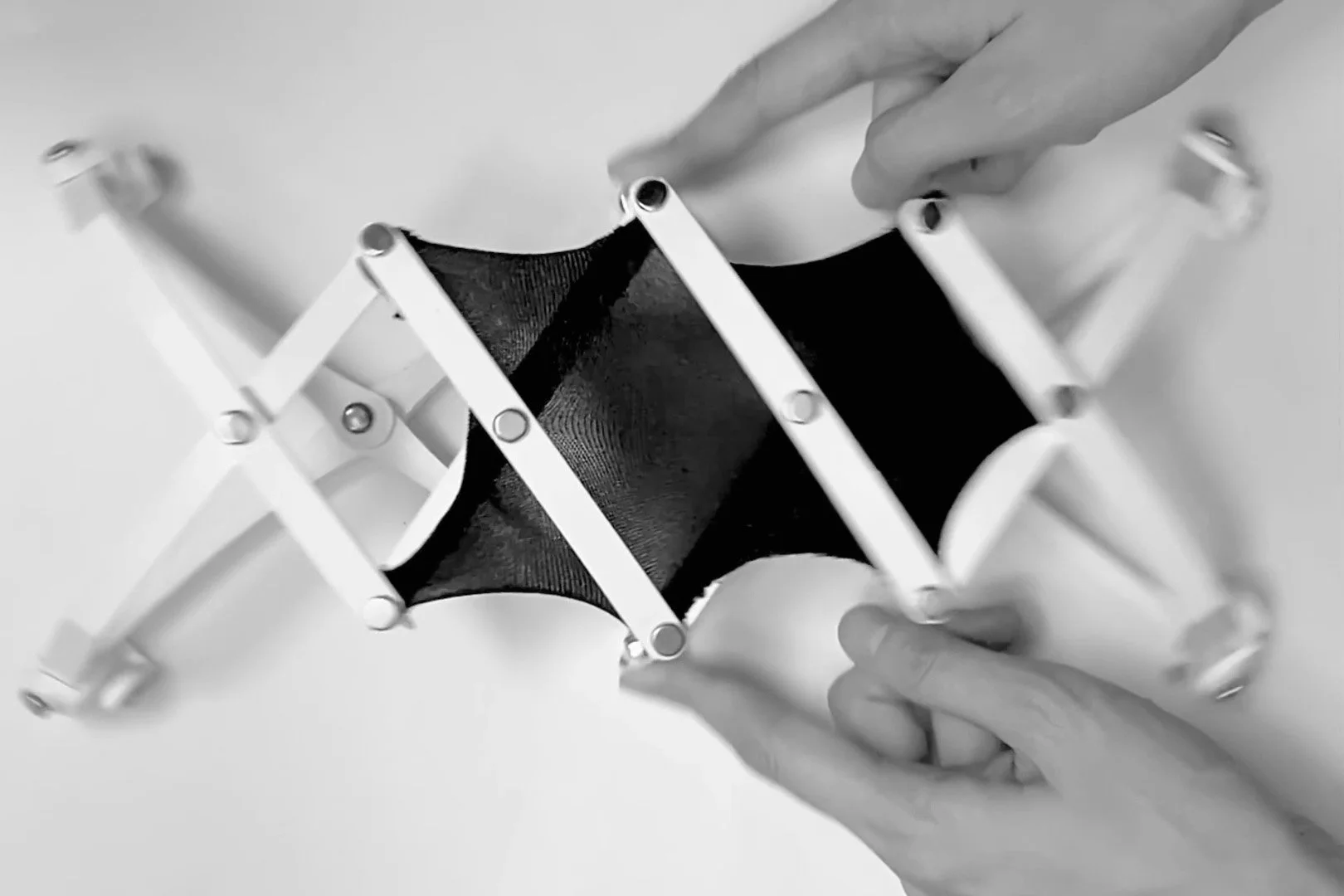
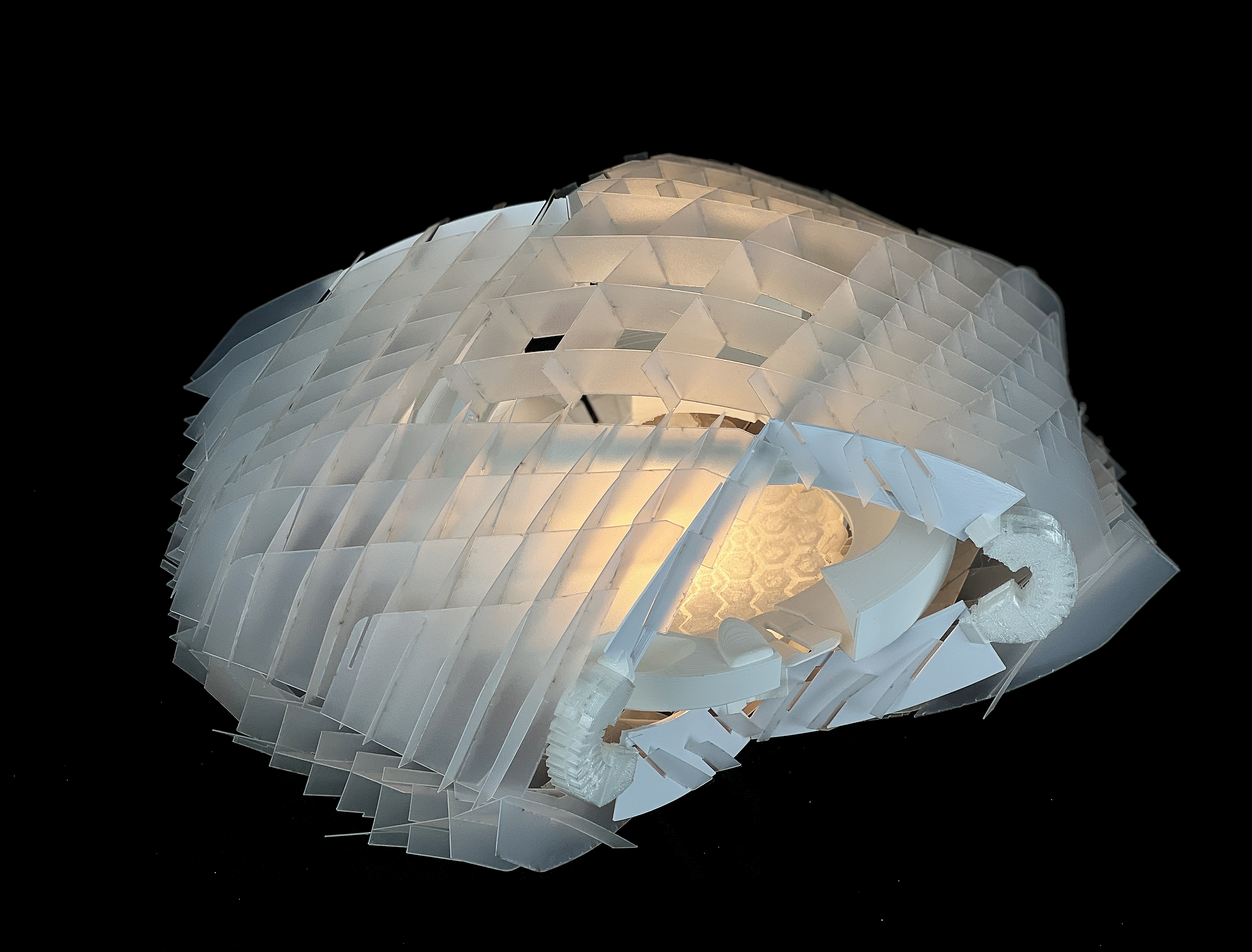
Develops bistable, transformable units that respond to temperature, wind, and snow load while reconfiguring interior space and energy performance
Scales individual adaptability into self-organising communities that migrate, aggregate, and share resources in response to seasonal and extreme climatic conditions
Digital Simulation
Physical Prototyping