Industrialis 3d
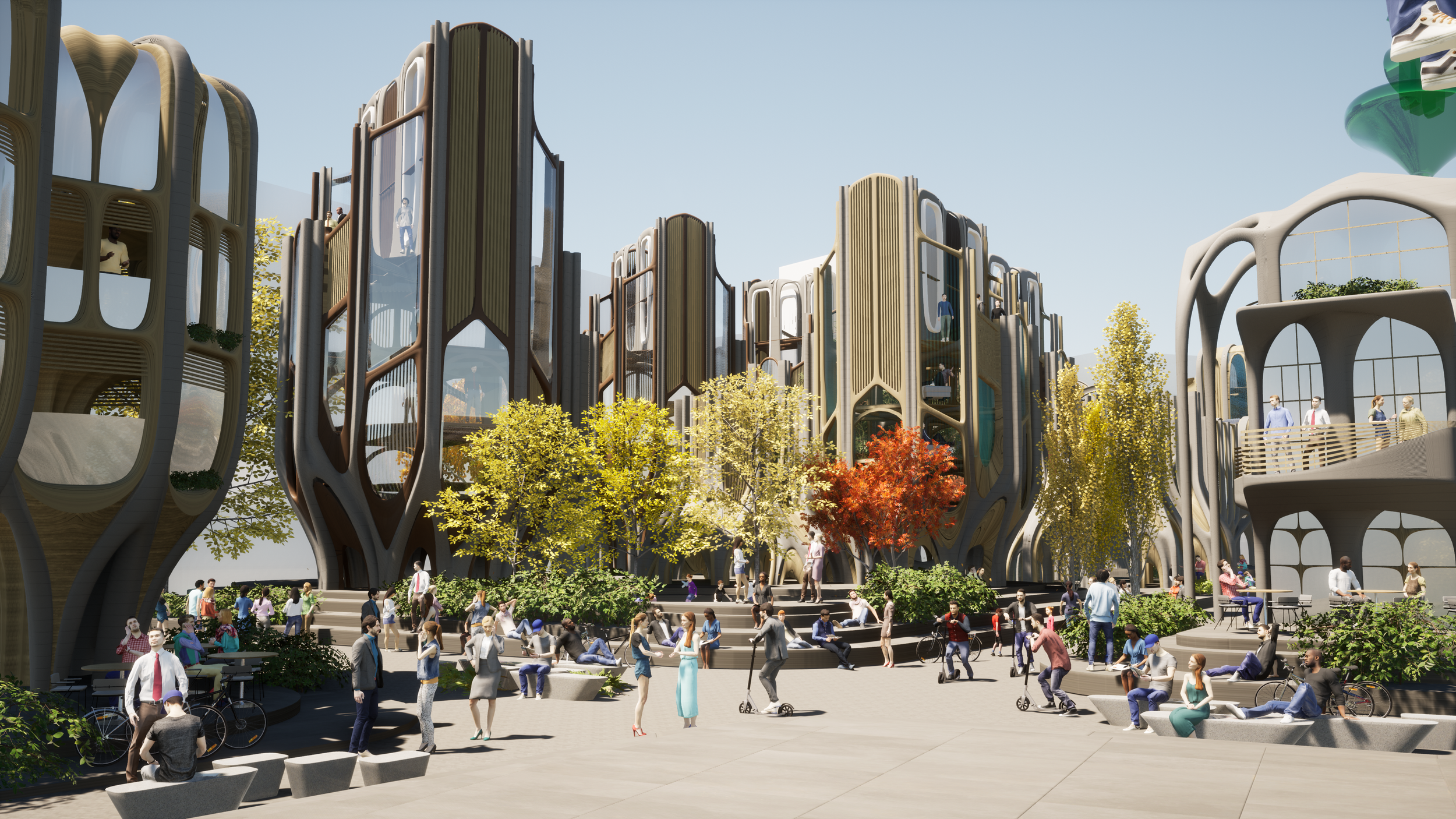
Proposes a citizen-centric, pedestrian-dominated urban ecology that rethinks contemporary cities through democratic participation, generative planning, and cyber-physical systems to restore social interaction, adaptability, and human-scale experience.
Reprioritises walkability and micro-mobility over car-oriented infrastructure to enhance public life and environmental performance
Studio Shajay Bhooshan / Alicia Nahmad Vasquez
Team Dilara Yurttas, Akash Clive Dr, Mauricio Villagra Dill’Erva
This project proposes a comprehensive rethinking of contemporary urbanism through a citizen-centric, pedestrian-dominated framework that places people, social interaction, and lived experience at the core of city-making. Responding to the failures of car-oriented urban development, it envisions cities as dynamic socio-technical ecologies in which mobility, public space, architecture, and governance are coherently integrated. The project argues that urban quality and productivity emerge when cities are designed at walking pace, enabling everyday encounters, inclusivity, and accessibility while reducing environmental and social costs associated with private vehicle dependency.
At the urban scale, the research advances a generative planning approach that prioritises walkability, micro-mobility, and mixed-use density. Streets are reconceived not as traffic corridors but as active public spaces that support social exchange, economic activity, and civic life. Superblock-based urban organisation, informed by spatial analysis and agent-based simulations, restructures circulation networks to shorten walking distances and increase experiential richness. This results in a more connected, adaptable, and resilient urban fabric capable of responding to diverse and evolving citizen needs.
Central to the project is a participatory contribution platform that merges cyber-physical systems, game theory, and real-time data. This platform enables citizens, designers, and investors to collaboratively shape urban environments through rule-based decision-making processes. By gamifying planning and design, the system democratises urban development, allowing individual preferences and collective intelligence to directly inform spatial outcomes across multiple scales. Urban form is thus generated through bottom-up participation rather than imposed through rigid top-down planning.
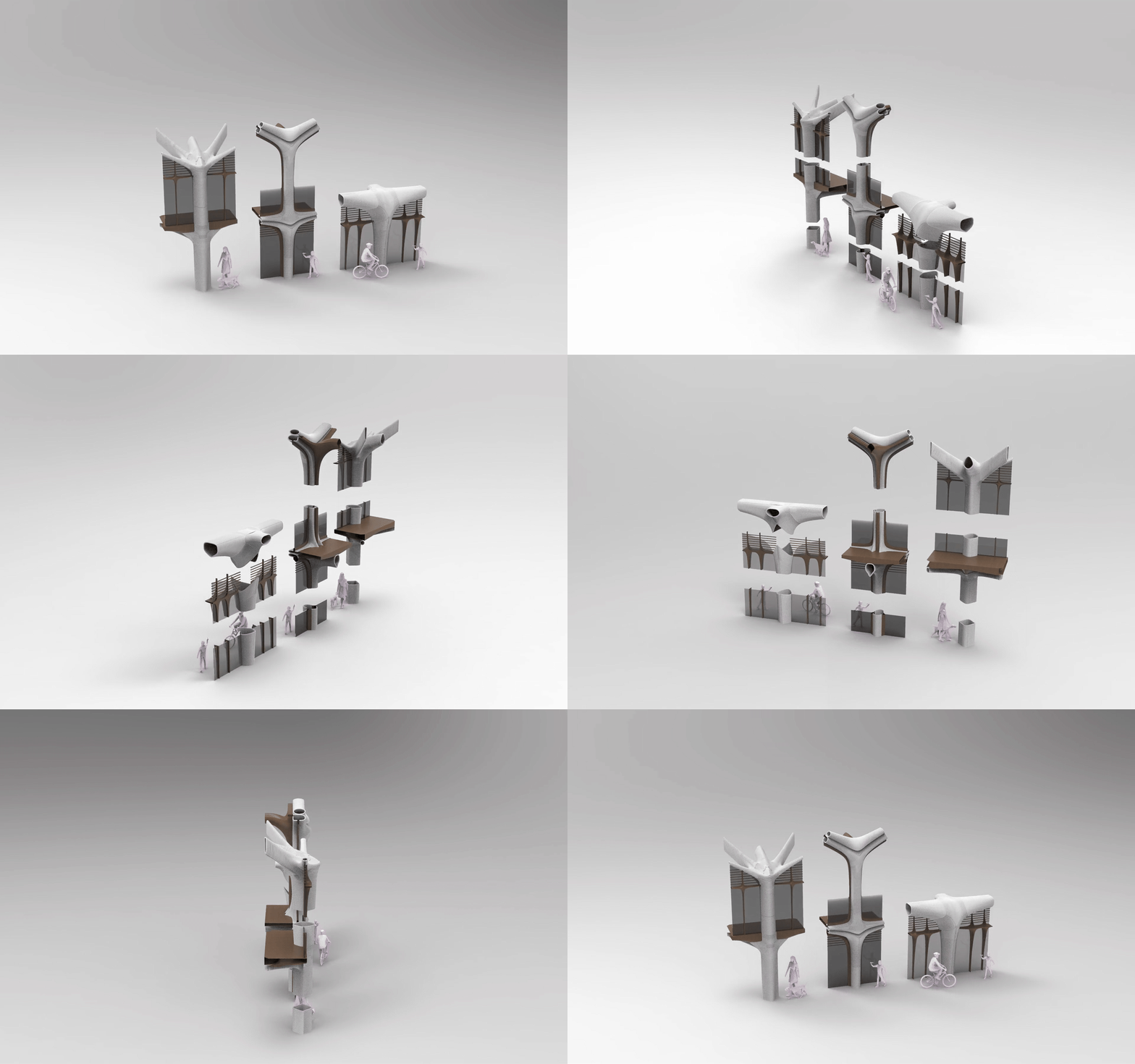
At the architectural and construction scale, the project integrates advanced additive manufacturing techniques with sustainable, locally sourced, and recycled materials. Material- and fabrication-aware geometries enable mass customisation, structural efficiency, and minimal material waste. By aligning digital design, fabrication logic, and urban organisation, the project delivers a holistic model for future cities—one that is adaptable, socially responsive, environmentally responsible, and fundamentally shaped by the people who inhabit it.
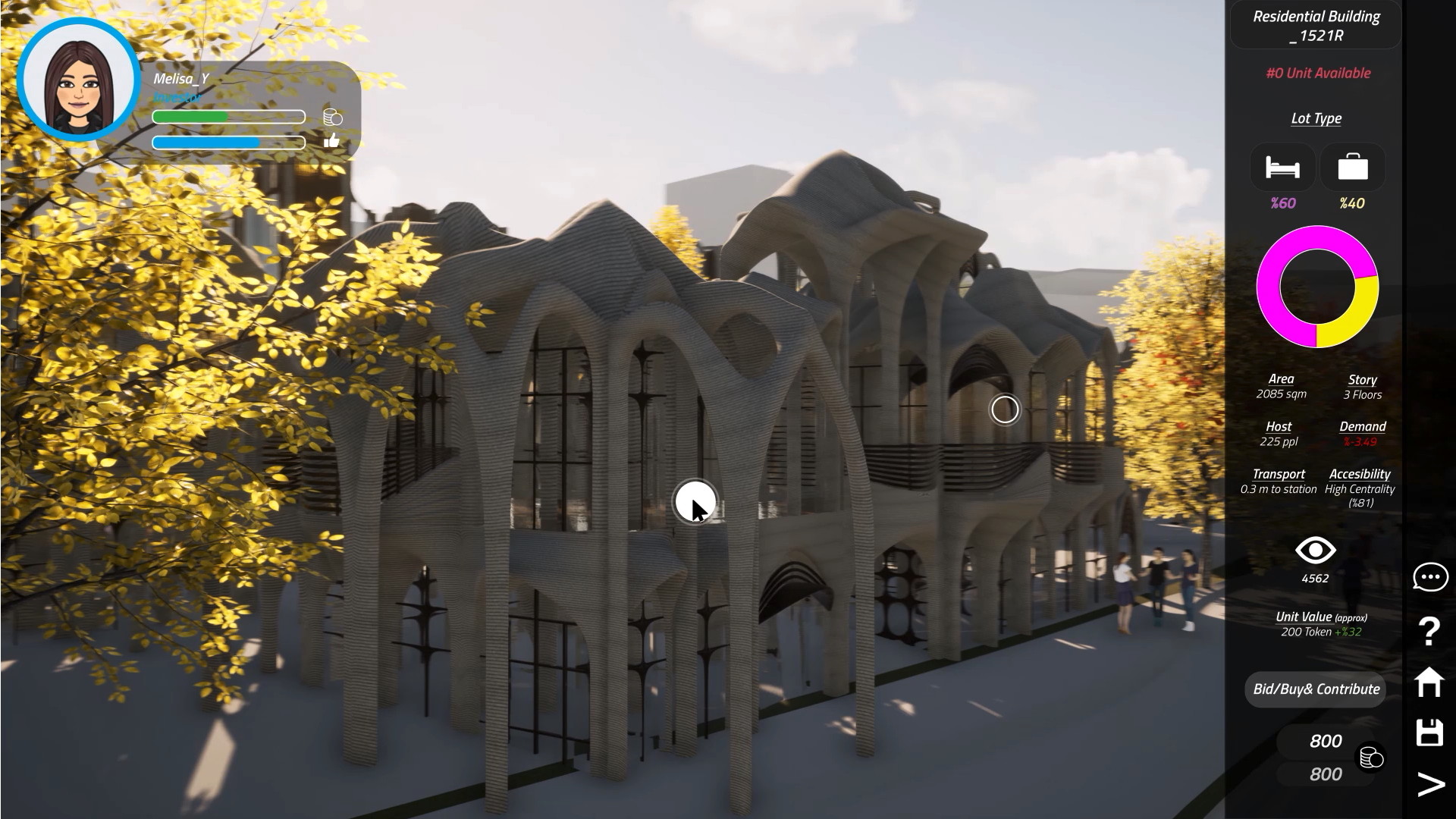
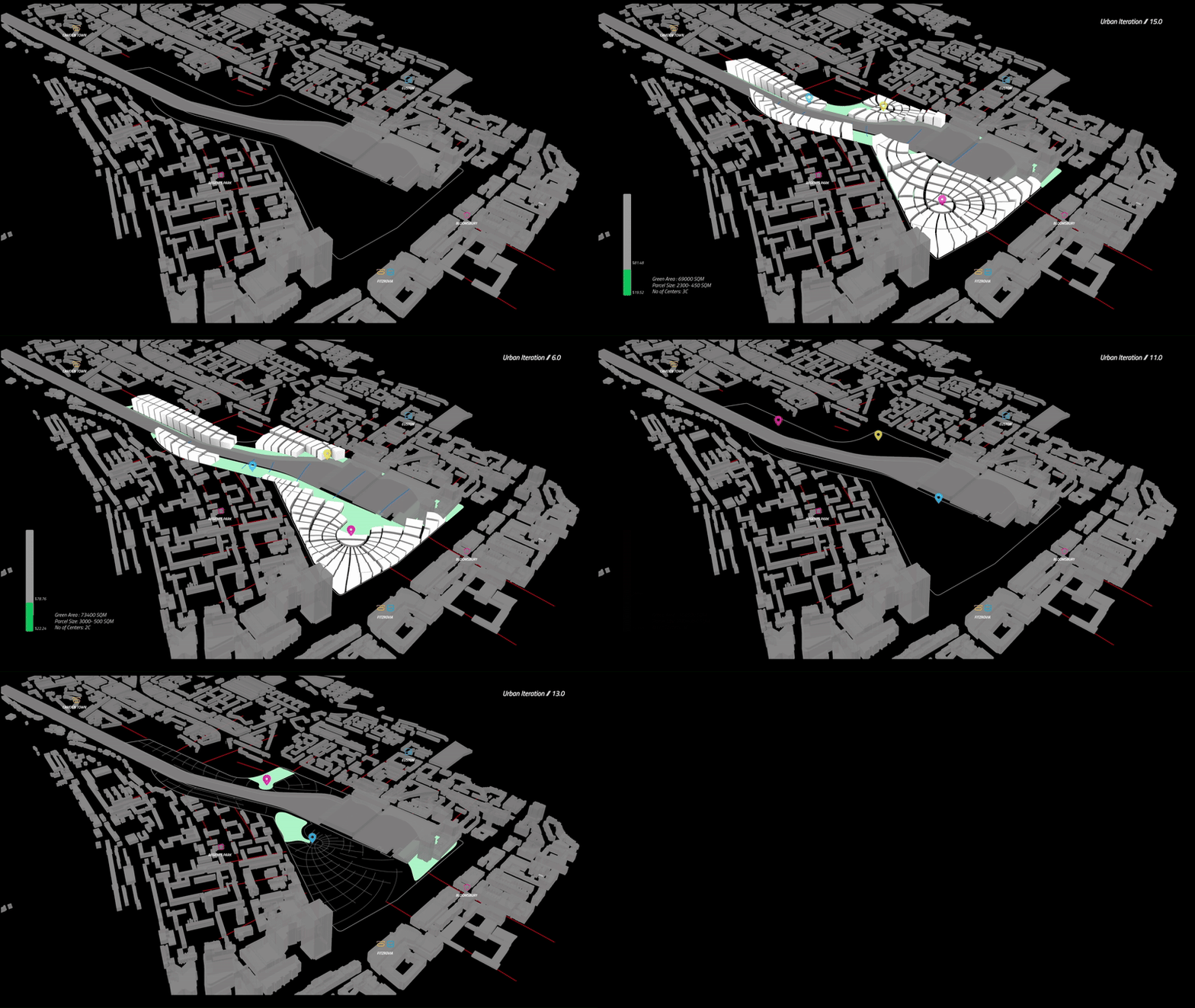
Develops a participatory planning platform that uses game-based logic and real-time data to enable collective decision-making across multiple urban scales
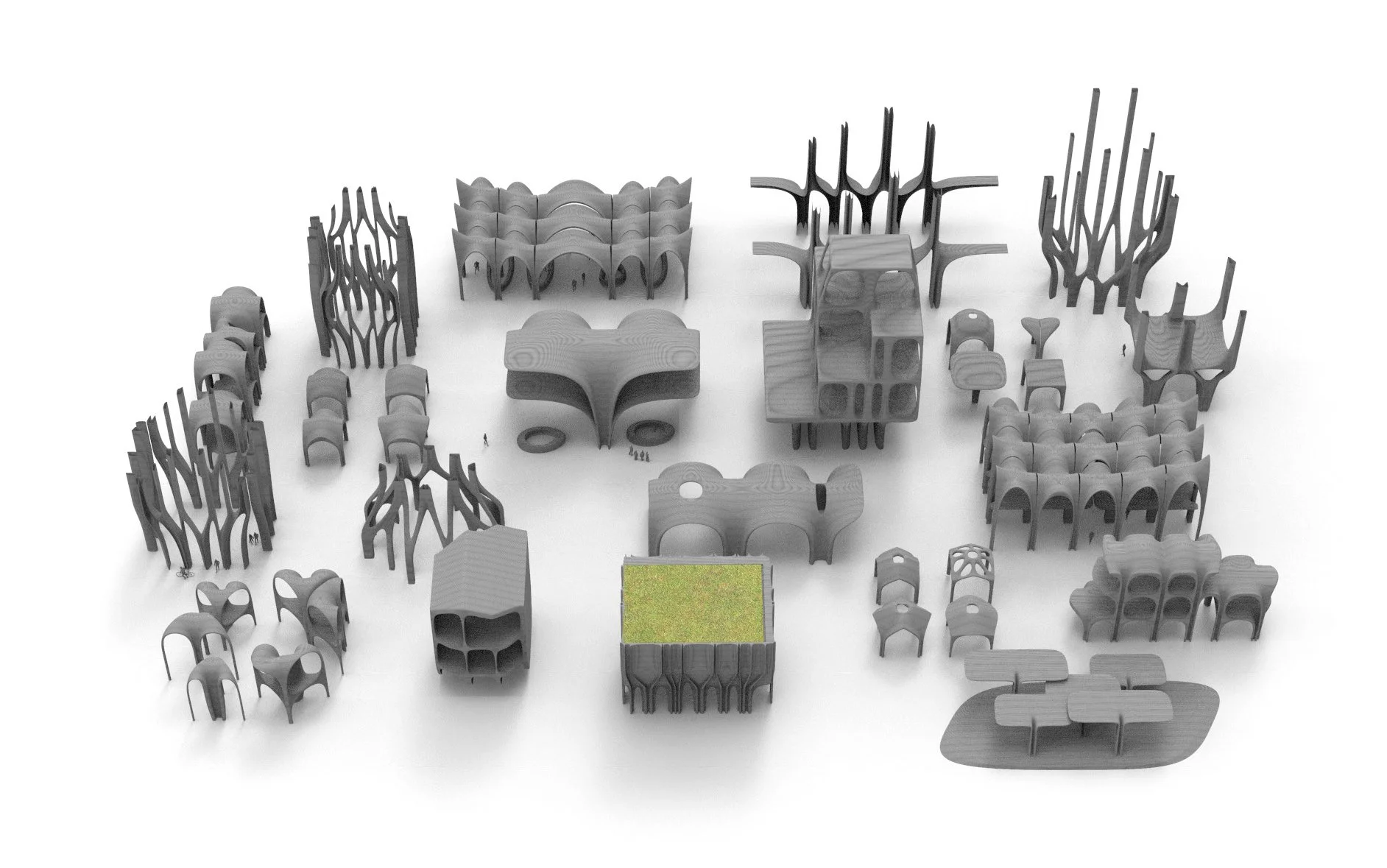
Integrates additive manufacturing and sustainable, locally sourced materials to deliver mass-customised, resilient, and reconfigurable architectural systems
Gamification
Digital Planning