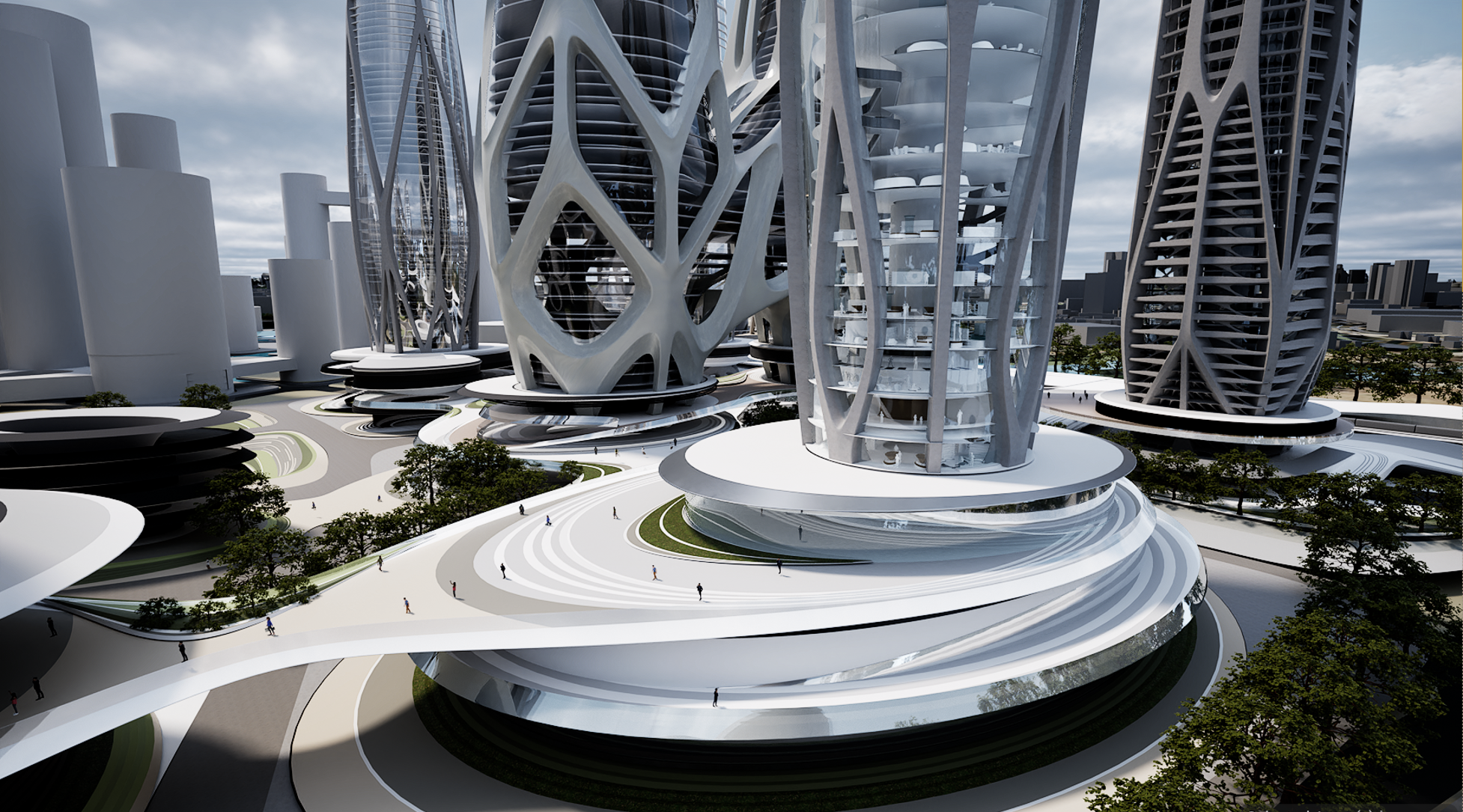
Meta Cities
Proposes a hyper-density, vertically layered urban blueprint that extends existing cities through participatory, procedural, and transit-oriented infill rather than horizontal expansion
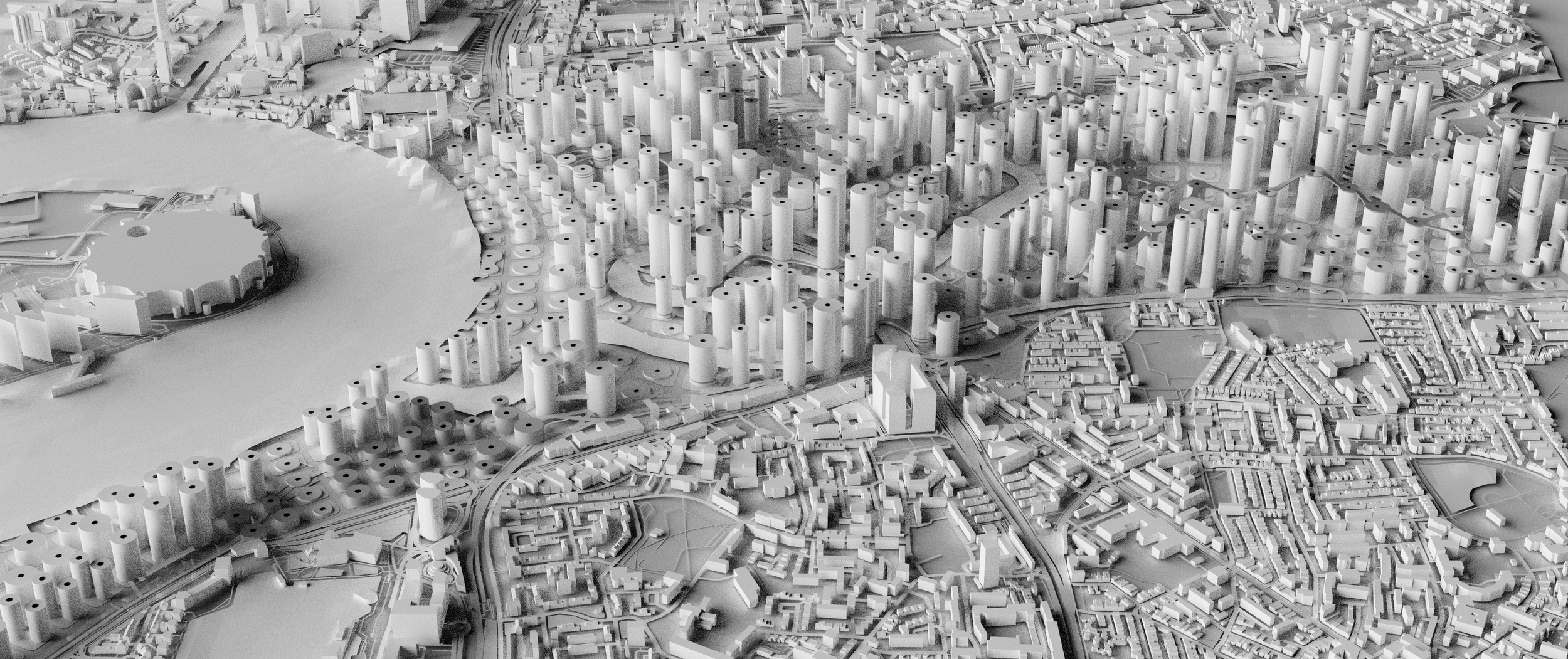
Reframes density as a driver of social interaction and urban vitality
Studio Shajay Bhooshan
Tutors Henry Louth, Keerti Manney
Team Aria Torabi, Karan Lotwala, Krish Nasta, Shubham Kale
Meta Cities proposes a prototypical urban framework for extending existing metropolitan infrastructures to accommodate extreme population growth while maintaining social, economic, and spatial quality. Developed within the Design Research Laboratory agenda of Social Ecologies, the project responds to rapid urbanisation, demographic shifts, and declining inner-city populations by reframing density as a generative resource rather than a constraint. Instead of horizontal expansion or tabula rasa planning, it advocates hyper-density infill through vertical urbanism, transit-oriented development, and the reuse of existing infrastructural networks.
The research draws on historical and theoretical precedents—including megastructures, metabolic urbanism, compact cities, and mixed-use mega-blocks—to argue that cities operate as multi-layered systems extending far beyond the ground plane. By activating rooftops, elevated circulation, subterranean infrastructure, and vertical public realms, the project reconceptualises the urban block as a stacked, programmable socio-spatial system. Density is treated not merely as a numerical increase, but as a catalyst for interaction, productivity, and urban vitality.
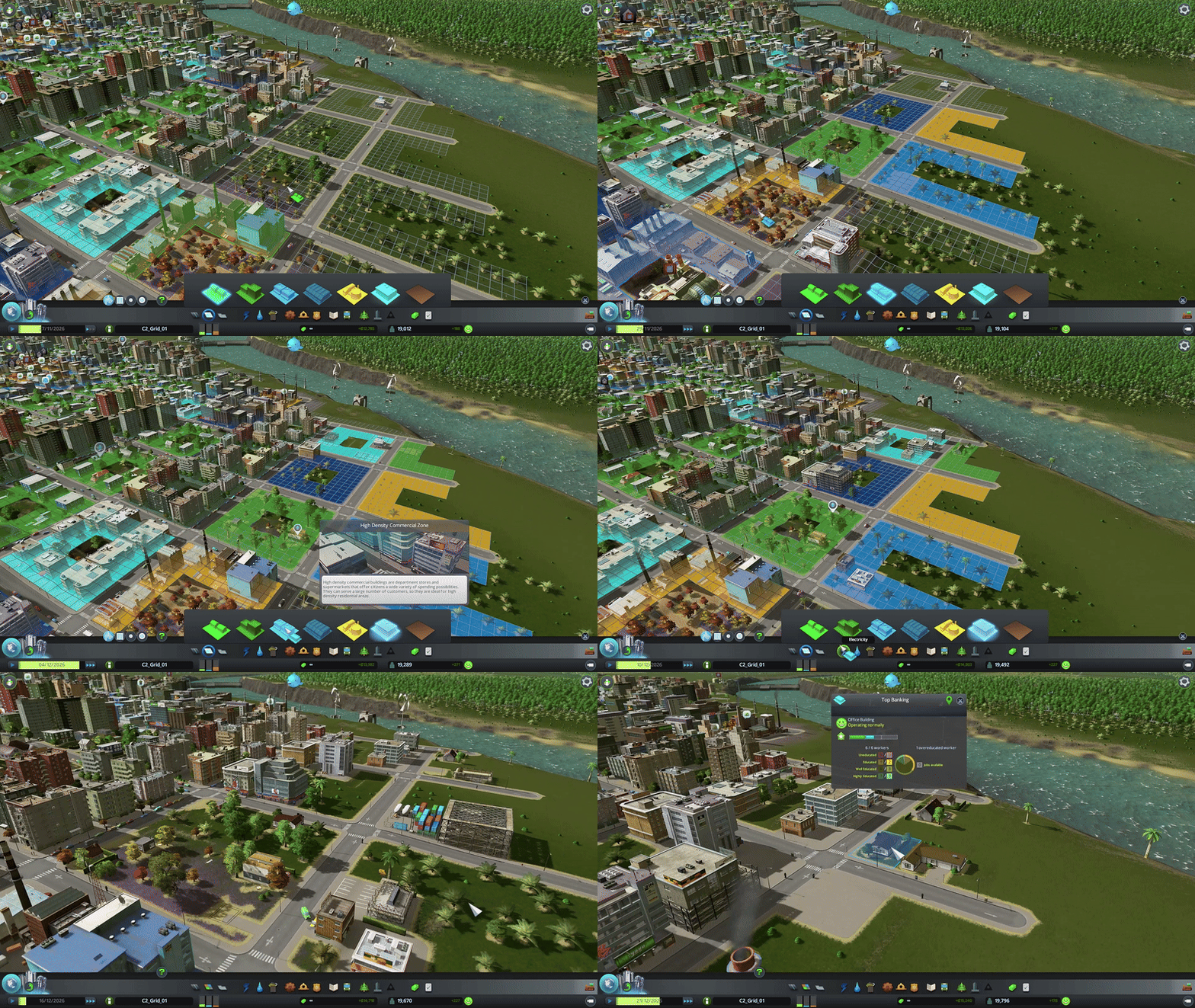
Central to the proposal is a procedural, game-based approach to city-making. Agent-based simulations, decision trees, and participatory logics are employed to model citizen behaviour, happiness indices, land-use dynamics, and economic flows. These systems allow urban form to emerge through rule-based negotiation rather than fixed masterplans, aligning digital simulation with physical urban growth.
Ultimately, Meta Cities positions architecture as a mediator between governance, behaviour, and construction. By integrating participatory agency, procedural urbanism, and scalable industrial systems, the project outlines a resilient and adaptive model for extending cities to a meta-scale—capable of absorbing large populations while remaining liveable, inclusive, and contextually grounded.
Employs game-based simulations and agent logic to align citizen behaviour, urban form, and economic performance
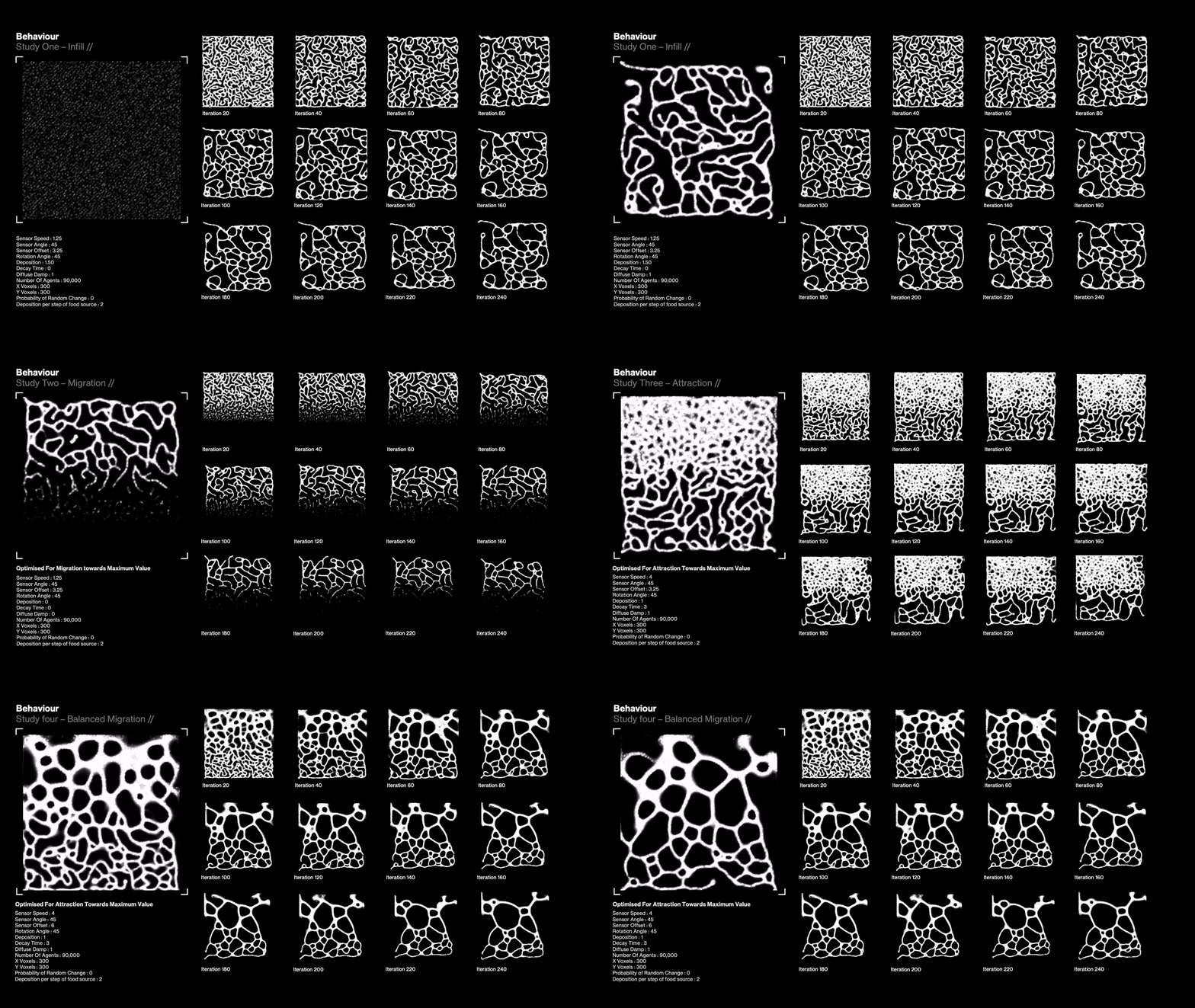
Integrates architectural geometry and circular industrial construction to deliver scalable, adaptable city-making systems
Gamification