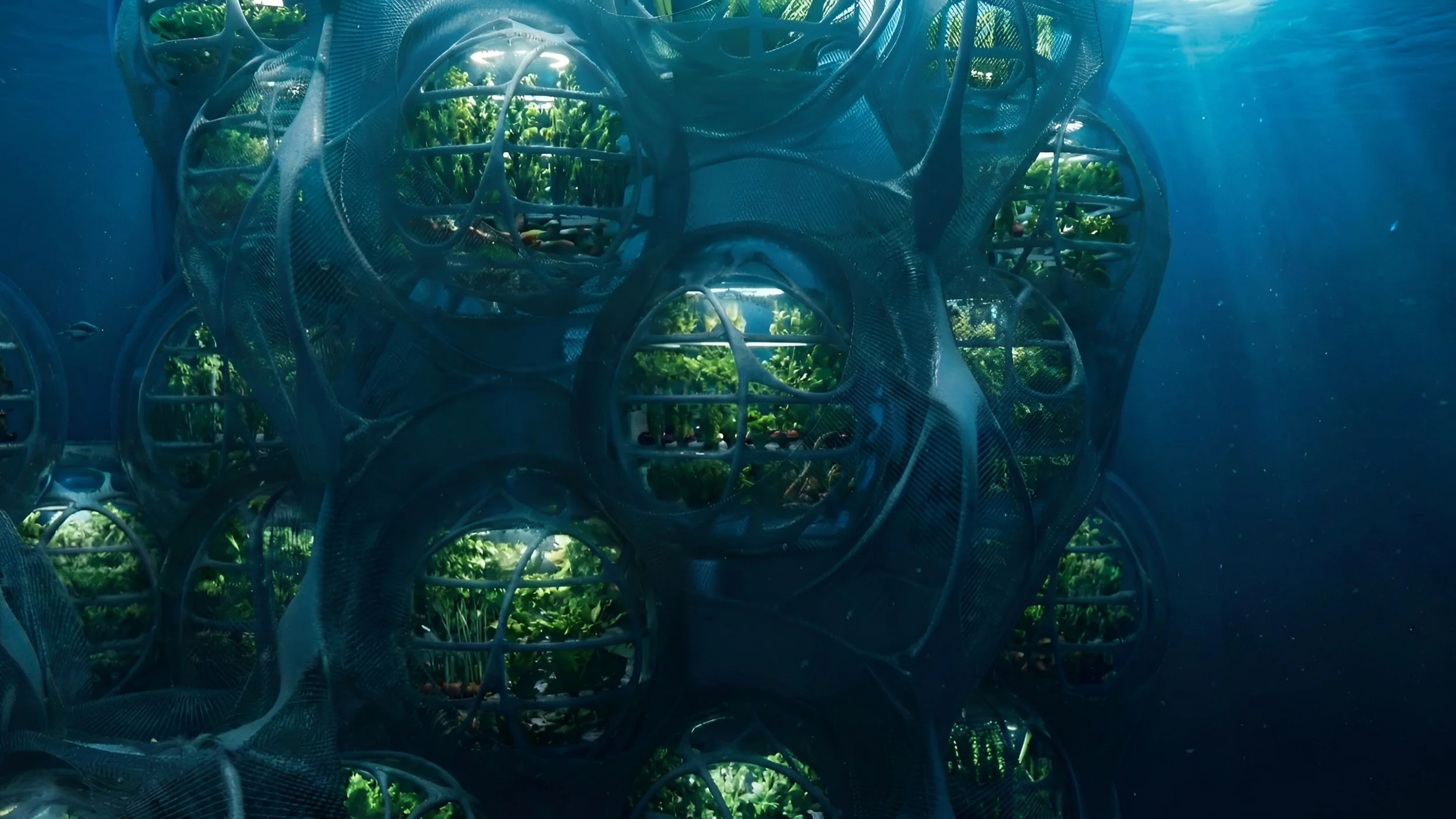
Nautilus
Positioning architecture as an active agent within climate responsive and resource constrained environments.
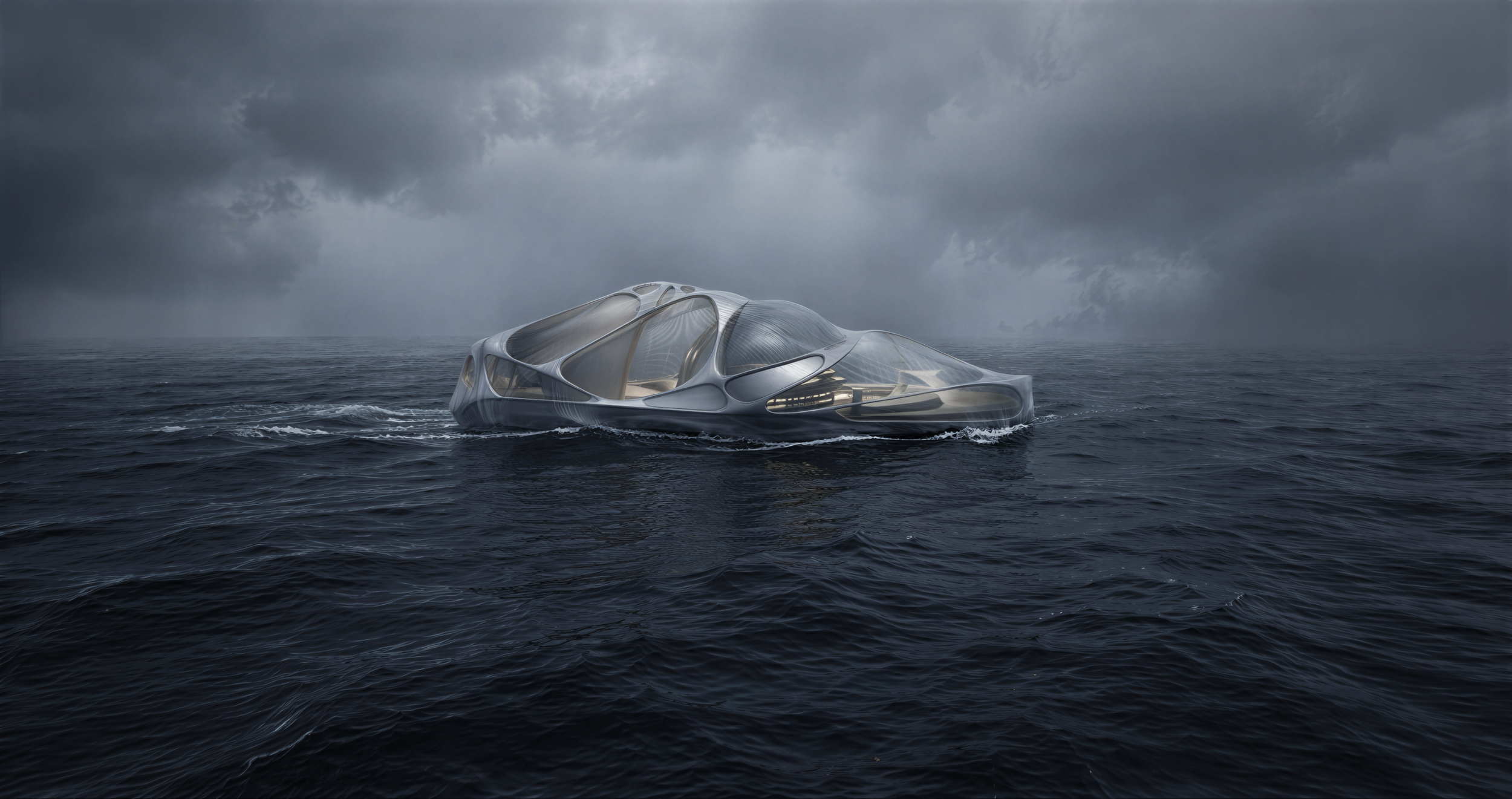
Reframing the ocean as an operative field shaped by energy flows and material exchanges.
Studio Pierandrea Angius
Tutors Ashwin Shah, Angel Tenorio
Team Rahul Raj Choorakad, Sriram Natarajan, Susanna Rachel Shajan, Yi Zhou
Project Nautilus positions architecture as an active agent responding to climate change and resource scarcity, operating across ecological, spatial, and cultural scales. Through the intersecting lenses of conservation, industrial production, and human ecology, the project challenges conventional architectural roles and explores how built systems can engage dynamically with environmental processes rather than merely occupy space. Rather than treating the ocean as a passive backdrop for human intervention, Nautilus reframes the sea as an operative field shaped by energy flows, material exchanges, and infrastructural networks.
The project investigates how environmental and climatic conditions can be visualised, measured, and translated into architectural and industrial systems that actively respond to fluctuating forces such as currents, tides, and resource cycles. By examining material ecologies, production logics, and environmental feedback mechanisms, Nautilus proposes speculative yet grounded models of sustainable development capable of functioning at sea level under conditions of uncertainty, instability, and finite resources. Jeju Island serves as a critical testing ground for these ideas. Its limited land availability, shallow seabed conditions, and strong wind and marine energy potential intersect with its strategic location within East Asian maritime and industrial networks.
These converging factors position Jeju as a site where ocean-based expansion emerges not as an alternative to terrestrial development, but as a necessary adaptive response to climatic, ecological, and geopolitical pressures. Within this context, architecture becomes embedded within evolving industrial ecologies and complex human–environment relationships, negotiating between extraction, production, habitation, and conservation. In this shifting and volatile terrain, Project Nautilus asks whether architecture can move beyond representation and static form to operate as a responsive, ethical, and accountable system—one capable of participating in climate-responsive infrastructures and contributing meaningfully to sustainable futures at sea.
Translating environmental data into responsive spatial and industrial systems.
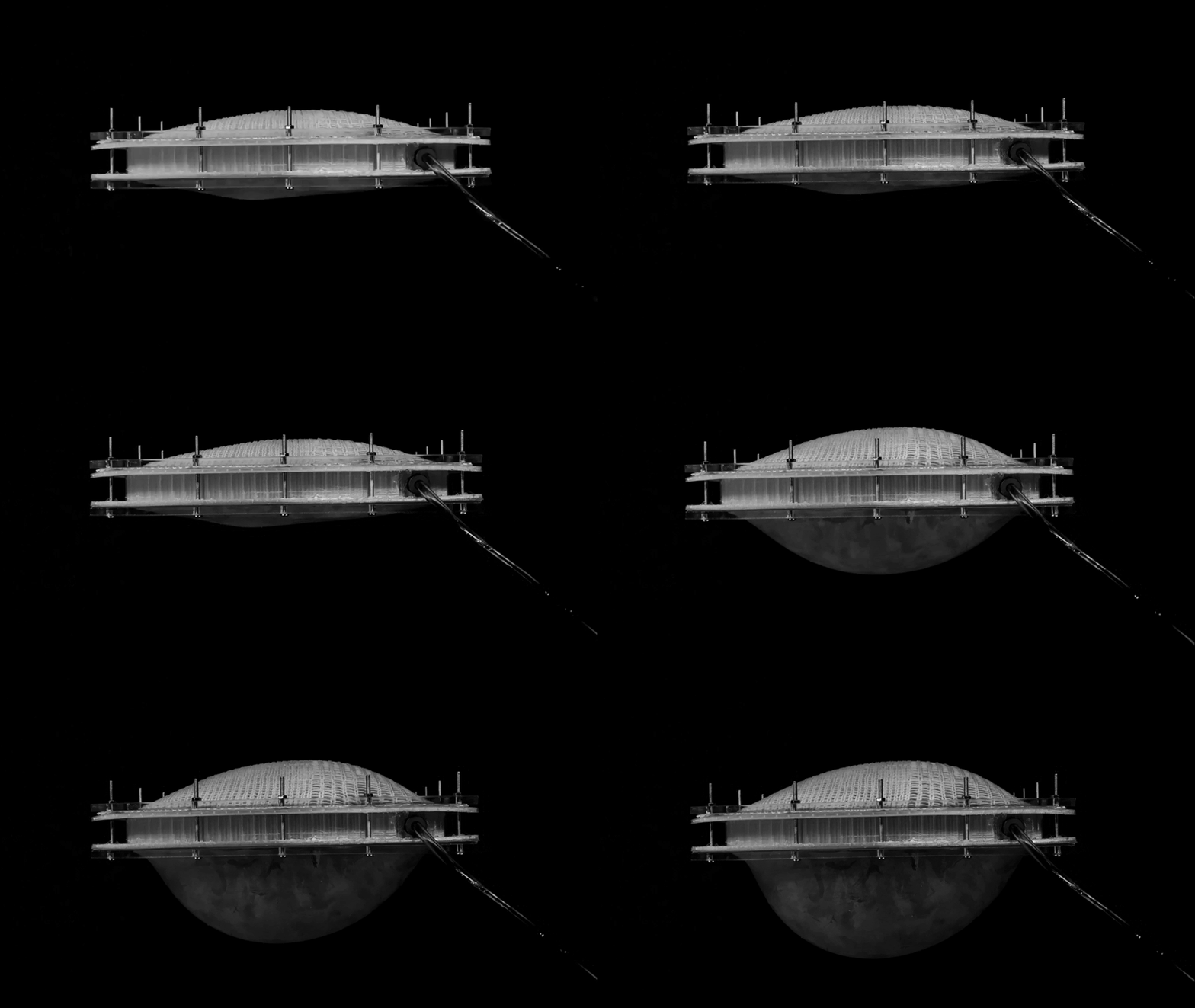
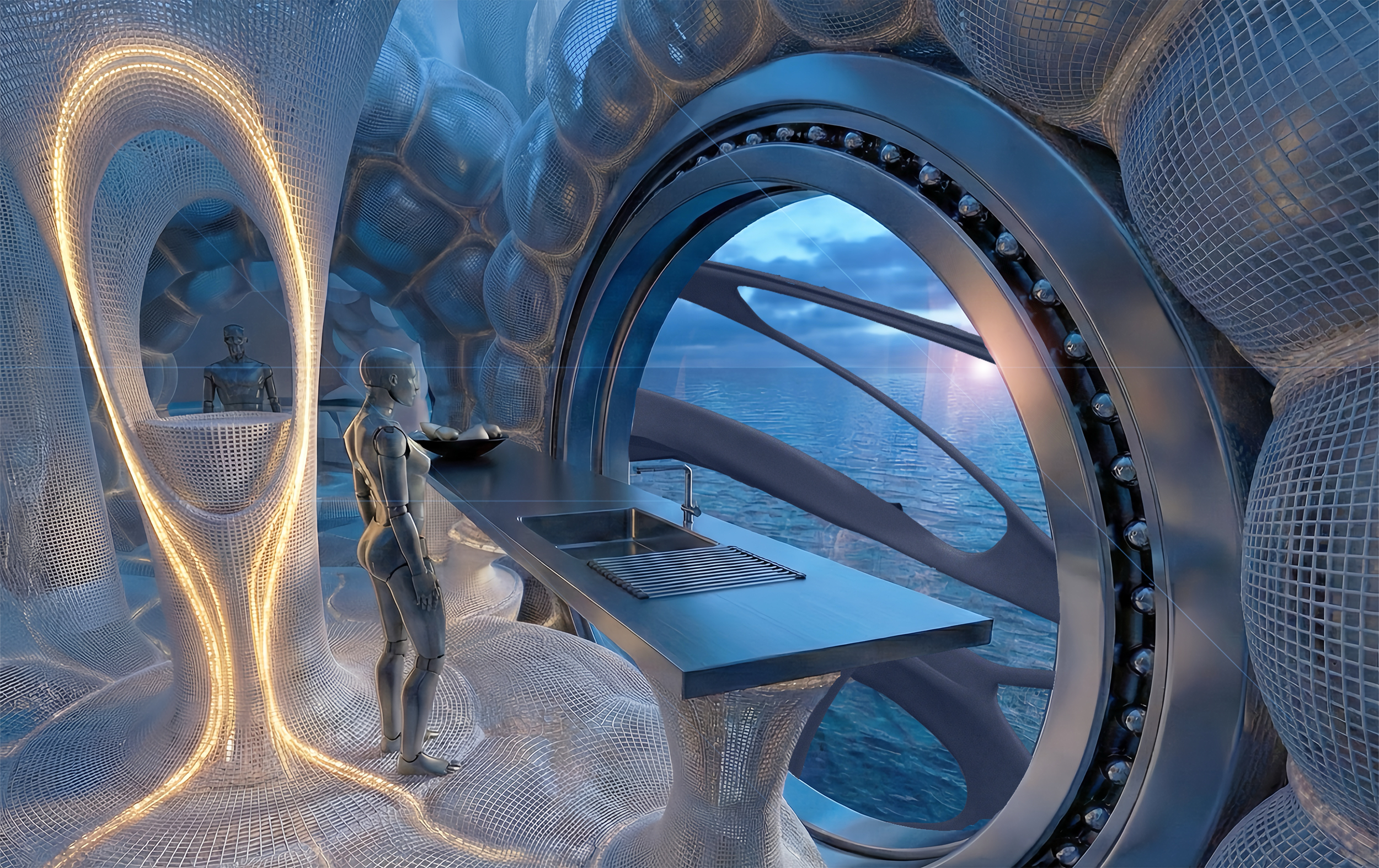
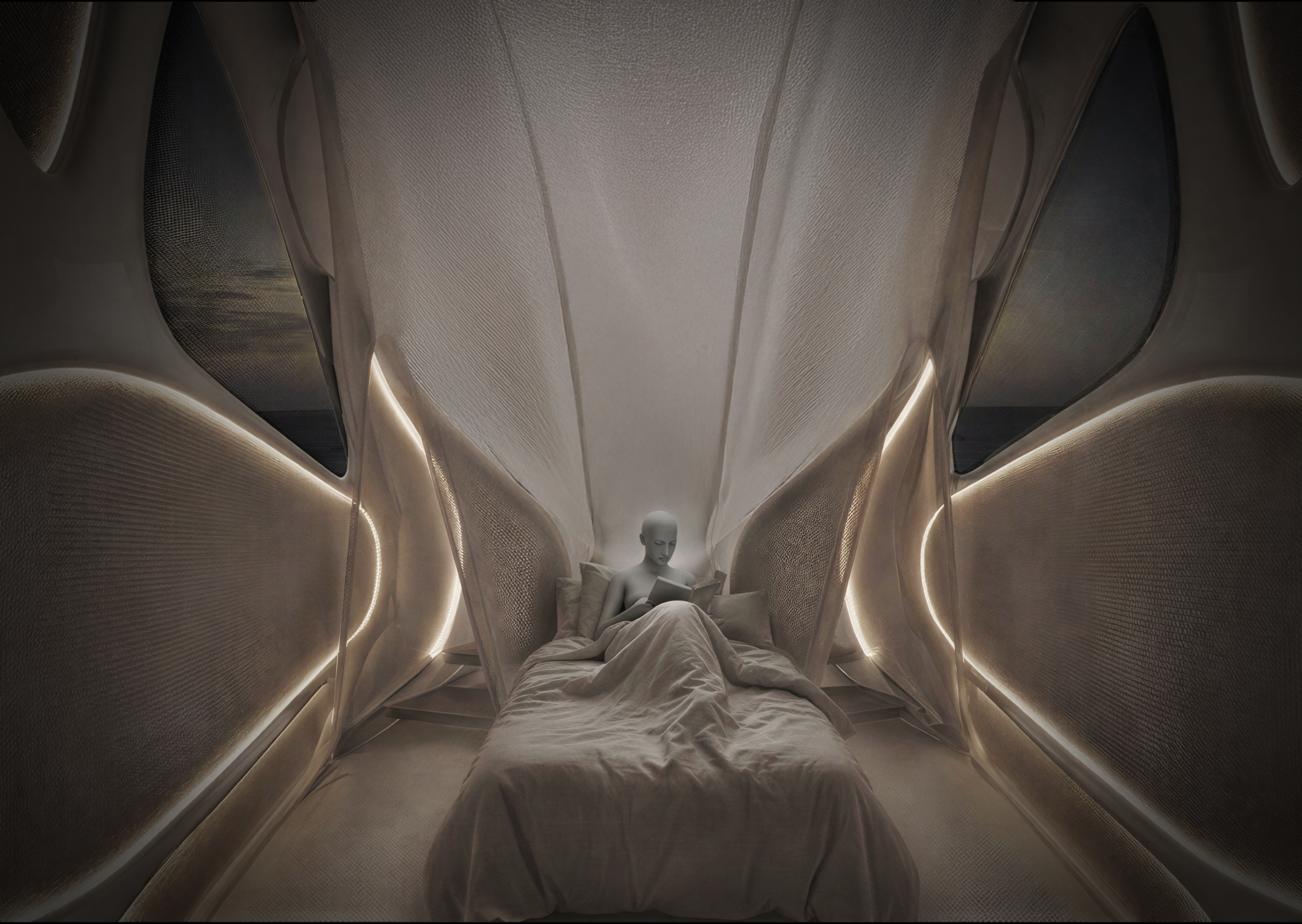
Embedding architecture within evolving marine and industrial ecologies to operate across extraction, production, and habitation.
Digital Simulation
Physical Prototyping