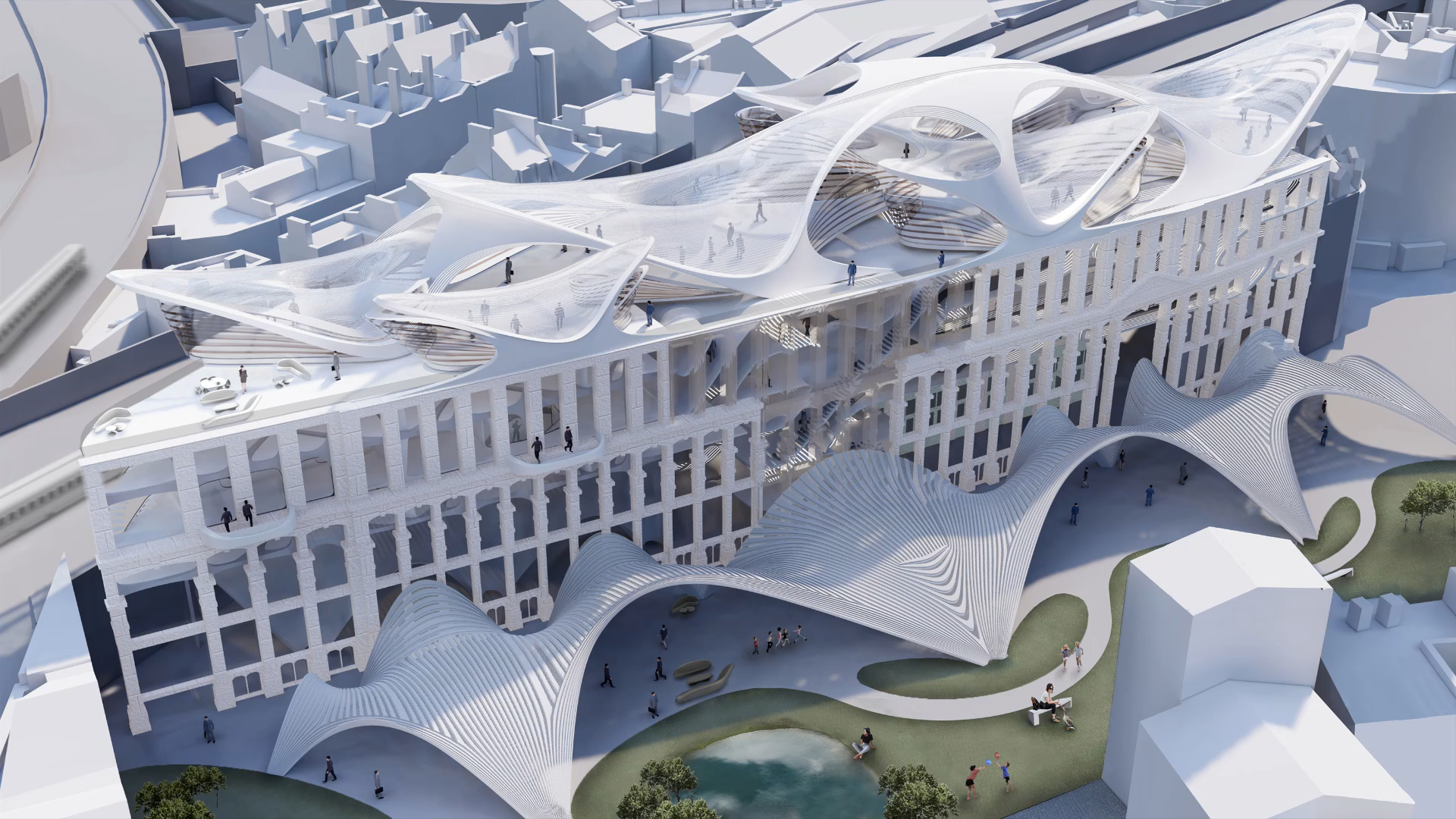
Parti-Cities
Proposes a cyber-physical urban system where citizens, start-ups, and investors collectively negotiate, fund, and materialise city-making through participatory games, decentralised governance, and adaptive architectural systems.
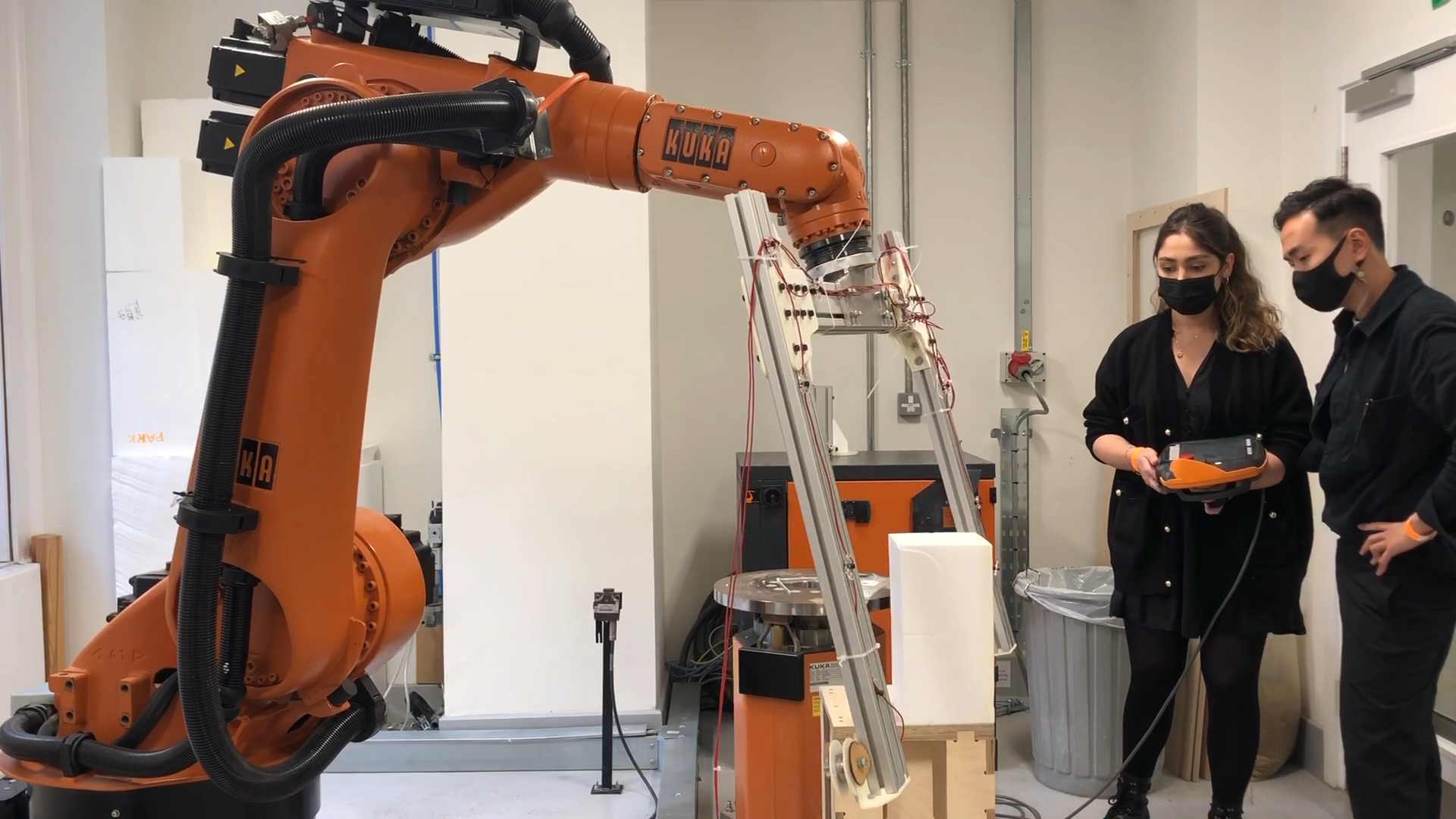
Reframes urban development as a bottom-up, citizen-driven process
Studio Shajay Bhooshan
Tutors Ariadna Lopez, Leo Bieling
Team Jamil Al Bardawil, Yara Manla, Cheolyoung Park, Pin-Ju Wang
PARTI-CITIES proposes a citizen-centric model of urban transformation that integrates participatory governance, game-based decision-making, and advanced digital fabrication to address the social, economic, and spatial challenges of contemporary cities. Responding to rapid urbanisation, post-pandemic vacancy, and the exclusion of innovative communities from city centres, the project reframes urban development as a negotiated process driven by citizens, start-ups, and investors through a cyber-physical platform.
At the core of the system is a multiplayer participatory game that enables communities and start-ups to collaboratively envision, fund, and configure urban space. Using voting, investment, and operational phases, the platform translates collective preferences into spatial outcomes while embedding economic logic through tokenised currencies, smart contracts, and decentralised finance mechanisms. This framework allows users to directly influence urban form, programmatic distribution, and degrees of sharing between private, semi-public, and public spaces, establishing a transparent and scalable model of bottom-up urban governance.
Spatial outcomes generated by the platform are materialised through a rule-based architectural system informed by game logic, behavioural patterns, and fabrication constraints. Voxel-based aggregation, minimal surfaces, cellular systems, and hyperbolic paraboloid structures form a hybrid architectural language capable of adapting to diverse programmes such as co-working, co-living, fabrication labs, and public spaces. Robotic hot-wire cutting and additive manufacturing enable mass customisation, structural efficiency, and reduced material waste, aligning digital design directly with construction processes.
Anchored by the Hop Exchange in central London as a proto-site, PARTI-CITIES demonstrates how vacant and underutilised urban assets can be reactivated through participatory agency, spatial adaptability, and digitally informed construction. The project ultimately positions architecture as an evolving socio-technical system—one that is continuously reshaped by its users and responsive to economic, social, and environmental change.
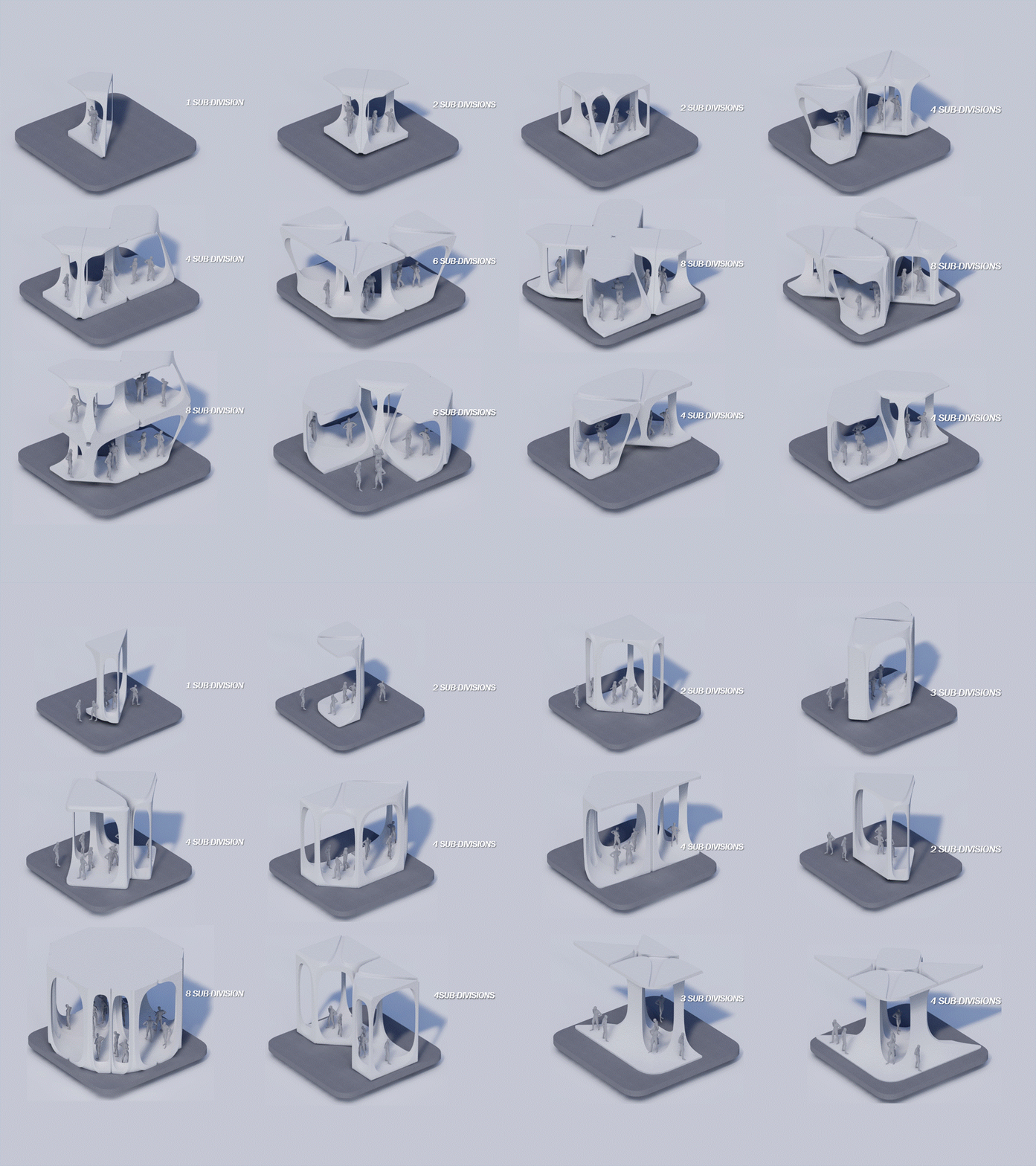
Uses game logic and tokenised economies to align social behaviour, spatial configuration, and investment strategies
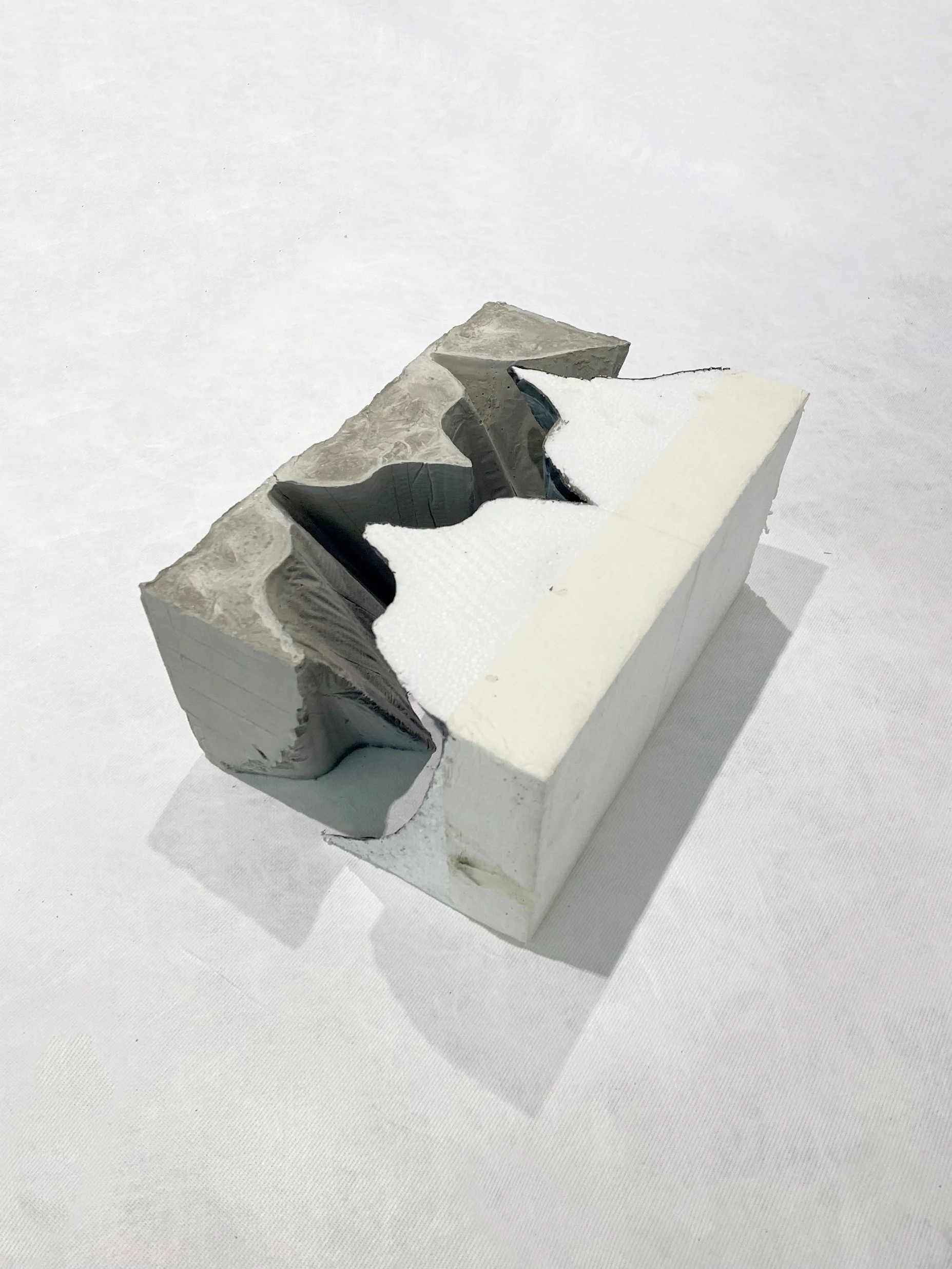
Materialises participatory outcomes through robotic fabrication and modular, reconfigurable architectural geometries
Gamification
Digital Renders