
KHORA
Studio Patrik Schumacher
Tutor Jose Pareja Gomez
Team Regina Amieva, Maria Agustina Fradin, Dana Ismail-Agha, Juan Antonio Fuentes
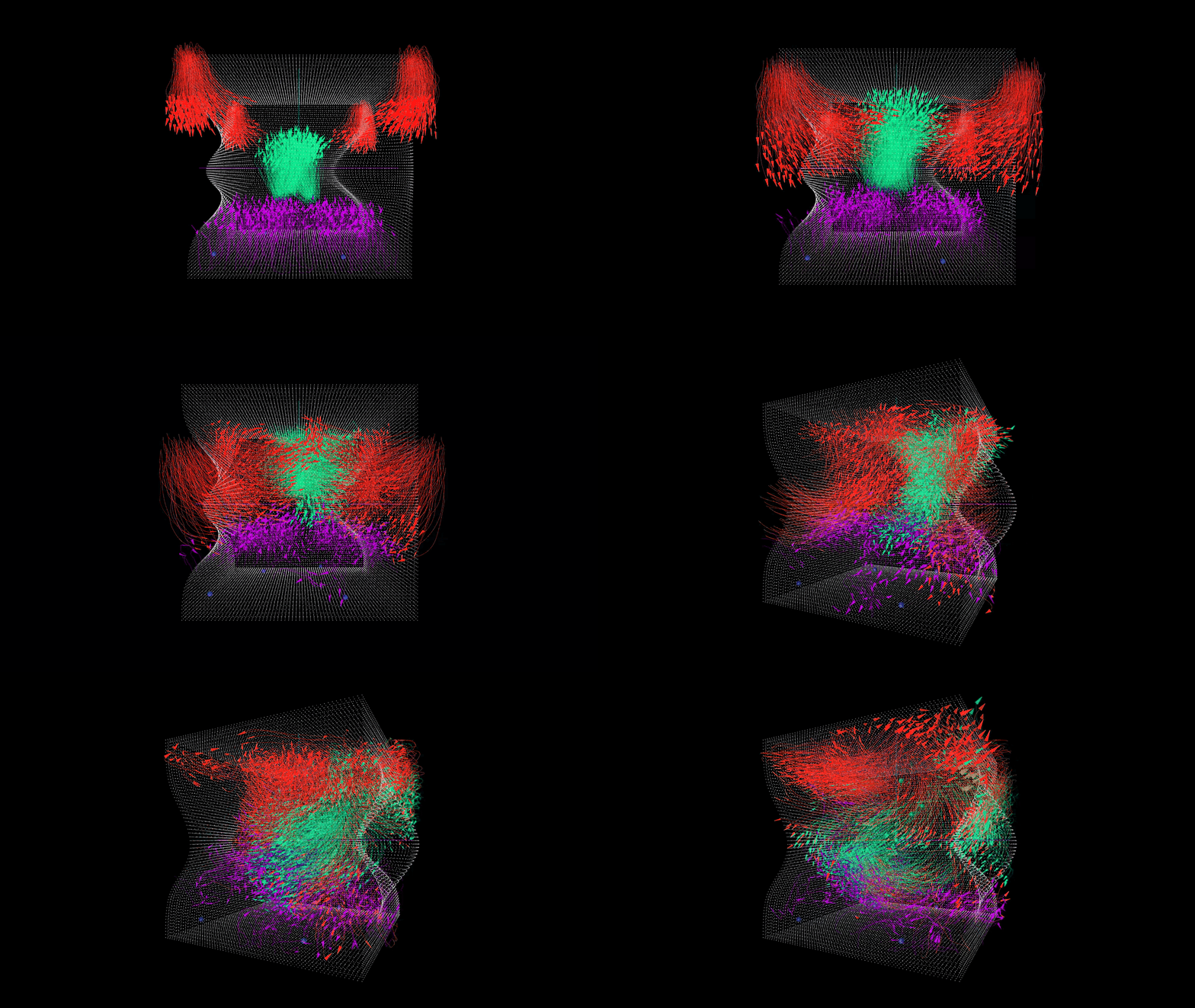
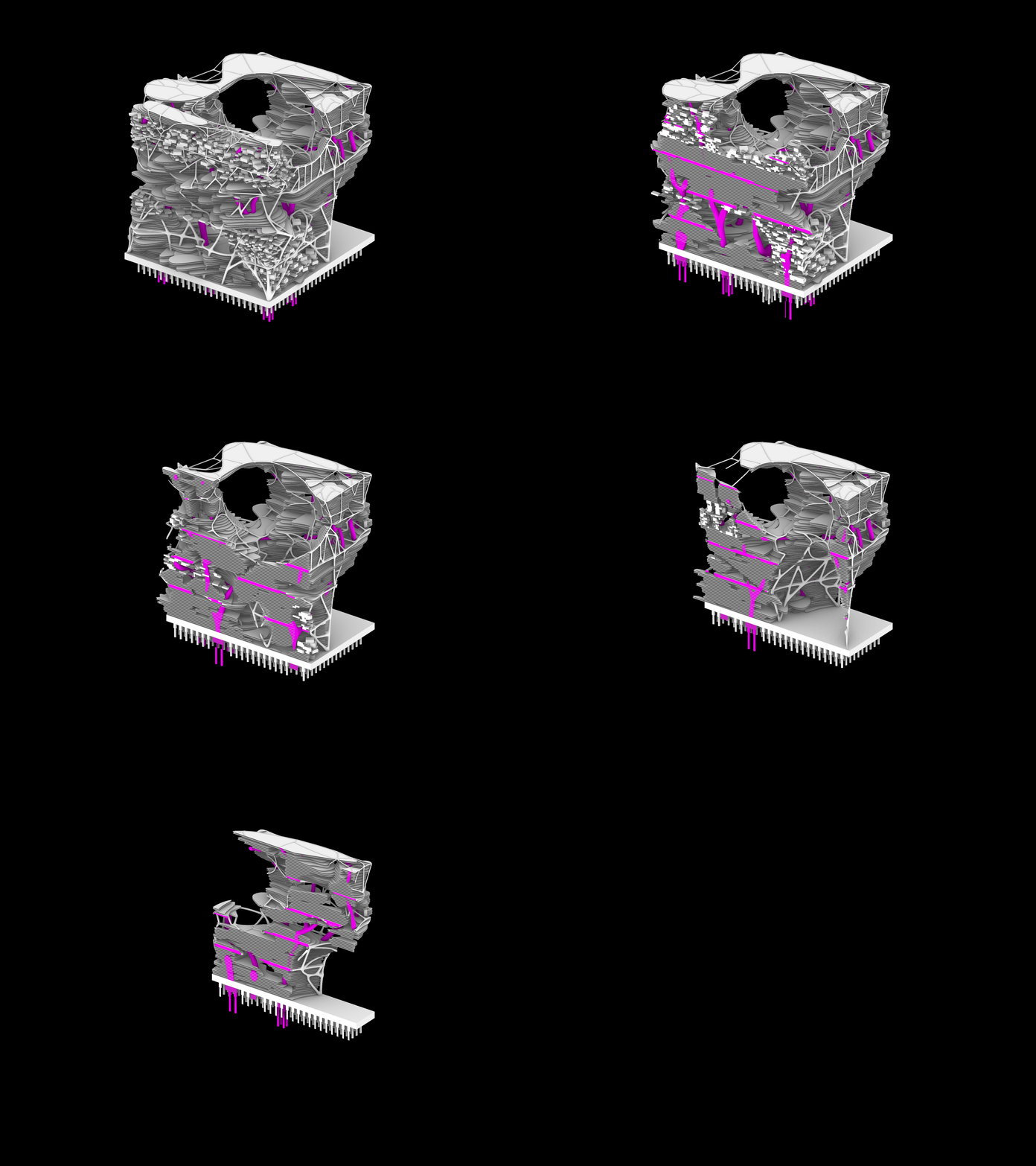
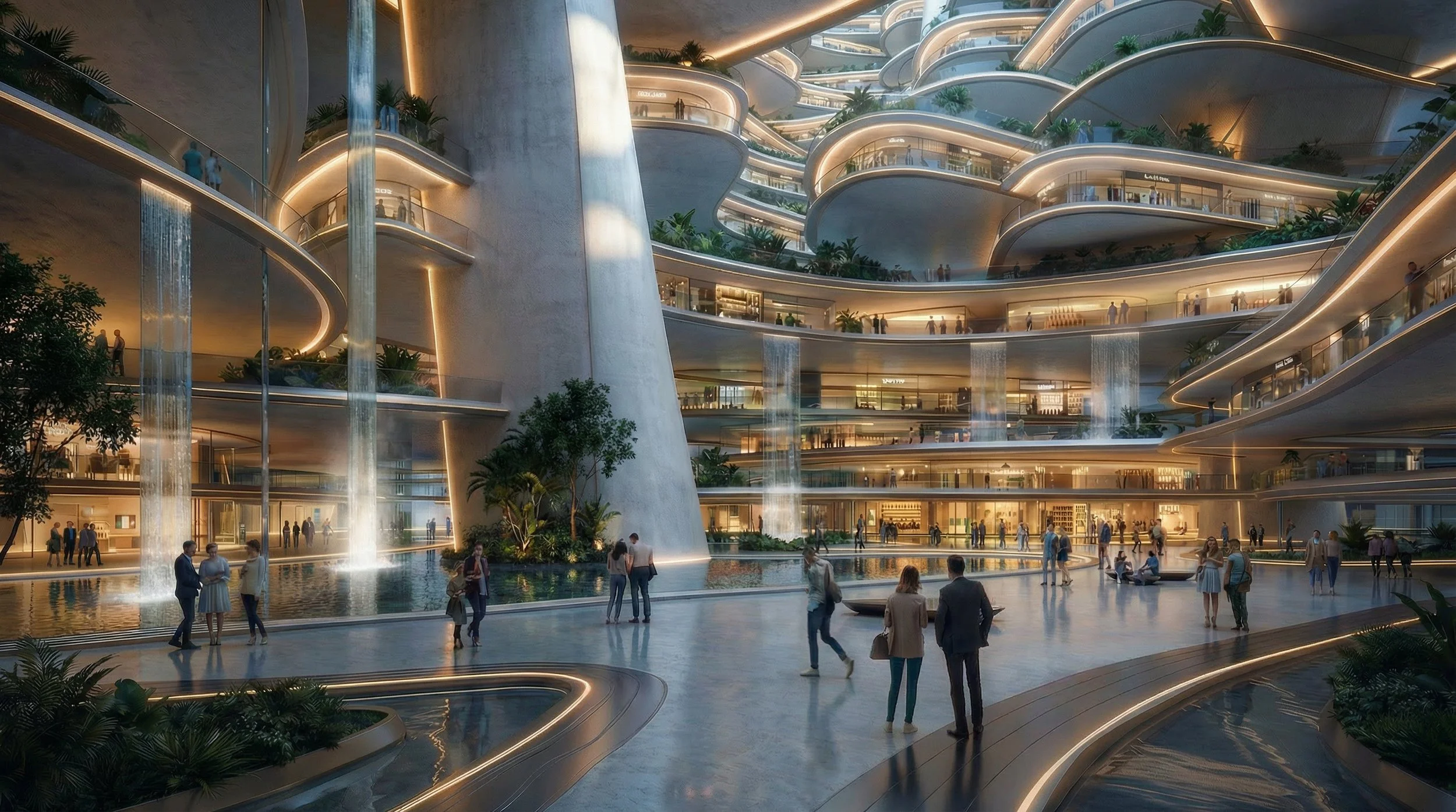
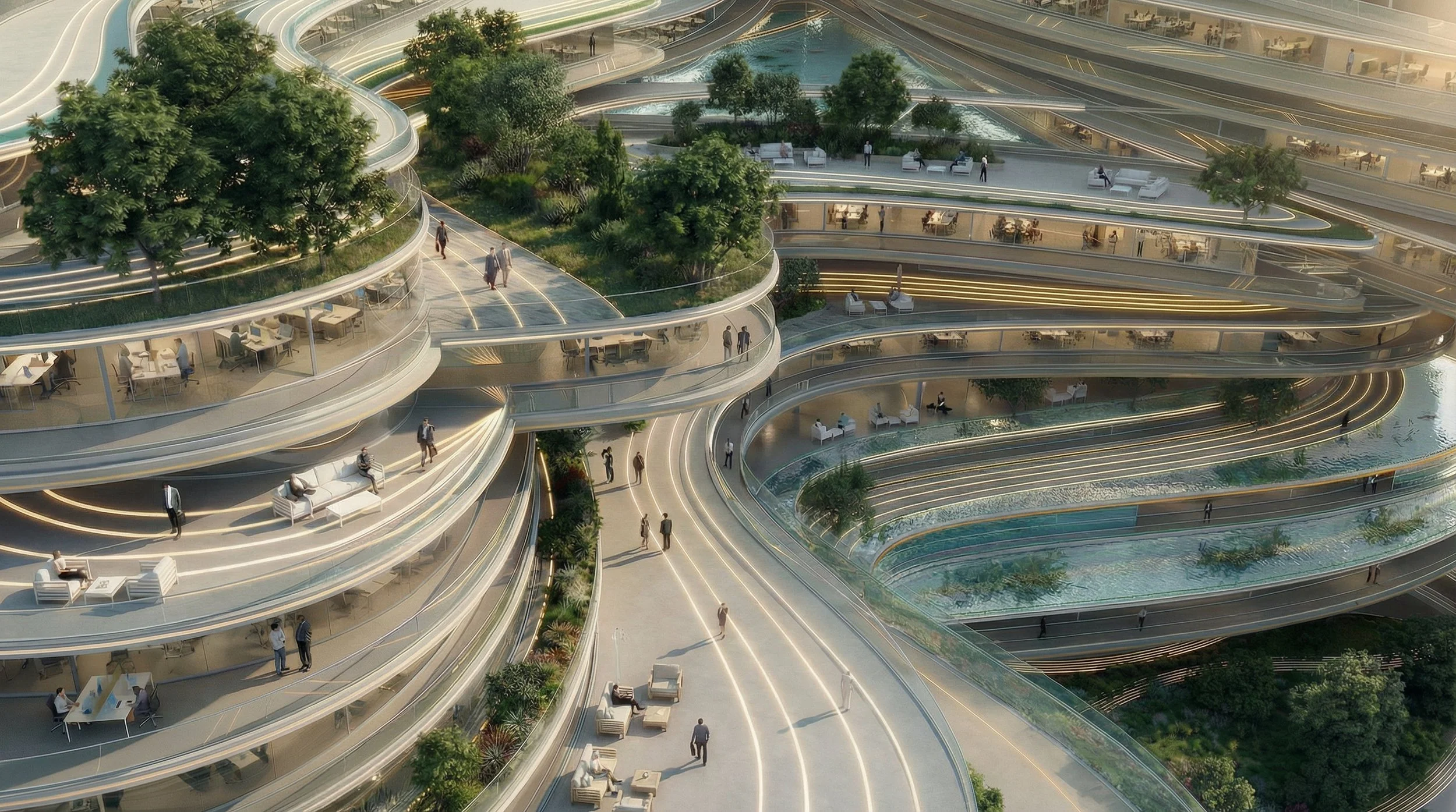
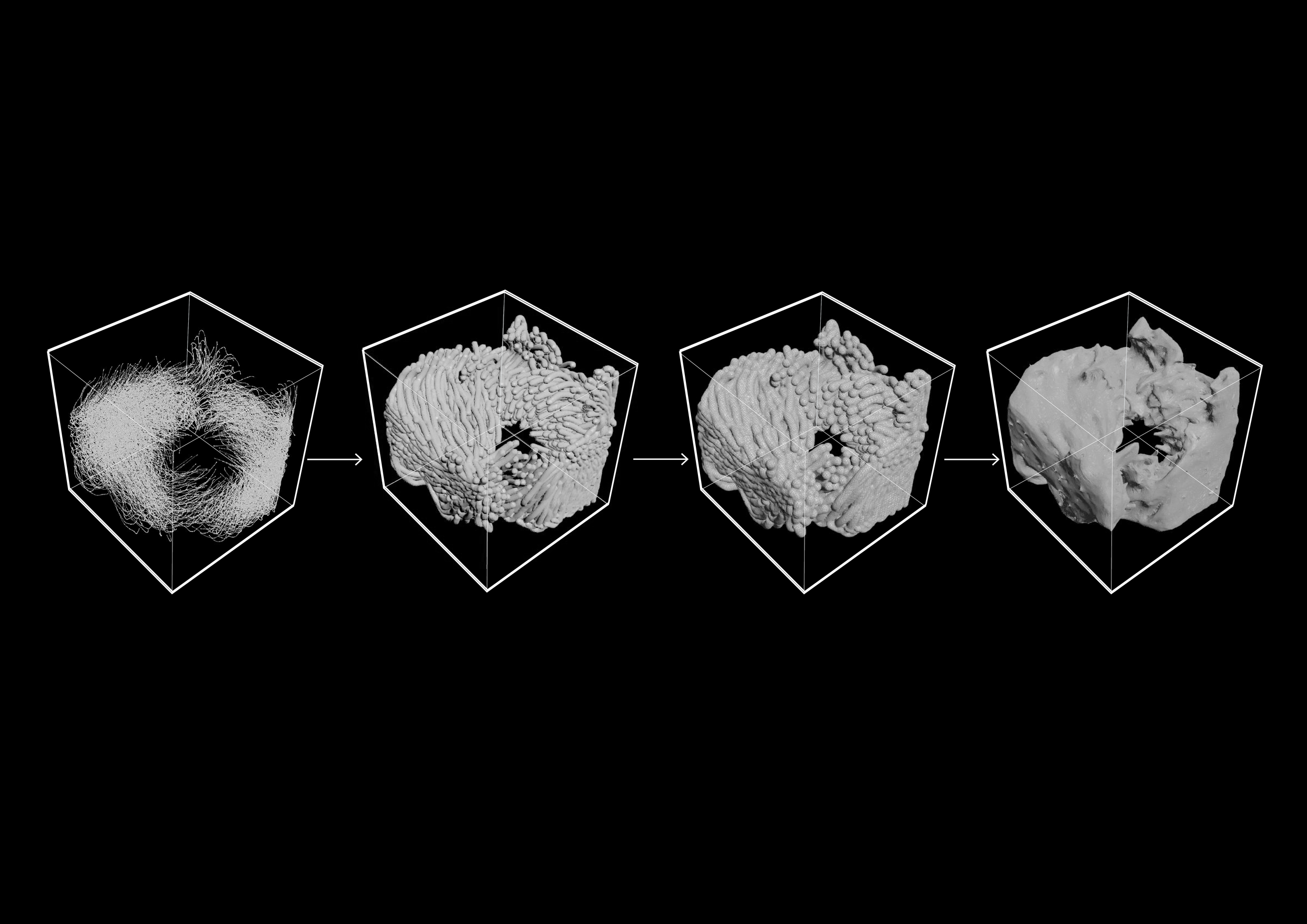
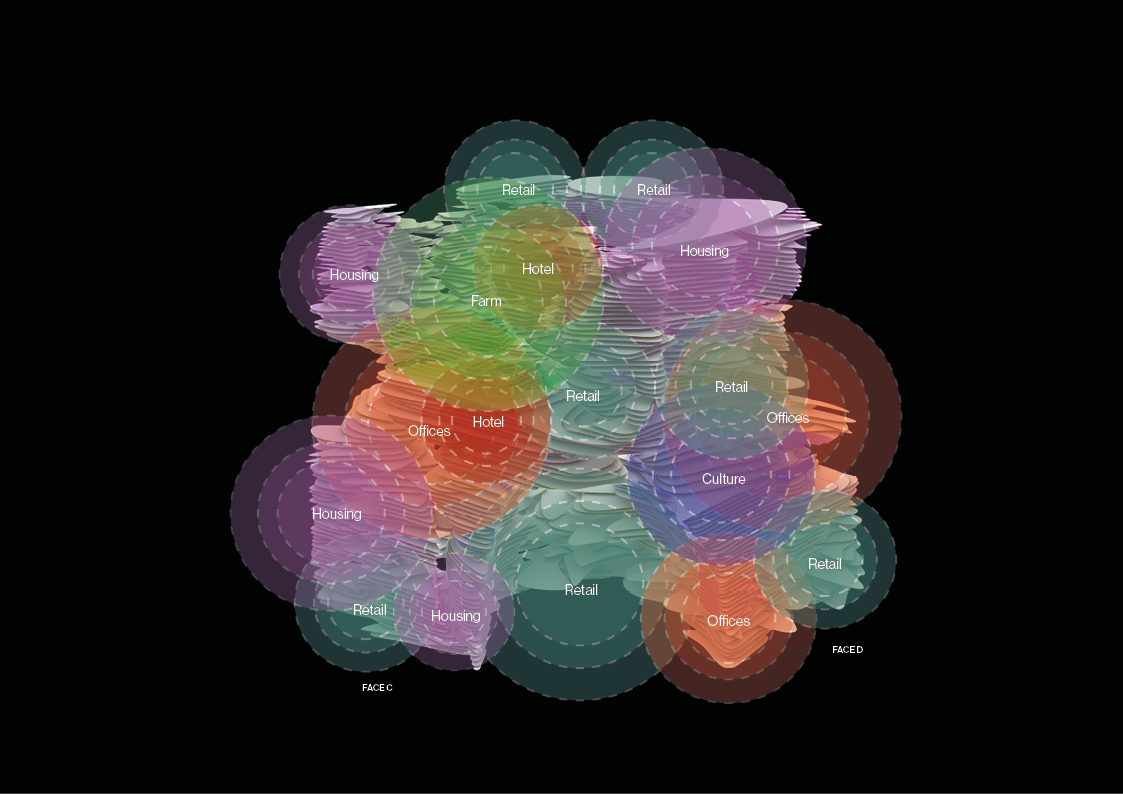

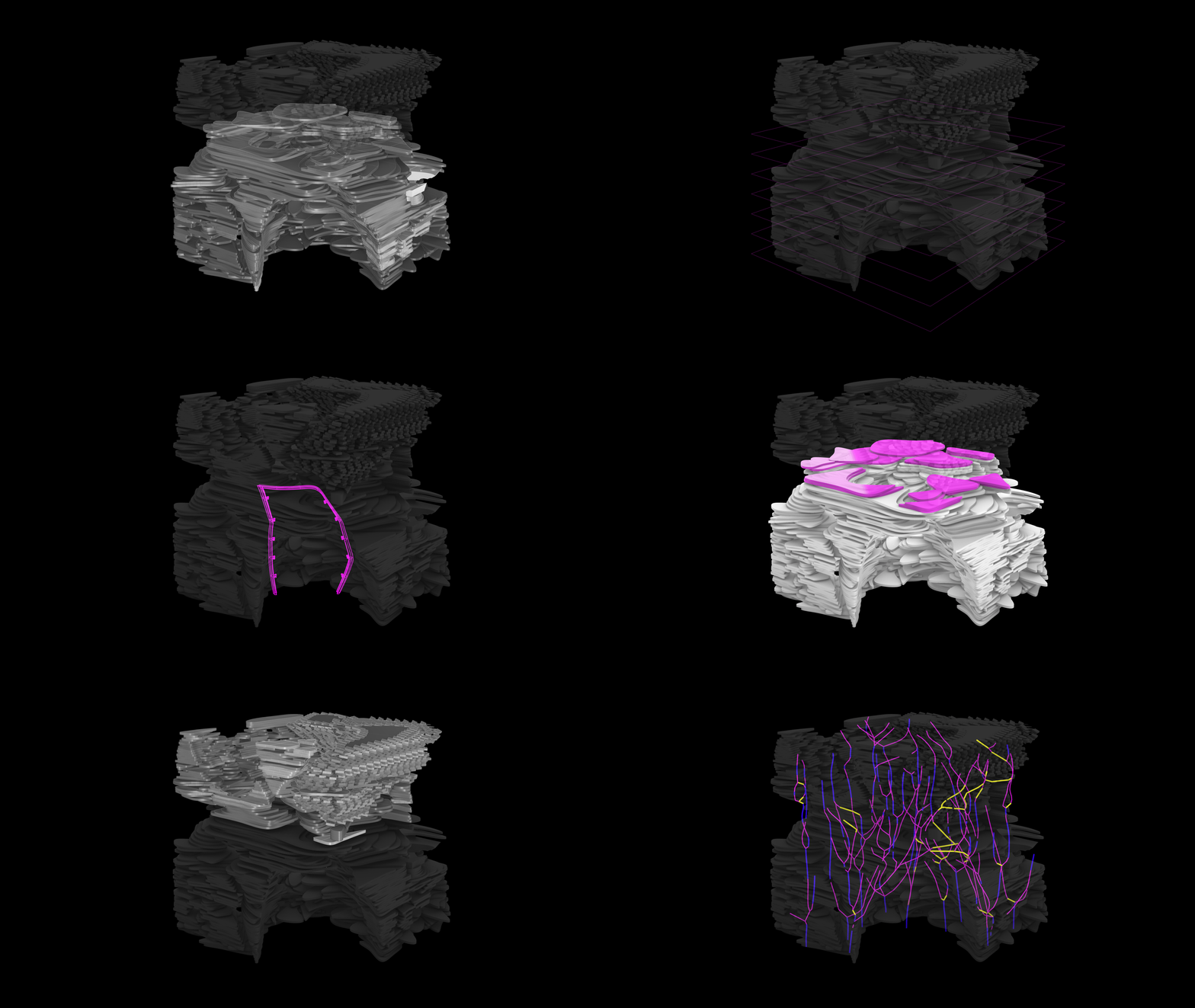
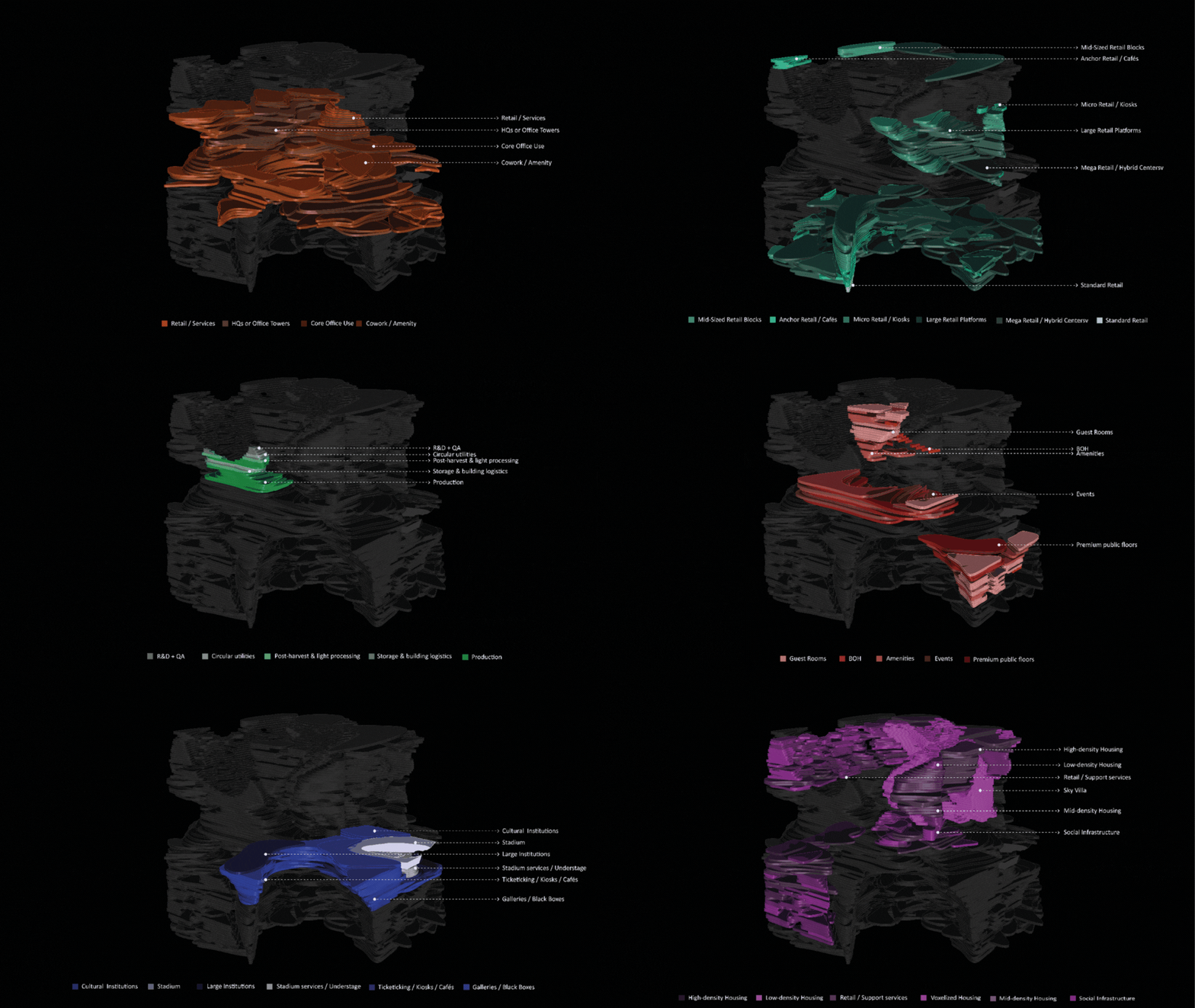
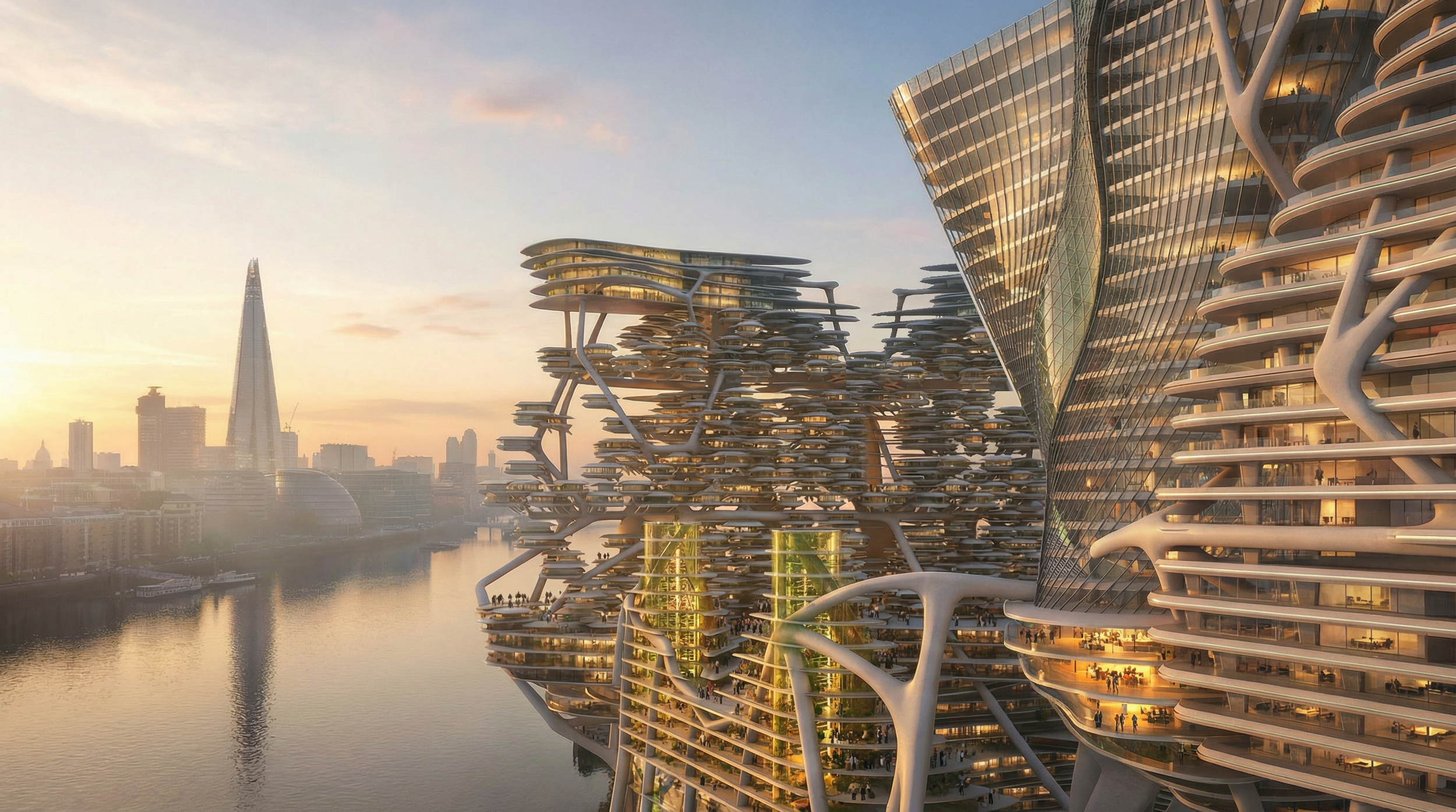
This research project investigates how hyper-density urbanism at the mega scale can offer an alternative typology to address London’s horizontal sprawl and fragmented intensification by proposing a compact, vertically integrated urban order. Situated in Wapping, between the Square Mile and Canary Wharf, the project explores the mega-building as a city within the city, a four-dimensional urban construct capable of hosting spatial, programmatic, social, and infrastructural systems within a single framework. By compressing the functional equivalence of multiple urban districts into a 500 × 500 × 500 metre volume, the project challenges conventional distinctions between architecture and urbanism, reframing the building as an operative urban field. Drawing from Rem Koolhaas’ concept of Bigness, the project treats extreme scale not as a loss of control, but as a condition that enables complexity, coexistence, and autonomy. This new typology becomes an environment where diverse programmes and urban situations overlap, interpenetrate, and hybridise, producing new forms of proximity and co-location. Rather than relying on fixed zoning or hierarchical segregation, the project adopts swarm intelligence as an organisational logic, allowing local interactions between subsystems to generate global order. Central to the project is the question of equitable quality of life within vertically intensified environments. To counteract spatial and social stratification, the design introduces three orders of voids and porosity that operate across scales, ensuring equal access to light, air, views, movement, and social interaction throughout the entire structure. These void systems function as spatial regulators and social condensers, producing gradients of density and openness while maintaining legibility within extreme complexity. By distributing fundamental living conditions vertically rather than privileging specific levels, the project proposes a model of non-hierarchical urban coexistence. Ultimately, the project positions the four-dimensional urban form as a systemic alternative to dispersed urban growth, offering a prototype for compact, adaptive, and integrated urbanism. It suggests that architecture at the mega scale can move beyond singular-function skyscrapers or isolated districts to become a continuous, intelligent urban organism, one capable of responding to London’s future through density, integration, and collective intelligence rather than expansion.