

mAKE NO LITTLE PLANS
Studio Shajay Bhooshan
Tutor Henry David Louth, Jayanaveenaa Periyasamy
Team Shyam Boopathy, Tarakesh Chandran, Raj Ashar, Palash Kasliwal
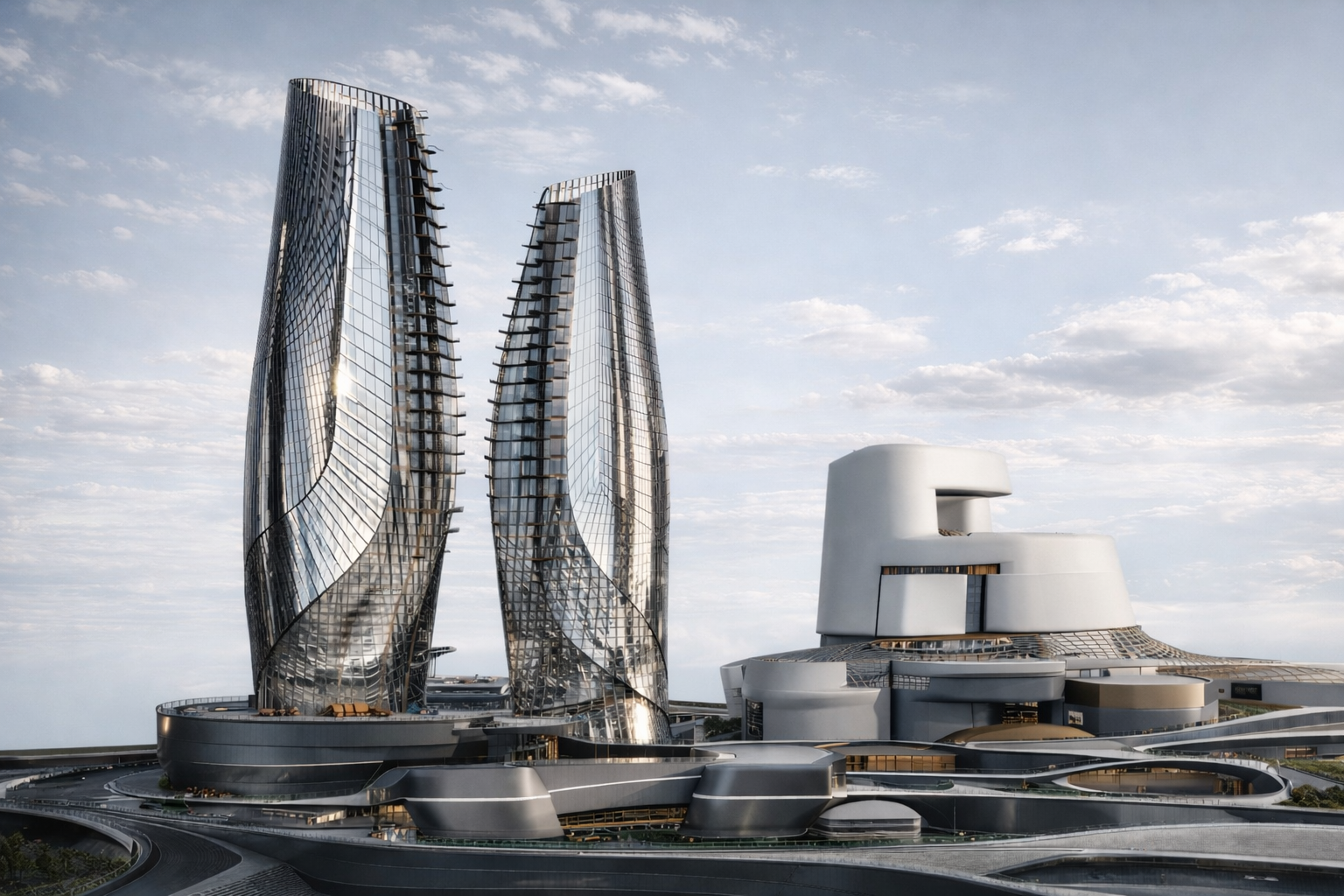

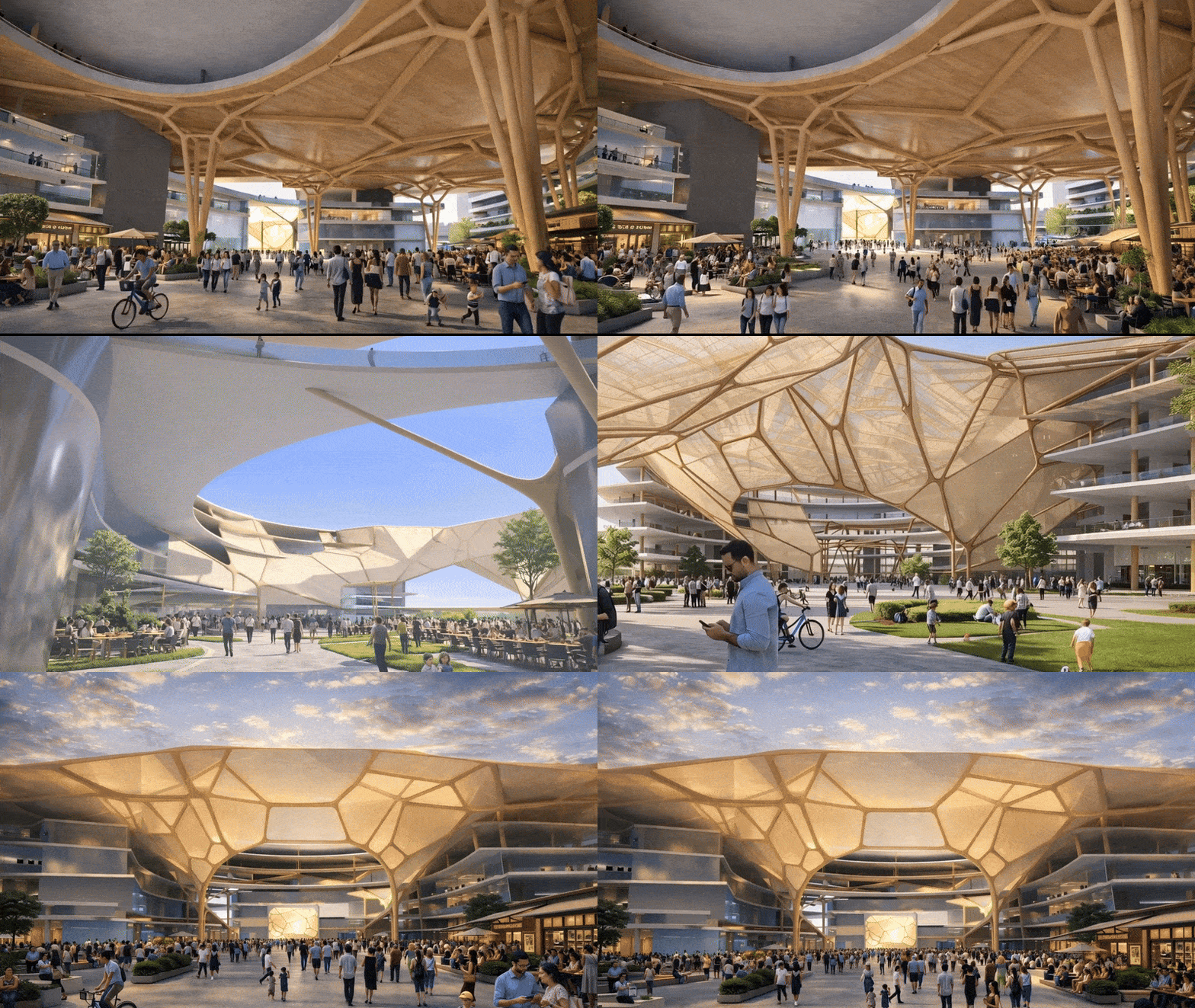
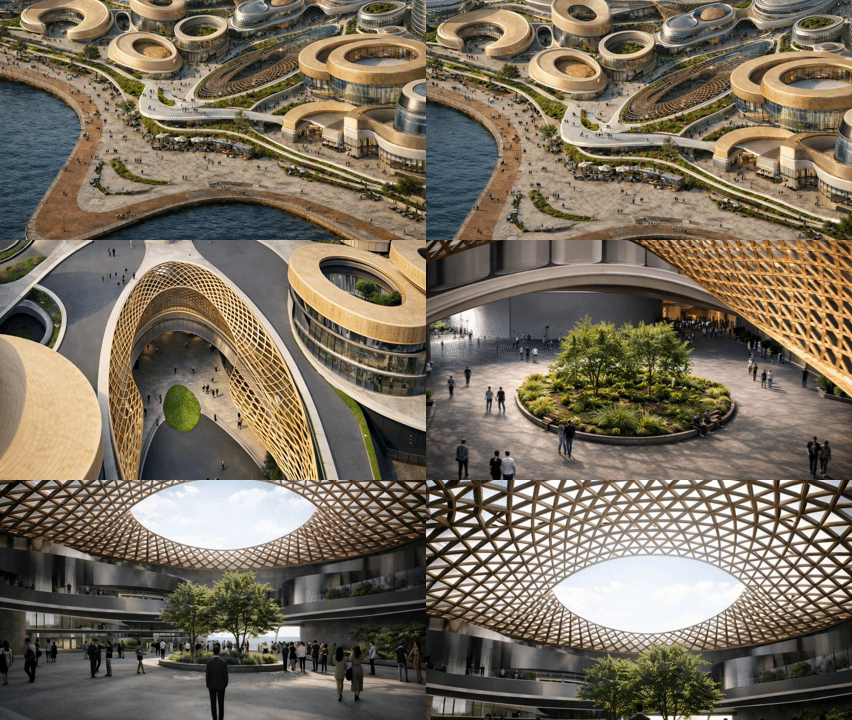


By 2050, global expansion will necessitate reimagining cities as high-velocity engines of prosperity. This thesis moves architectural agency "upstream," designing the socio-economic "game rules" and geometric landscapes from which urban order emerges. Using Milton Keynes as a laboratory repositioned as Europe’s potential Silicon Valley we seek a middle ground between Chicago’s integrated Architectural urbanism and the innovation of the modern tech campus like Silicon Valley. Guided by Daniel Burnham’s 1917 injunction to "make no little plans," the project seeks to inspire collective ambition through a visionary urbanism that utilizes technology as an economic catalyst while upholding architectural grandeur. To facilitate rapid, high-velocity expansion, we employ standardized building templates and a rigorous geometrical masterplan order reminiscent of historical Chicago. This research introduces an integrated building system where spatial programs, structural grids, façades, and roofing are co-generated through computational methods. Rather than relying on rigid shape grammars, the system processes Signed Distance Fields (SDFs) to generate building massing derived from mathematical expressions and local parcel conditions, resulting in a variegated yet cohesive urban order. This unified framework ensures that the floorplan boundary directly informs the underlying structural logic and external envelope, allowing for a seamless transition between architectural scale and urban morphology. Our methodology is driven by two AI frameworks. GameAI, Employs Reinforcement Learning and Game Theory to find "win-win" equilibria between institutional stewardship and economic growth. This stabilizes the tension between "Silicon Valley" powerhouses and "Chicago" urban order. ShapeAI, Derives variegated morphology through latent map blending and procedural field generation. Rather than prescribing typologies, agency is exercised through objective-function design and loss-term negotiation. The culmination of this framework is a high-performance interior urbanism—reminiscent of the Silicon Valley ecosystem—where productivity is driven by a multi-layered, porous interconnection of building clusters and institutional anchors. This approach yields a multi-scalar, polycentric morphology that departs from the constraints of the rigid masterplan, emerging instead from a state of negotiated algorithmic equilibrium. In this context, Artificial Intelligence transcends its role as a mere representational tool; it becomes a robust framework for reasoning, negotiation, and stabilization. By governing the underlying conditions from which form and organization arise, the system ensures that the city remains a dynamic, adaptive engine for growth, balancing expressive architectural agency with the complex requirements of a 21st-century global metropolis.