
VERTICITY
Studio Shajay Bhooshan
Tutor Henry David Louth, Jayanaveenaa Periyasamy
Team Aschawit Treehirunkul, Divya Goel, Yash Bagad
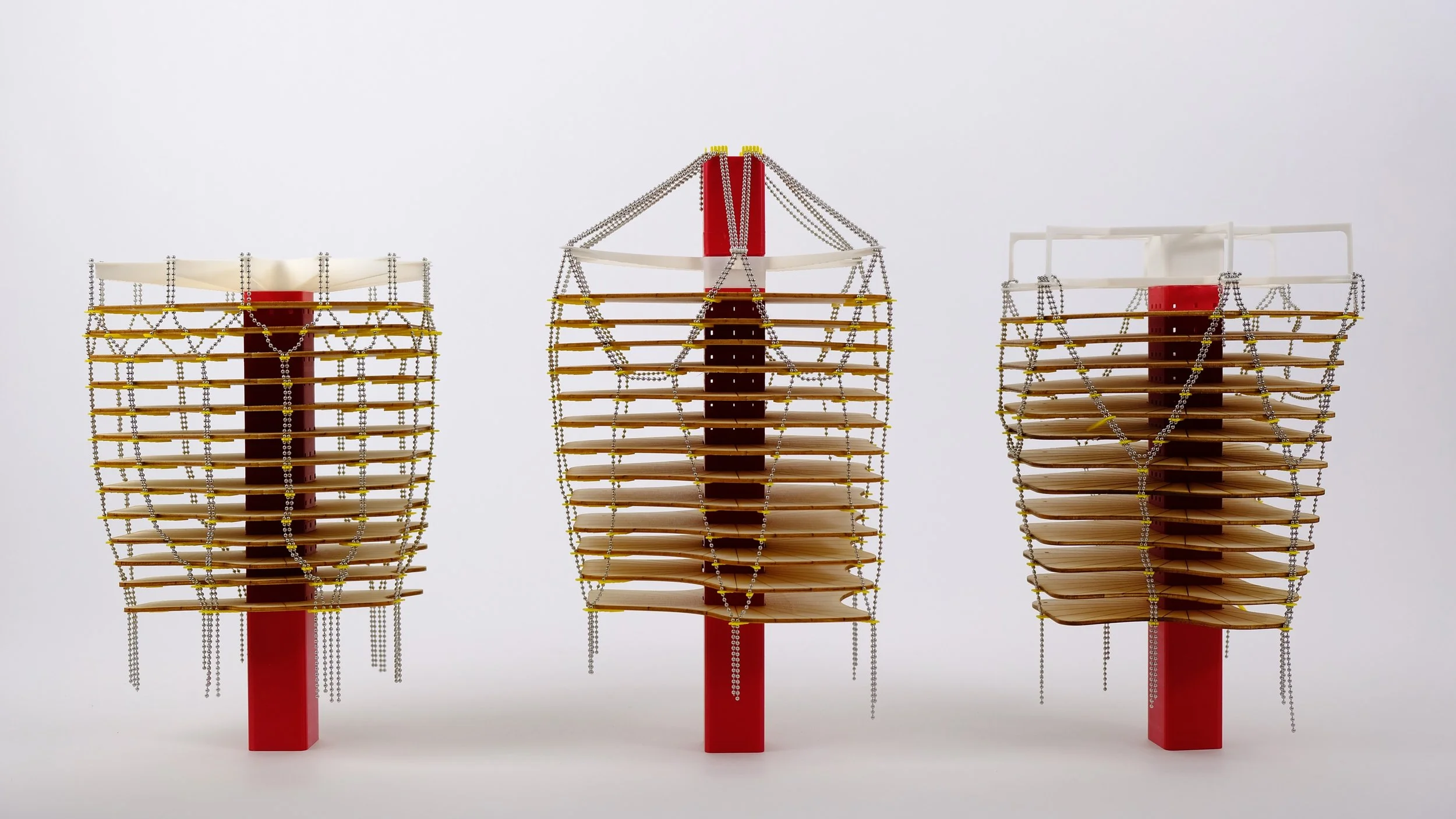
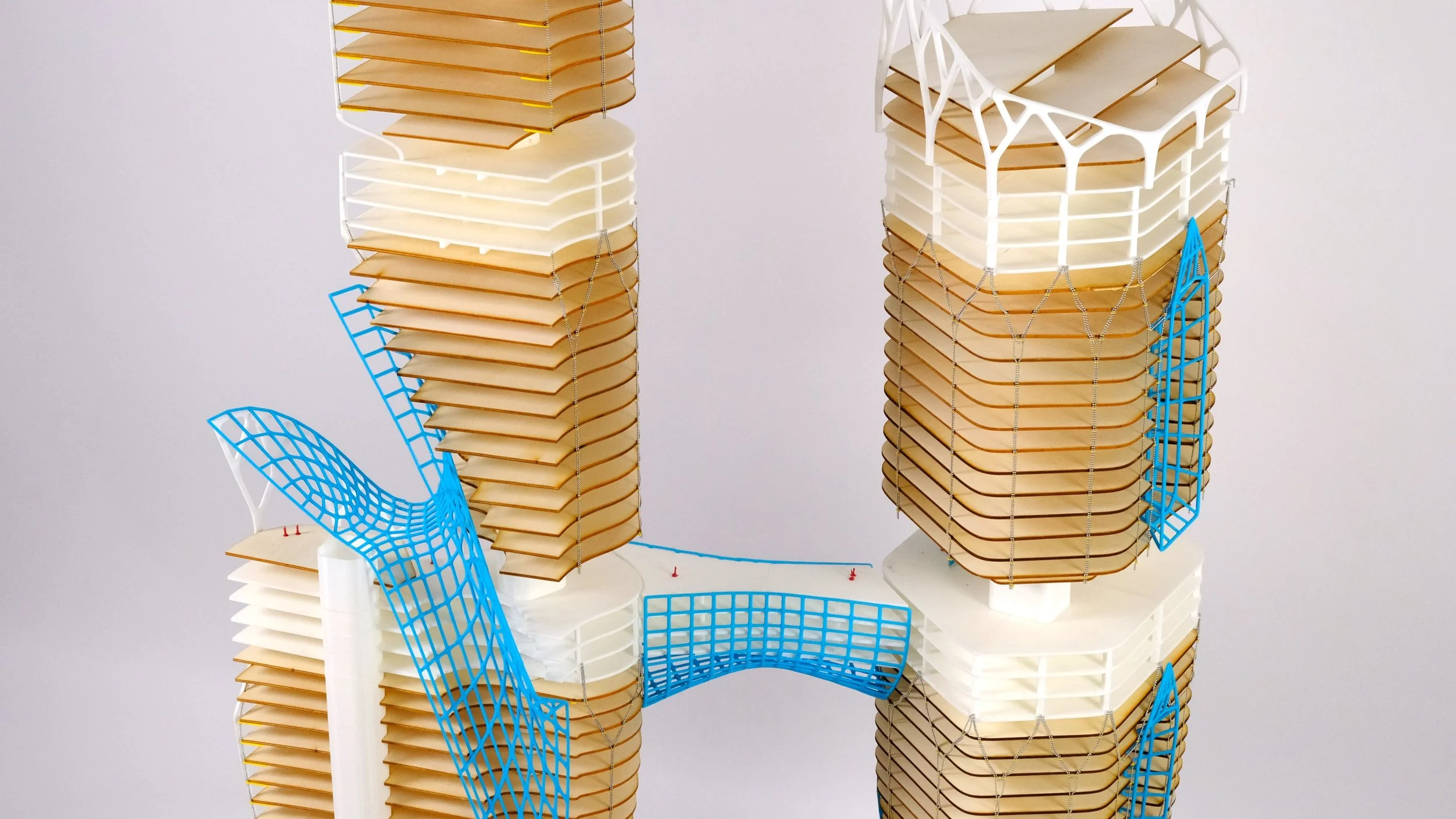
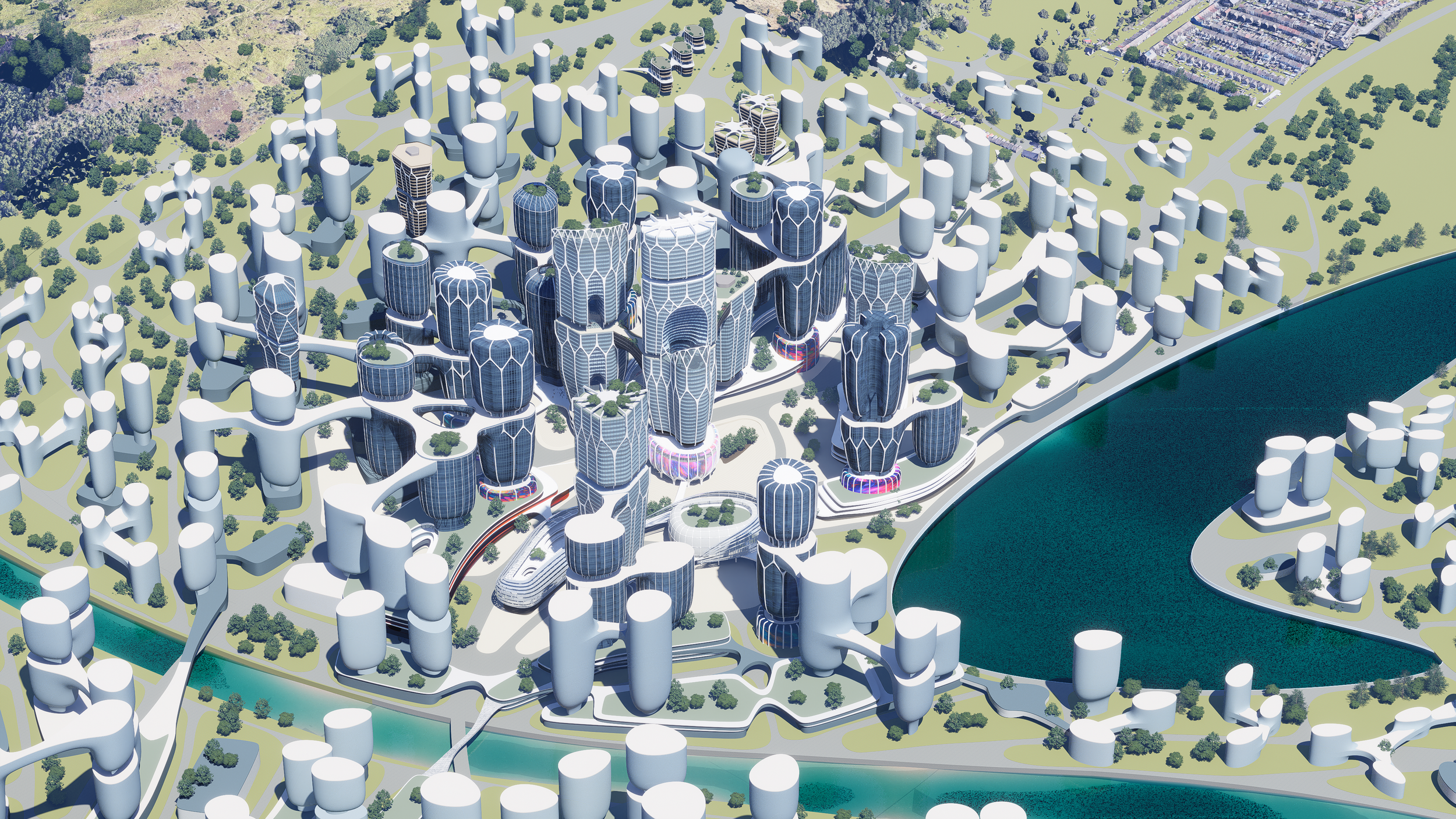
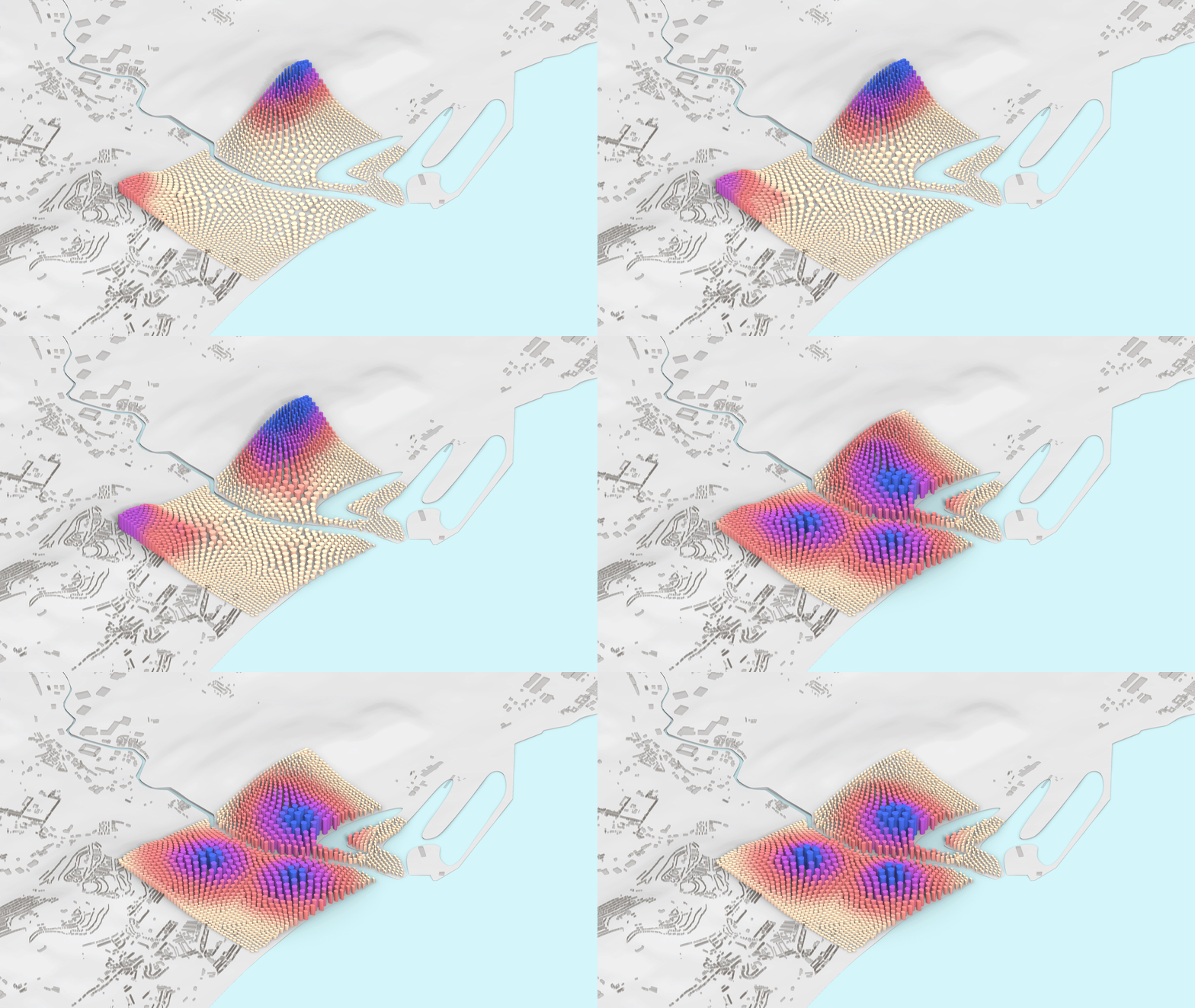
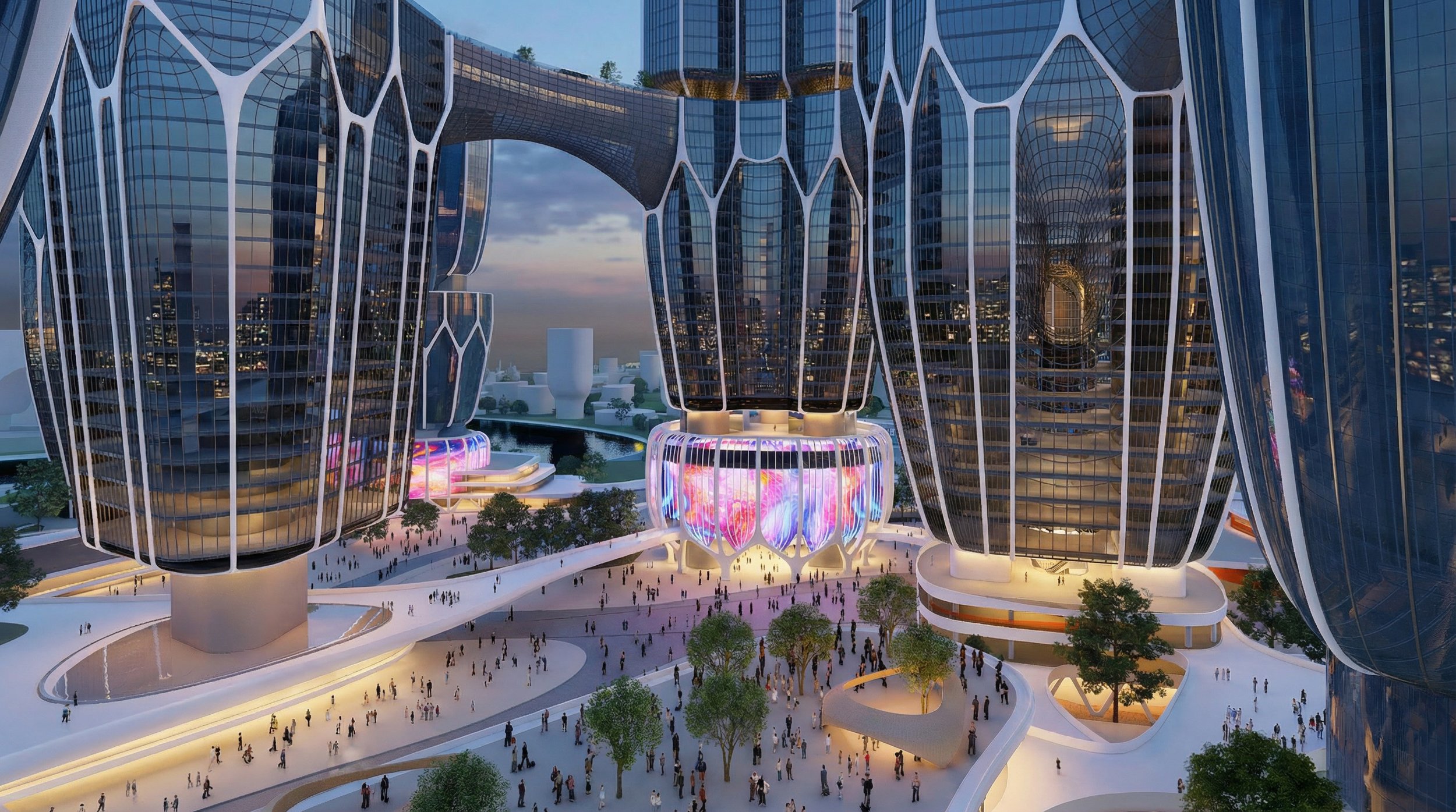
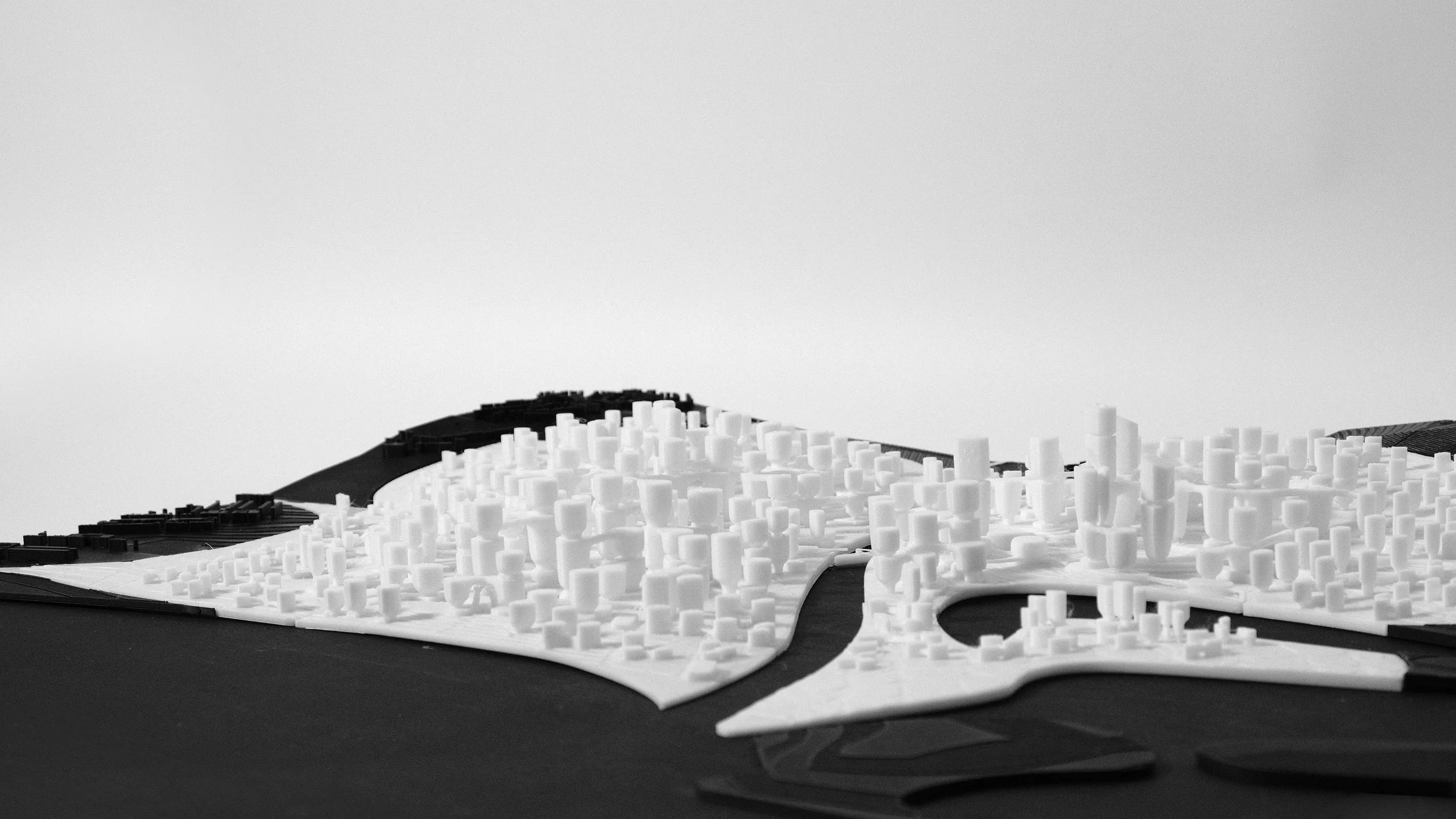
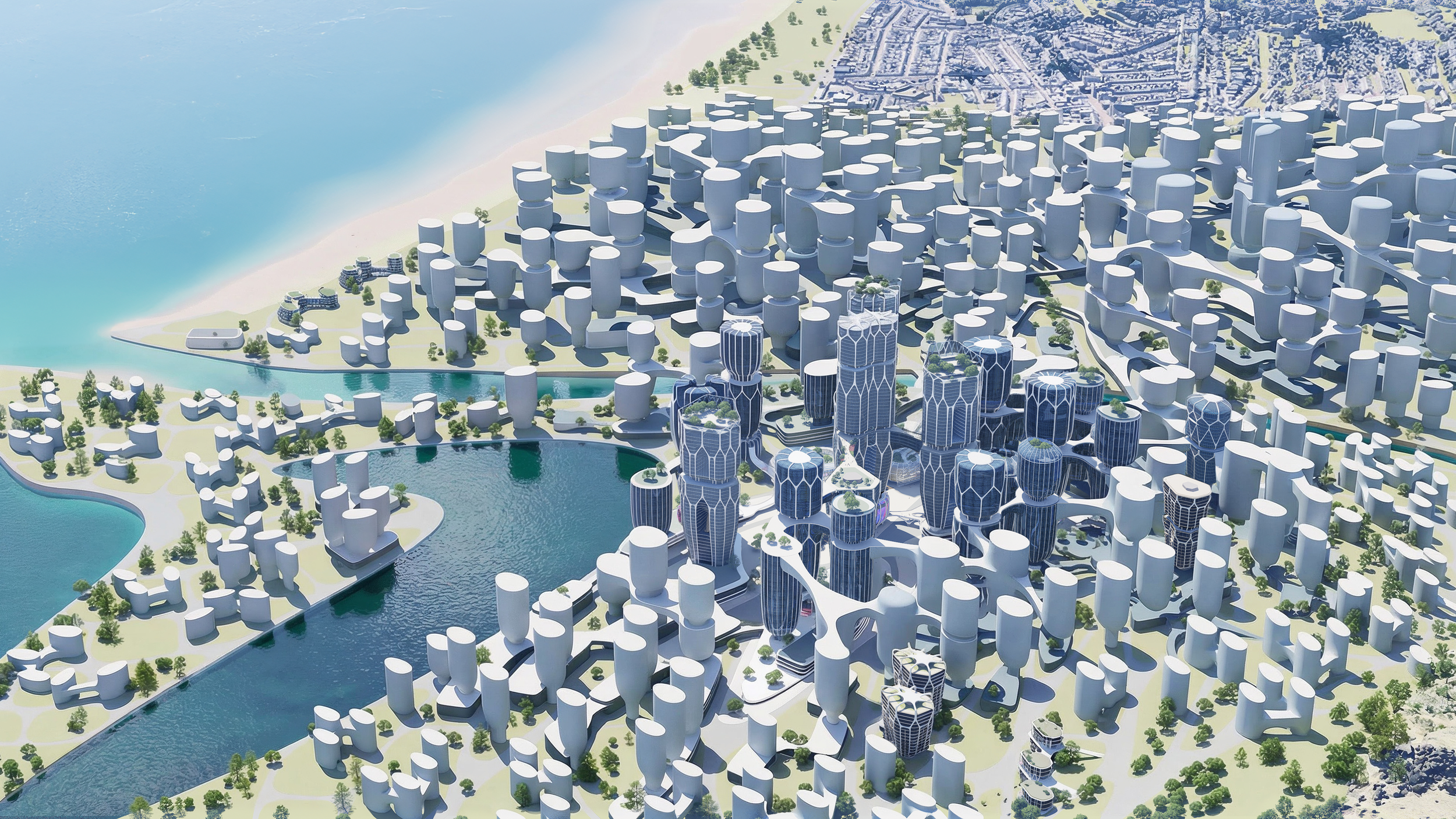

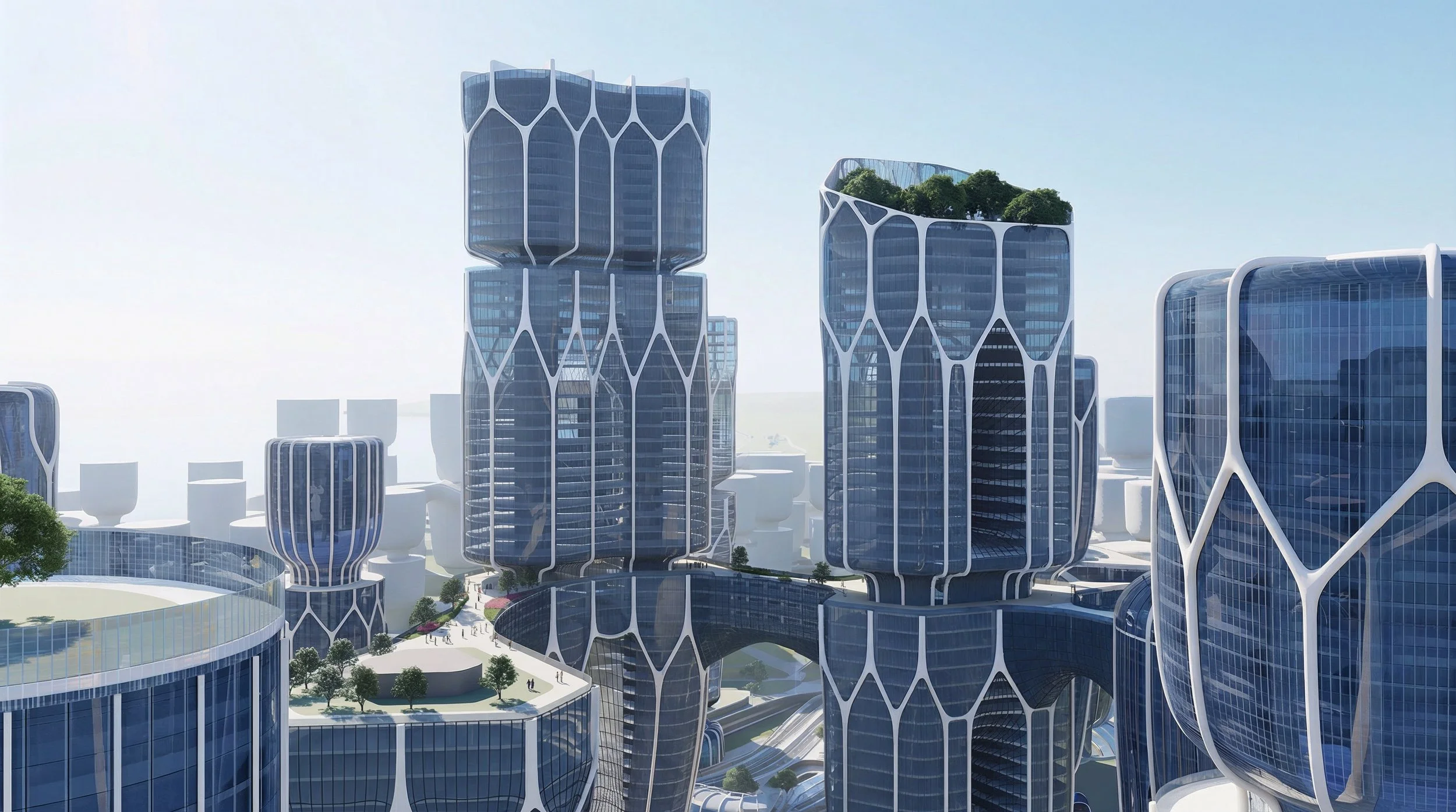
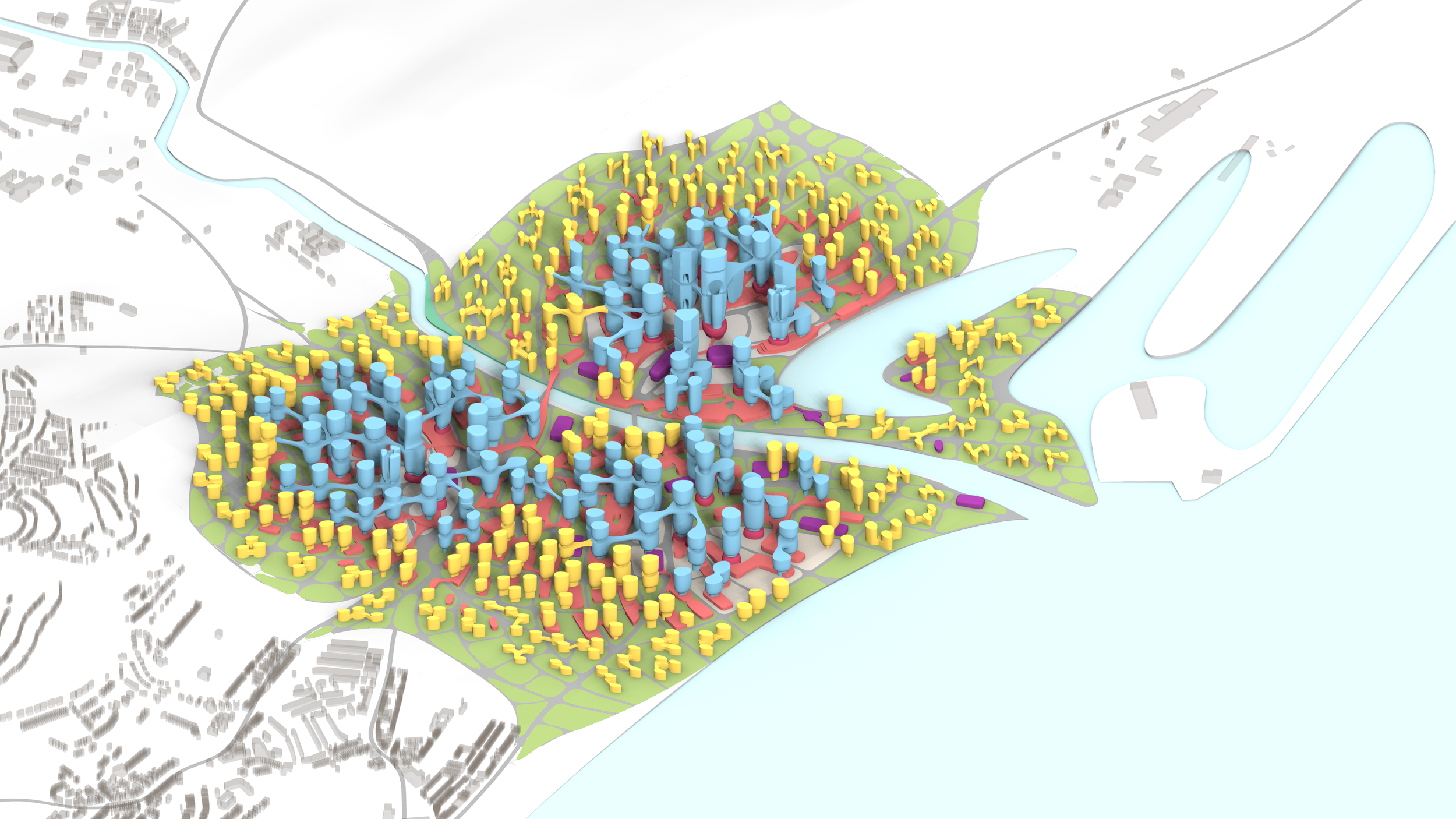
Towards the mid-21st Century, the growth and proportion of urban population is the evidence of high demand to live in cities across the globe. With rapid changes, and more complex problems, solutions for responsive cities are required. Becoming an accessible tool, AI is examined in built environment compatible setting in this research. In urban development, agent-based simulation and game strategy is studied to project urban results in various conditions through city and economic development drives. In architectural scale, AI can generate iterations from minimum inputs such as building outlines leading to the more complex but controllable shape of buildings. Cities as a form of cooperation generates socio-economic activities which is the basis in this thesis to find a sustainable and vibrant recipe to create new cities. Geographical Constraints can be a factor to drive the urban growth with denser cooperative society, a smaller number of resources to be invested in infrastructure, and less intervention to nearby environment. As data is a new oil for the new AI age demanded by various industries, by incorporating edge AI data centre having smaller size and close proximity to users into city fabric, it can catalyst the urbanisation in contrast to traditional and large data centres which are isolate from urban development. Vertical urbanism is explored as the framework to cope with geographical limitations and such starting infrastructure. By integrating building programmes on the shared construction footprint and creating multi-level urbanism, architecture and urbanism become a connective fabric and bring the population to both operating and enjoyable life of the city. To respond with construction on the limited amount of land, and having different volumetric layers, building system for fast and adaptable construction process is explored through the combination of suspended structure for the high-rise buildings and bottom bottom-up construction for the low-rise buildings.