
Atmosphere INTELLIGENCE
Studio Theodore Spyropoulos
Tutors Hanjun Kim, Apostolos Despotidis, Elizabeth Konstantinidou
Team Evelyn Kreslavsky, Fadayiro Ayorinde, Ari Zhorzholiani, Vaibhavi Patil
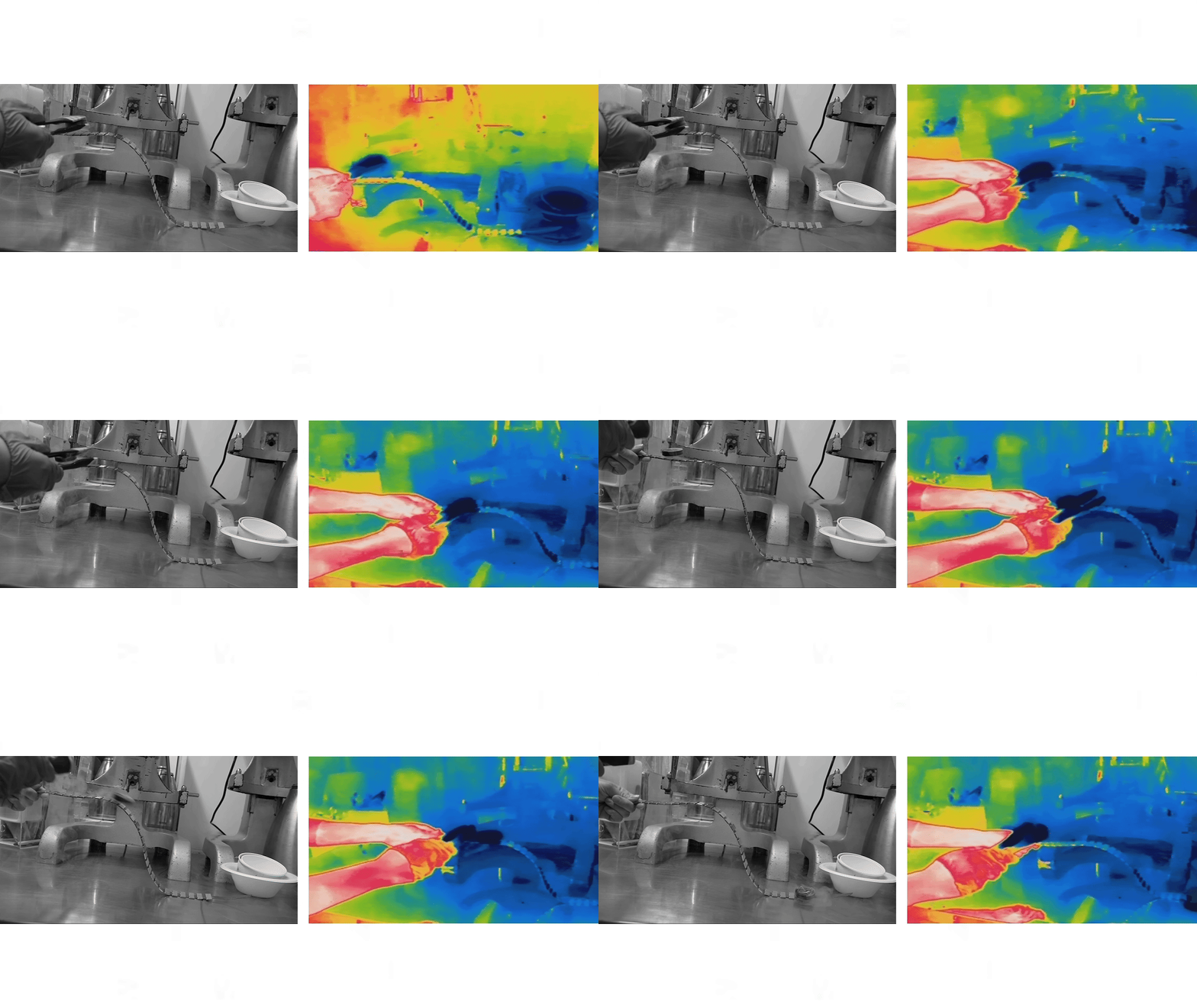


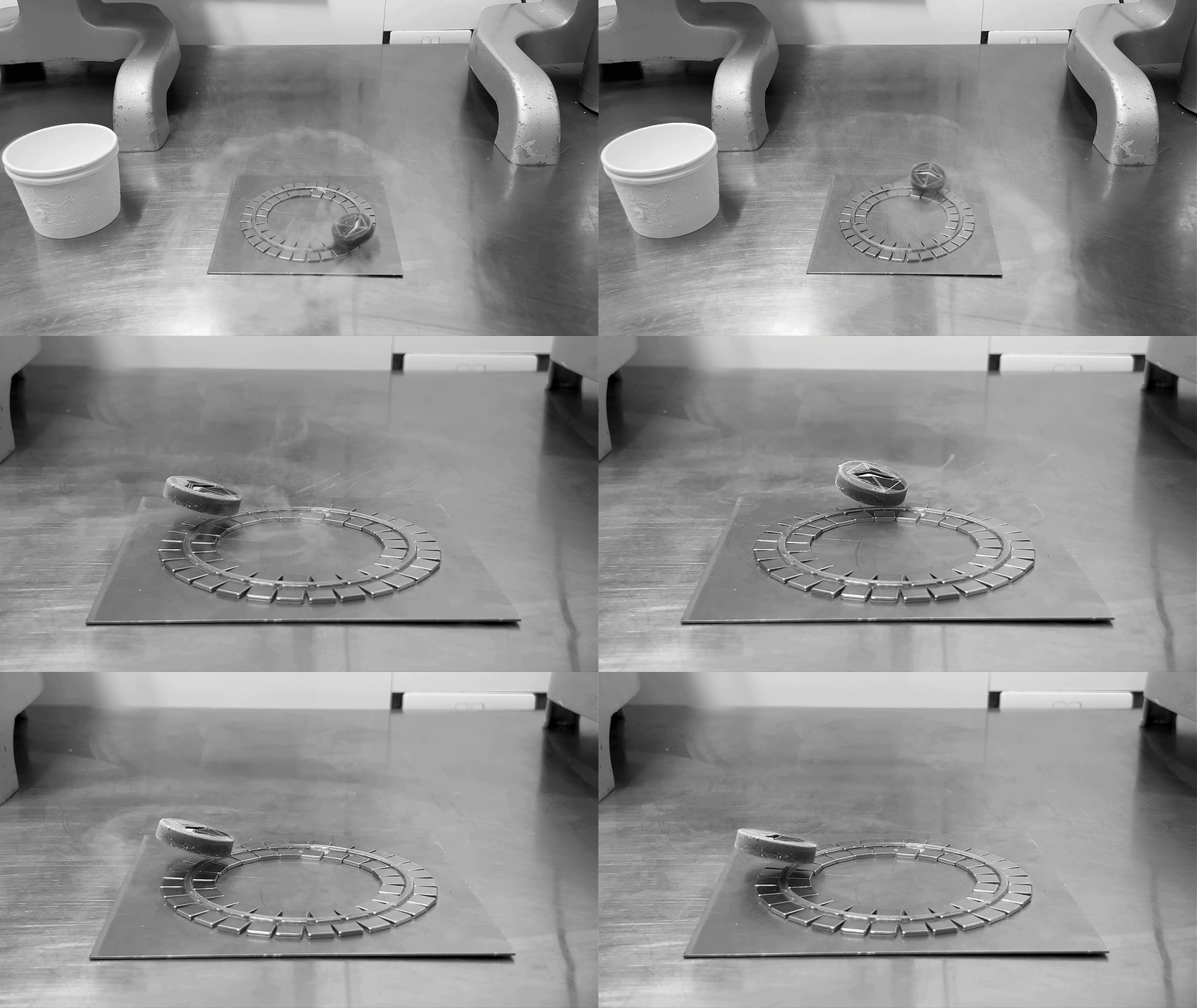
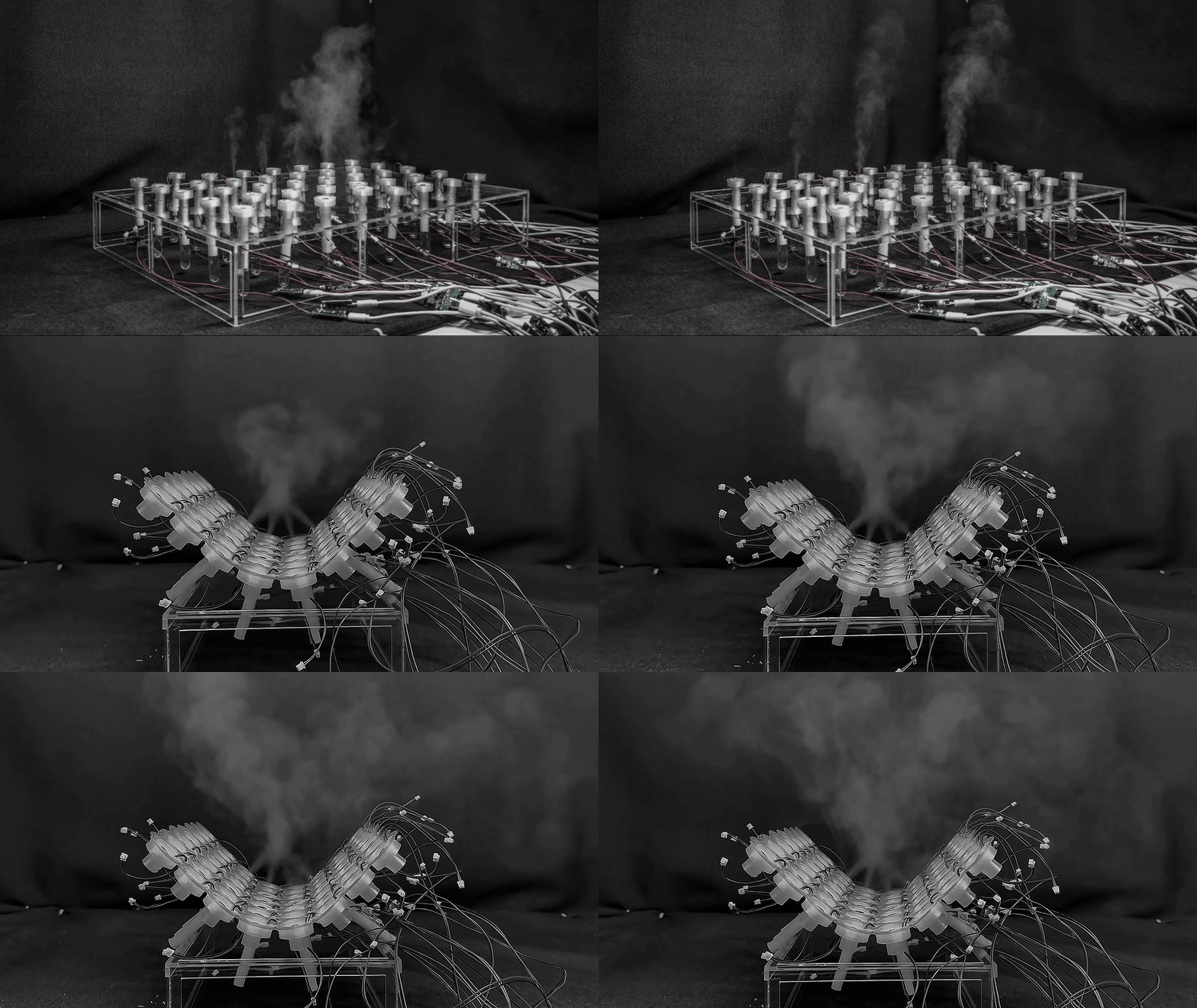
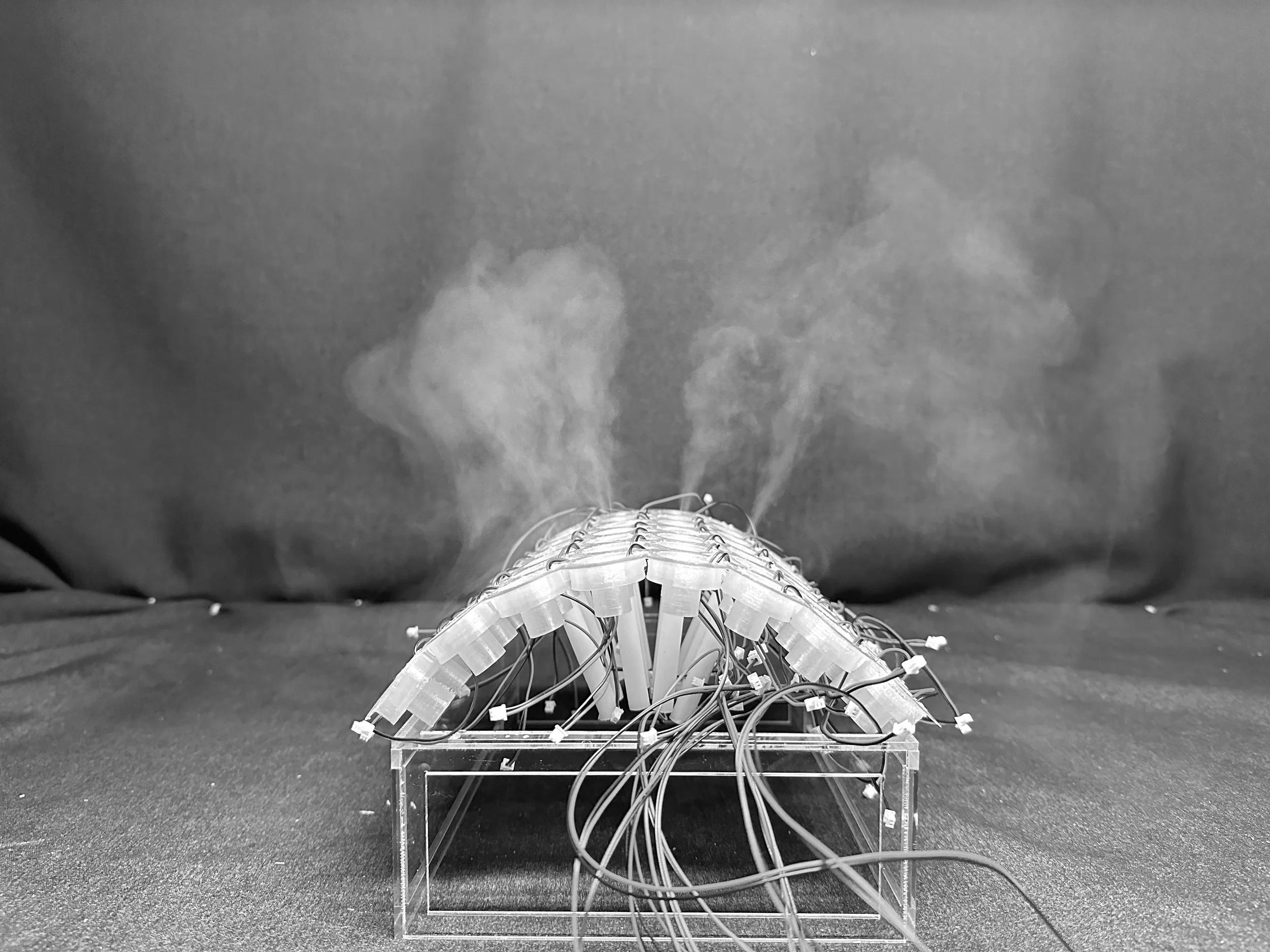
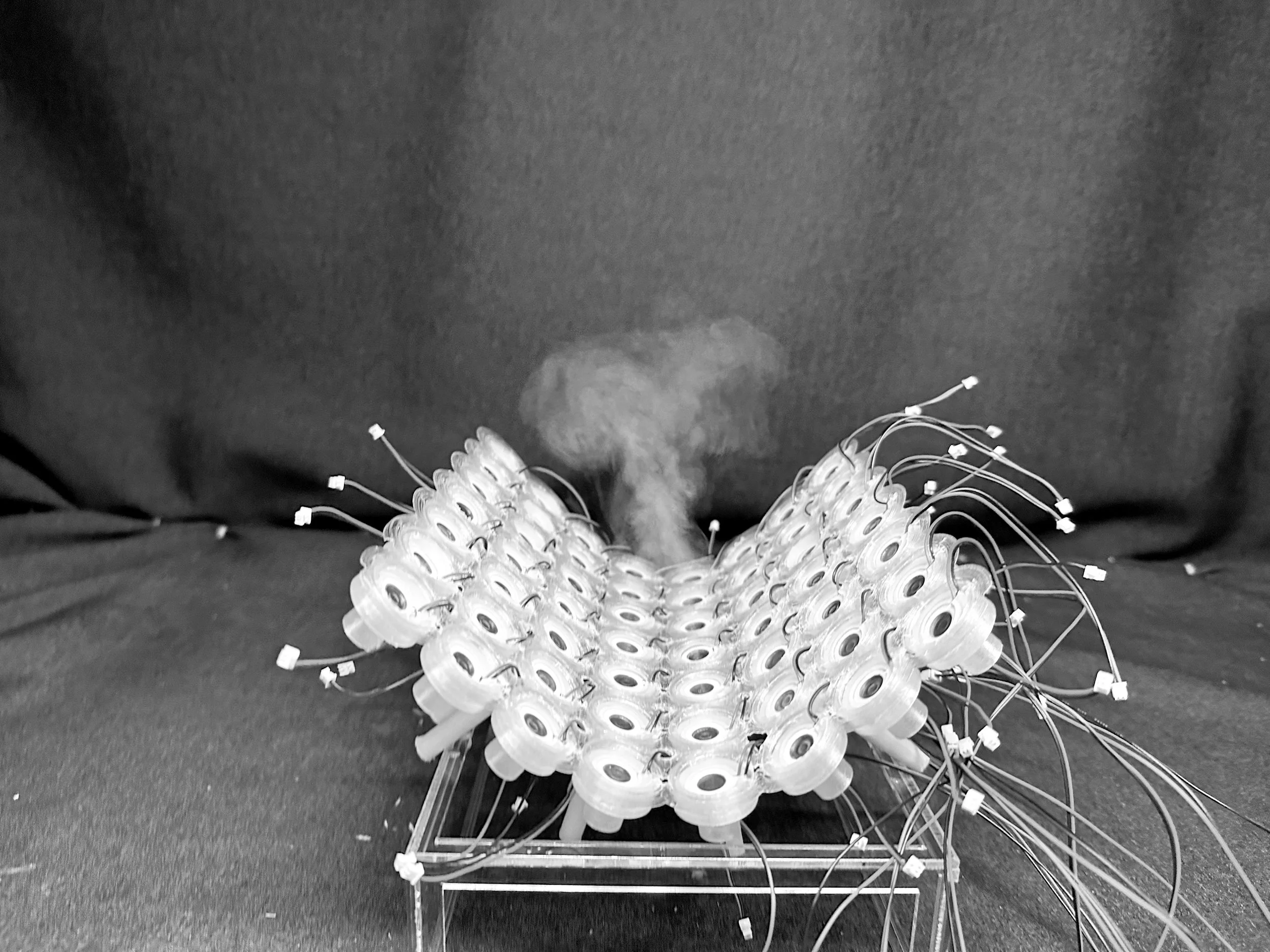

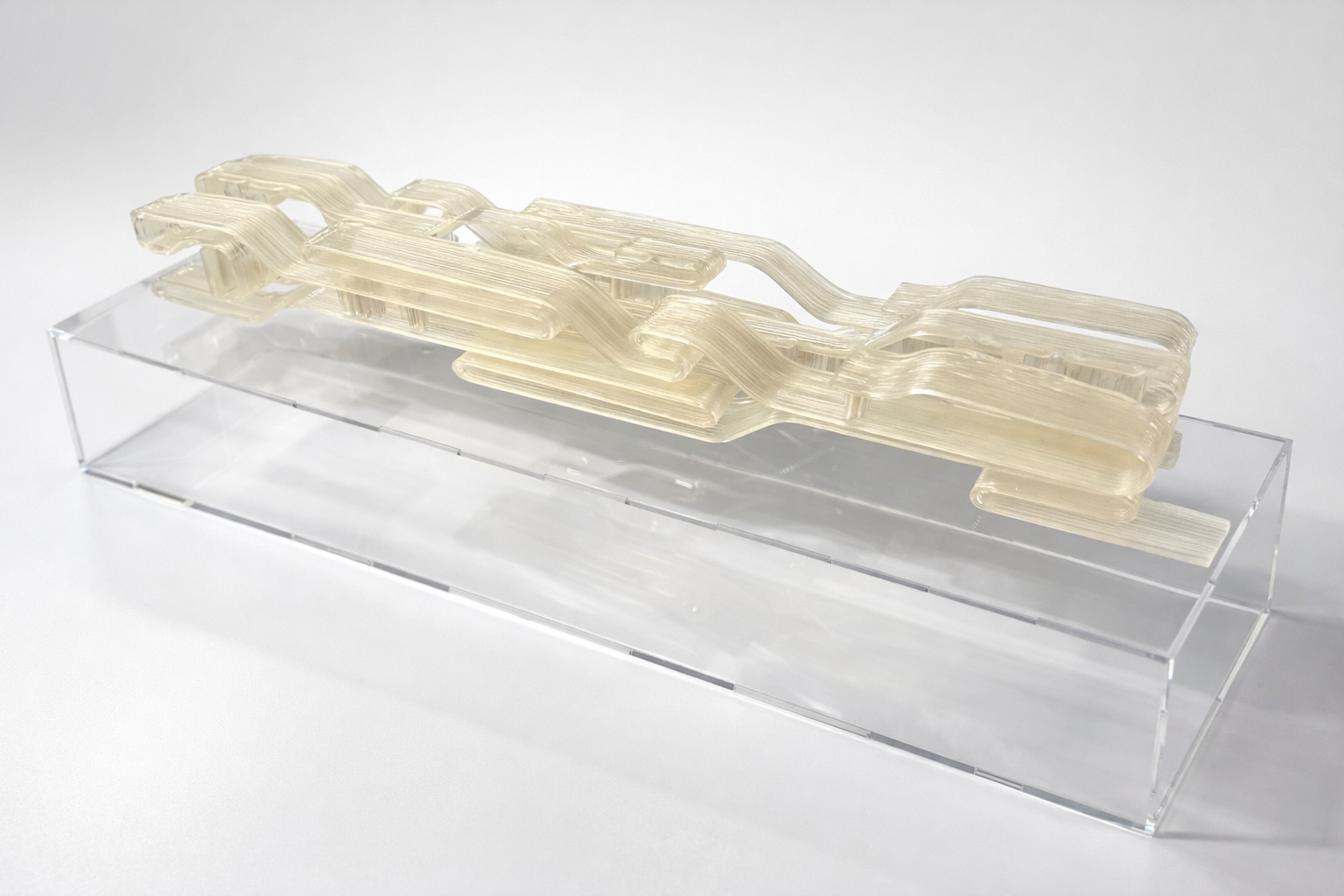
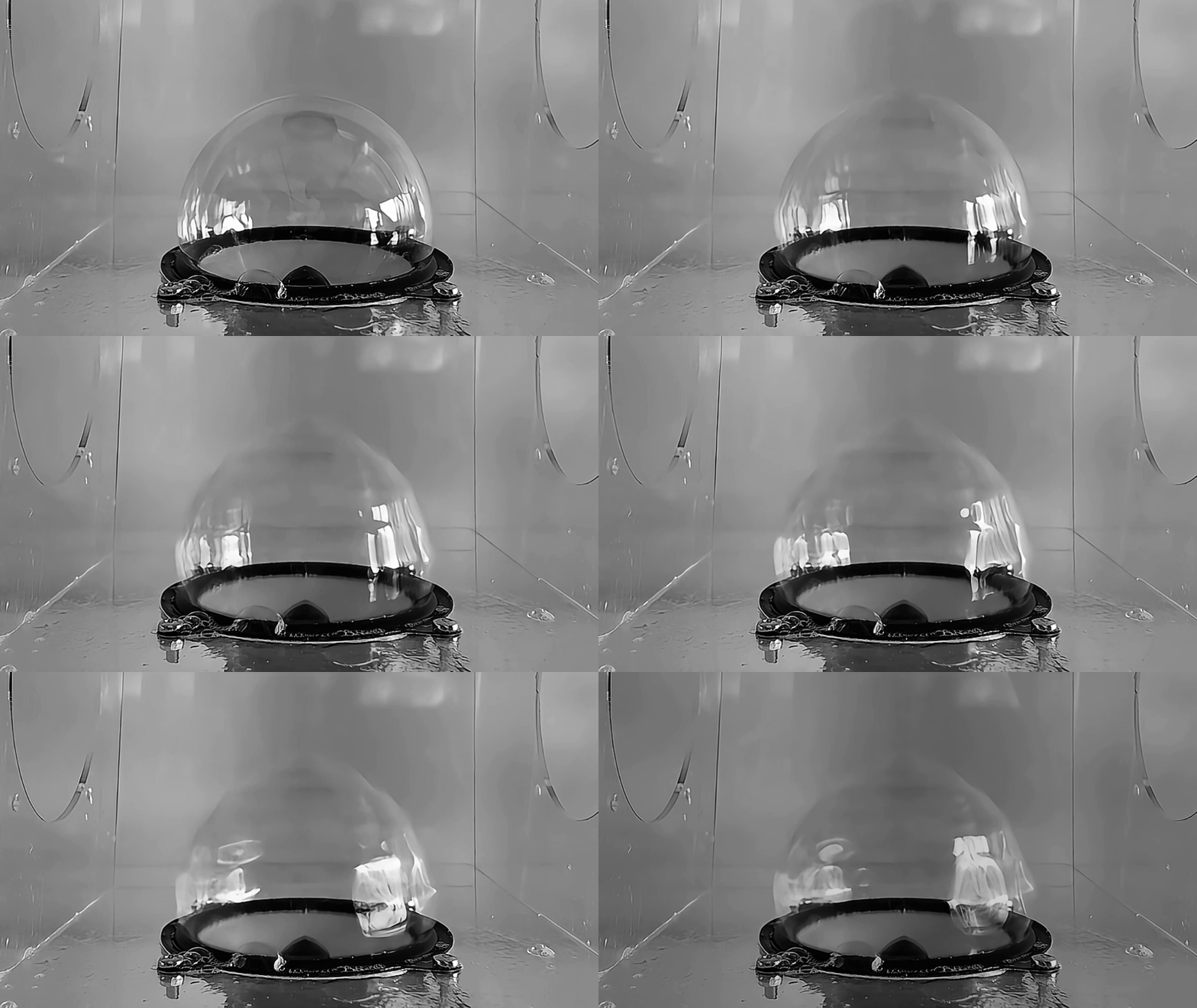
Atmosphere Intelligence questions how intelligence is understood and applied in architecture, moving beyond human-centred optimisation toward planetary-scale systems. The atmosphere is treated not as a passive backdrop but as an active, measurable field composed of interacting variables including temperature, pressure, humidity, and energy transfer. These variables are understood as spatial data that change over time and across scales. The research develops a methodological framework in which continuous atmospheric fields are discretised through voxelisation. This approach allows atmospheric conditions to be modelled, learned, and predicted without prescribing fixed outcomes. Early experiments focus on micro-atmospheric scales, examining how energy inputs propagate through air. Cloud formation is used as a model system that renders atmospheric behaviour visible, enabling relationships between airflow, energy, and matter to be measured and translated into volumetric datasets. These datasets inform a physics-based artificial intelligence model that identifies patterns and relational structures rather than performing supervised optimisation. Building on these studies, the research turns to heat as a primary atmospheric driver. Computational infrastructures, including data centres, are analysed as constructed atmospheres in which computation appears as thermal fields shaped by airflow, cooling systems, and material limits. Computation is therefore understood as a physical process with measurable atmospheric effects that can be sensed, modelled, and spatially organised. Because most computational infrastructures remain inaccessible, their atmospheric impacts are rarely visible or contested. The project responds through speculative experiments in superconductivity and an architectural proposal for an accessible research facility. Artificial intelligence primarily operates at the pre-programming stage, analysing atmospheric, thermal, and programmatic relationships to structure spatial organisation. These relationality guide zoning, circulation, and spatial adjacencies. Following occupation, real-time thermal sensing records temperature gradients as spatial data, voxelised to provide feedback on atmospheric performance. Architecture functions as an active interface that anticipates and reveals computational atmospheres clearly for public research engagement.